
Introduction
Amla, also known as Indian gooseberry, has been an important part of Indian food and Ayurveda for centuries. It is valued for its high nutritional content and traditional health-supporting properties. However, raw amla can be very sour, which makes it difficult for many people to consume regularly.
This is where amla candy becomes useful. When prepared carefully, amla candy offers the goodness of amla in a convenient and tasty form. This blog explains how amla candy supports hair, skin, and immunity, and how to use it wisely as part of a balanced lifestyle.
What Is Amla Candy?
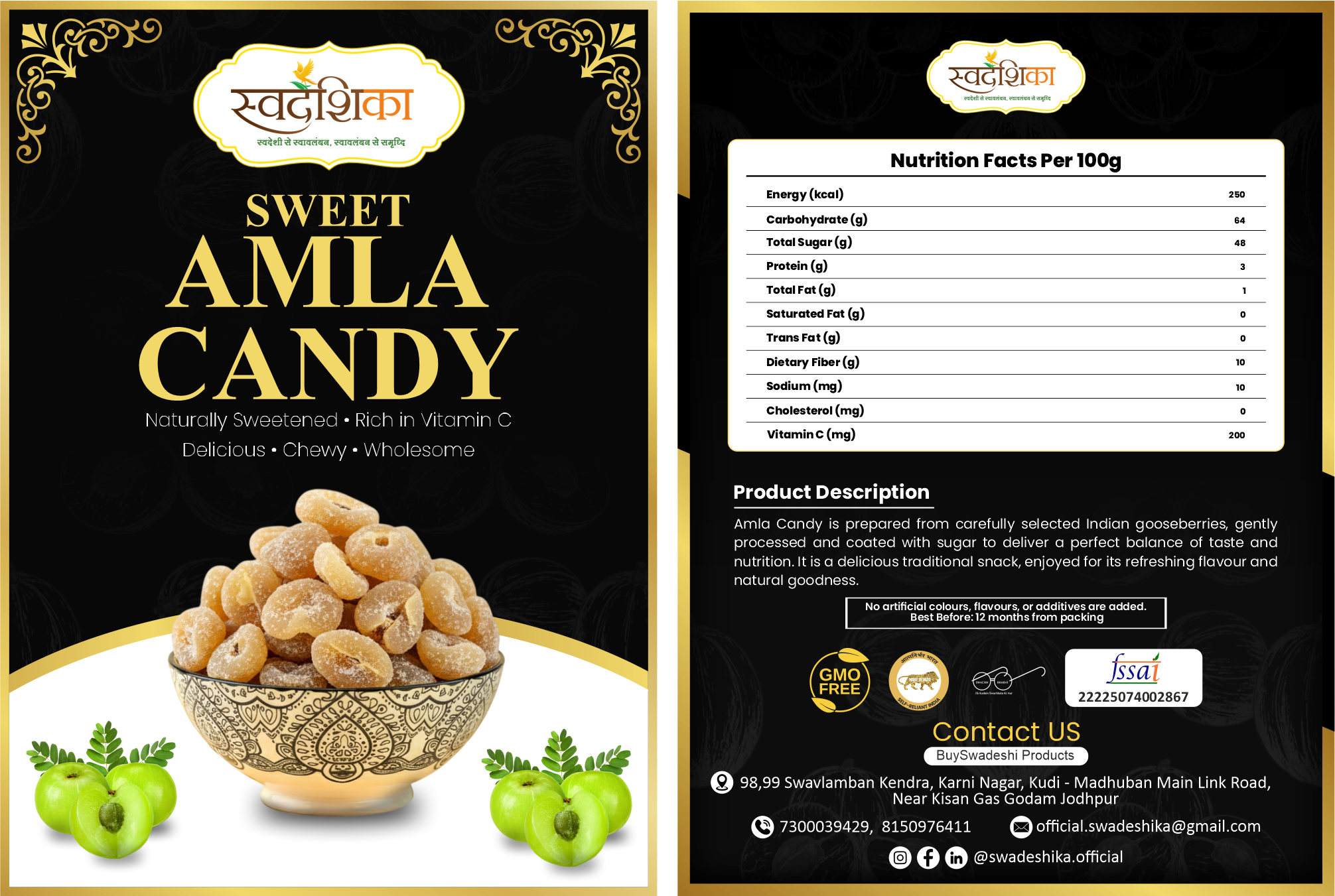
Amla candy is made by cutting fresh amla into pieces, processing it with minimal heat, and preserving it using natural sweeteners and spices. The goal is to retain as much of amla’s natural nutrition as possible while making it pleasant to eat.
Good-quality amla candy:
- Uses real amla pieces
- Avoids artificial colours and flavours
- Maintains a balance between taste and nutrition
Nutritional Value of Amla
Amla is known for being one of the richest natural sources of vitamin C. According to nutrition data, fresh amla contains significantly more vitamin C than many common fruits.
In addition to vitamin C, amla contains:
- Antioxidants
- Polyphenols
- Fibre
- Essential minerals
These nutrients contribute to its traditional use in daily wellness.
How Amla Candy Supports Hair Health
Vitamin C and antioxidants present in amla help support hair health in several ways:
- Supports collagen production, which strengthens hair roots
- Helps reduce oxidative stress on hair follicles
- Traditionally used to support scalp health
Regular, moderate consumption of amla-based foods is commonly associated with stronger and healthier-looking hair.
How Amla Candy Benefits Skin
Amla has long been used in traditional skincare routines.
Skin-related benefits include:
- Supporting natural skin glow
- Helping the body fight free radical damage
- Supporting collagen formation for skin elasticity
Because amla candy is easy to consume daily, it offers a practical way to include amla in your routine.
Immunity Support: Traditional Understanding
Vitamin C plays an important role in immune function. Amla candy provides a natural source of vitamin C, which helps:
- Support the body’s natural defence system
- Reduce oxidative stress
- Support recovery during seasonal changes
It is important to remember that amla candy supports immunity but does not replace medical treatment.
Sweet vs Masala Amla Candy (Brief Overview)
- Sweet amla candy: Mild taste, suitable for children
- Masala amla candy: Tangy and spicy, often preferred after meals
Both forms offer similar nutritional value when prepared naturally.
How to Consume Amla Candy Daily
- 1–2 pieces per day are sufficient
- Can be taken after meals
- Works well as a mid-day snack
- Suitable for both adults and children
Avoid excessive consumption, as balance is key.
Buying and Storage Tips
- Choose amla candy with natural colour
- Avoid products with very bright shades
- Check ingredient list for artificial additives
- Store in airtight containers
- Keep away from moisture
Conclusion
Amla candy is a simple and convenient way to include the benefits of amla in daily life. When prepared naturally and consumed in moderation, it can support hair health, skin quality, and immunity.
As with all natural foods, consistency and balance matter more than quantity.
Small daily habits often create the biggest long-term impact.
------------------------------------------
परिचय
आंवला भारतीय खान-पान और आयुर्वेद का अहम हिस्सा रहा है। यह अपने पोषण गुणों, खासकर विटामिन C के लिए जाना जाता है। लेकिन कच्चा आंवला बहुत खट्टा होता है, इसलिए हर कोई इसे रोज़ नहीं खा पाता।
आंवला कैंडी आंवले को खाने का एक आसान और स्वादिष्ट तरीका है। सही तरीके से बनी आंवला कैंडी सेहत को सहारा देती है और रोज़ाना सेवन में आसानी होती है।
आंवला कैंडी क्या होती है?
आंवला कैंडी ताज़े आंवले के टुकड़ों से बनाई जाती है। इन्हें हल्की प्रोसेसिंग और प्राकृतिक मिठास के साथ तैयार किया जाता है।
अच्छी आंवला कैंडी:
- असली आंवले से बनी होती है
- बिना कृत्रिम रंग और स्वाद के
- स्वाद और पोषण का संतुलन बनाए रखती है
आंवले का पोषण मूल्य
आंवला विटामिन C का प्राकृतिक स्रोत है। इसके अलावा इसमें:
- एंटीऑक्सिडेंट
- फाइबर
- खनिज तत्व
पाए जाते हैं, जो शरीर के लिए लाभकारी होते हैं।
बालों के लिए आंवला कैंडी के फायदे
आंवले में मौजूद विटामिन C:
- बालों की जड़ों को मज़बूत करने में मदद करता है
- स्कैल्प को स्वस्थ रखने में सहायक होता है
- बालों को टूटने से बचाने में मदद करता है
त्वचा के लिए फायदे
आंवला पारंपरिक रूप से त्वचा की देखभाल में इस्तेमाल होता रहा है।
यह मदद करता है:
- त्वचा की चमक बनाए रखने में
- त्वचा को फ्री रेडिकल्स से बचाने में
- कोलेजन बनने में
इम्युनिटी के लिए लाभ
विटामिन C शरीर की रोग-प्रतिरोधक क्षमता को सहारा देता है।
आंवला कैंडी:
- शरीर की प्राकृतिक सुरक्षा को मजबूत करती है
- मौसम बदलने पर शरीर को सहारा देती है
यह कोई दवा नहीं है, लेकिन नियमित सेवन से लाभ मिल सकता है।
आंवला कैंडी का सेवन कैसे करें?
- रोज़ 1–2 टुकड़े काफ़ी हैं
- खाने के बाद लेना बेहतर
- बच्चों के लिए भी उपयुक्त
खरीदने और रखने के सुझाव
- बहुत चमकीली कैंडी न लें
- सामग्री सूची ज़रूर पढ़ें
- एयरटाइट डिब्बे में रखें
- नमी से दूर रखें
निष्कर्ष
आंवला कैंडी आंवले के गुणों को अपनाने का एक आसान तरीका है। सही मात्रा में लेने से यह बाल, त्वचा और इम्युनिटी को सहारा देती है।