
Introduction
Dhoop has been an essential part of Indian homes for centuries, used during prayers, meditation, and to create a calm indoor atmosphere. Traditionally, different natural fragrances were chosen not just for smell, but for the mood and purpose they suited.
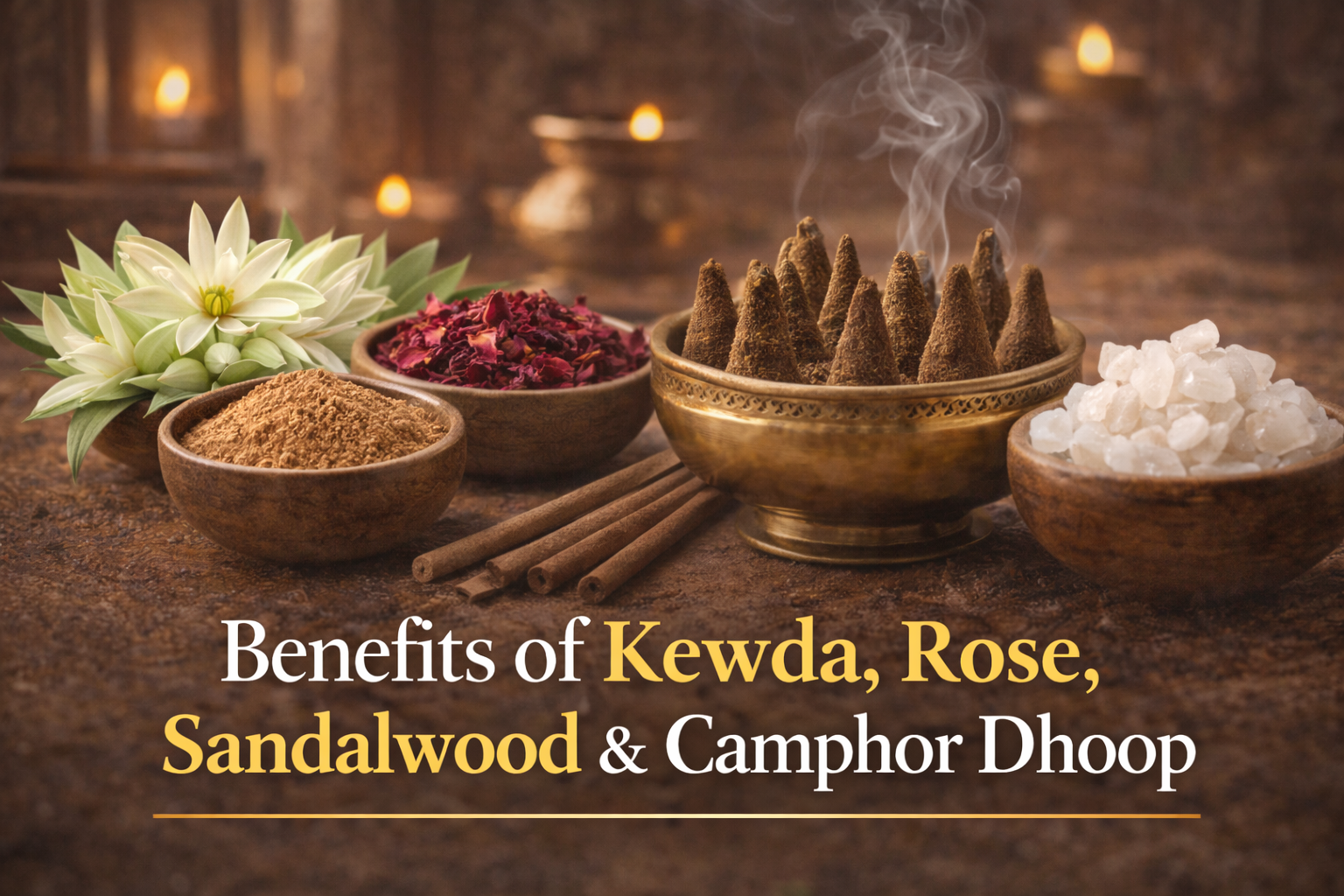
Among the most popular traditional options are kewda, rose, sandalwood, and camphor dhoop. Each of these has its own unique fragrance profile and traditional significance. This blog explains their characteristics, traditional uses, and how to choose the right one for your home.
Kewda Dhoop: Fresh and Uplifting
Kewda (screwpine flower) is known for its sweet, refreshing floral fragrance.
Traditional benefits:
- Creates a fresh indoor atmosphere
- Often used during festive rituals
- Considered suitable for welcoming or auspicious occasions
- Provides a light, pleasant scent that is not overpowering
Kewda dhoop works well for morning prayers or special gatherings.
Rose Dhoop: Calm and Soothing
Rose fragrance has long been associated with peace and emotional calmness.
Traditional benefits:
- Helps create a soothing environment
- Commonly used during meditation or evening prayers
- Adds a gentle floral aroma to rooms
- Traditionally linked with purity and devotion
Rose dhoop is ideal when you want a soft and comforting fragrance.
Sandalwood Dhoop: Deep and Meditative
Sandalwood is one of the most valued fragrances in Indian spiritual traditions.
Traditional benefits:
- Produces a warm, woody aroma
- Widely used in temples and spiritual spaces
- Associated with focus and mental calmness
- Suitable for meditation and long prayer sessions
Sandalwood dhoop is often preferred for serious or quiet spiritual practices.
Camphor Dhoop: Pure and Cleansing
Camphor (kapoor) has a strong, sharp fragrance and is traditionally used in many religious rituals.
Traditional benefits:
- Creates a feeling of purity in the space
- Commonly used during aarti and temple rituals
- Produces a distinctive, refreshing aroma
- Traditionally believed to help clear heavy indoor smells
Camphor dhoop is often chosen for ritual use rather than daily fragrance.
Comparison of Different Dhoop Types
| Type Fragrance Style Best Use | ||
| Kewda | Sweet, fresh floral | Festivals, morning prayer |
| Rose | Soft, calming floral | Meditation, evening prayer |
| Sandalwood | Warm, woody | Spiritual focus, temples |
| Camphor | Strong, sharp | Aarti, ritual purification |
Choosing depends on personal preference and occasion.
Tips for Using Dhoop at Home
- Use in a ventilated room
- Burn in safe holders
- Avoid prolonged use in closed spaces
- Choose natural ingredient-based products
- Start with small quantities
Proper use helps maintain both fragrance and indoor comfort.
Buying Tips
- Check for natural ingredient labels
- Prefer mild natural aroma before lighting
- Avoid overly bright colours or artificial smell
- Choose trusted traditional or natural brands
Good dhoop should smell authentic, not synthetic.
Conclusion
Kewda, rose, sandalwood, and camphor dhoop each offer a unique traditional fragrance suited to different moods and rituals. Whether you want freshness, calmness, focus, or ritual purity, selecting the right natural dhoop can enhance your daily spiritual or home environment naturally.
Fragrance has always been part of tradition — the right one simply completes the moment.
------------------------------------------
परिचय
धूप भारतीय घरों में पूजा, ध्यान और वातावरण को सुगंधित करने के लिए उपयोग की जाती है। अलग-अलग खुशबू अलग उद्देश्य के लिए चुनी जाती हैं।
केवड़ा, गुलाब, चंदन और कपूर धूप सबसे लोकप्रिय पारंपरिक विकल्पों में से हैं।
केवड़ा धूप
- मीठी और ताज़ा खुशबू
- त्योहार और सुबह की पूजा के लिए उपयुक्त
- हल्की और सुखद सुगंध
गुलाब धूप
- शांत और सुकून देने वाली खुशबू
- ध्यान और शाम की पूजा के लिए अच्छी
- कोमल फूलों जैसी सुगंध
चंदन धूप
- गहरी लकड़ी जैसी खुशबू
- मंदिर और ध्यान के लिए उपयोगी
- मानसिक शांति से जुड़ी मानी जाती है
कपूर धूप
- तेज़ और ताज़गी भरी खुशबू
- आरती और धार्मिक अनुष्ठानों में उपयोग
- वातावरण को पवित्र महसूस कराती है
तुलना
| प्रकार खुशबू उपयोग | ||
| केवड़ा | ताज़ा फूलों जैसी | त्योहार |
| गुलाब | हल्की और शांत | ध्यान |
| चंदन | गहरी लकड़ी जैसी | पूजा |
| कपूर | तेज़ | आरती |
उपयोग के सुझाव
- हवादार कमरे में जलाएँ
- कम मात्रा में उपयोग करें
- प्राकृतिक धूप चुनें
निष्कर्ष
इन चारों धूप की खुशबू अलग है और अलग अवसरों के लिए उपयुक्त है। सही धूप चुनकर आप घर का वातावरण बेहतर बना सकते हैं।