
Introduction
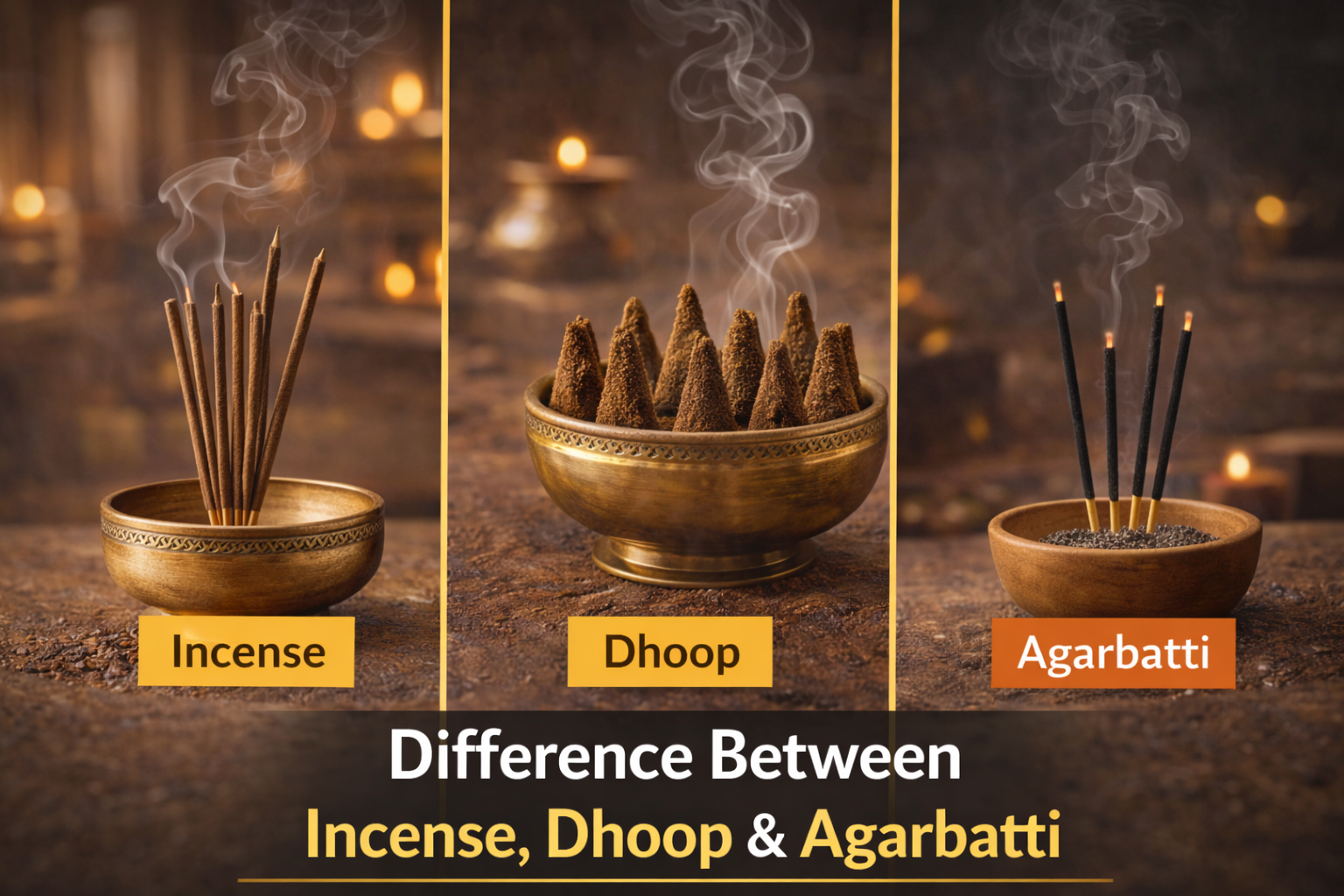
Fragrant smoke has been part of Indian rituals and daily life for centuries. Words like incense, dhoop, and agarbatti are often used interchangeably, but they are not exactly the same. Each has a different form, composition, and traditional use.
Understanding the difference helps you choose the right product for prayer, meditation, or simply creating a pleasant indoor atmosphere. This blog explains these three types clearly and simply.
What Is Incense?
Incense is a broad, general term used worldwide for any aromatic material that releases fragrance when burned.
It can include:
- Agarbatti
- Dhoop sticks or cones
- Resin incense
- Powder incense
So, incense is not a specific product — it is the category that includes many fragrant-burning items.
What Is Agarbatti?
Agarbatti is the most commonly used incense form in Indian homes.
Key characteristics:
- Thin bamboo stick at the center
- Fragrant paste coated around the stick
- Produces steady smoke when lit
- Burns slowly and evenly
Typical uses:
- Daily home prayers
- Temple rituals
- Freshening indoor spaces
Because it burns gradually, agarbatti is suitable for longer use.
What Is Dhoop?
Dhoop is a more traditional and often stronger form of incense.
Key characteristics:
- Usually no bamboo stick inside
- Comes as thick sticks, cones, or powder
- Made from herbs, resins, and wood powders
- Produces denser fragrance and smoke
Typical uses:
- Religious ceremonies
- Aarti rituals
- Meditation sessions
- Traditional temple offerings
Dhoop often burns faster than agarbatti but releases a deeper aroma.
Agarbatti vs Dhoop vs Incense: Comparison Table
| Feature Incense Agarbatti Dhoop | |||
| Meaning | General category | Specific incense type | Specific incense type |
| Bamboo Stick | May or may not | Yes | Usually no |
| Smoke Strength | Depends on type | Mild to moderate | Stronger |
| Burn Time | Varies | Longer | Often shorter |
| Common Use | General fragrance | Daily prayer | Ritual or ceremonial use |
Which One Should You Choose?
Choose agarbatti when:
- You want mild fragrance
- Need longer burning time
- Using it for daily prayers
Choose dhoop when:
- You prefer stronger traditional aroma
- Performing rituals or aarti
- Want deeper fragrance quickly
Choose based on incense type when:
- Looking for specific ingredients like sandalwood or herbal blends
The best choice depends on personal preference and occasion.
Natural vs Synthetic Versions
Both agarbatti and dhoop can be:
- Natural (made from herbs, wood, oils)
- Synthetic (made with artificial fragrance or chemicals)
Natural versions usually:
- Have softer aroma
- Produce less harsh smoke
- Align better with traditional practices
Checking ingredients is always useful.
Tips for Safe Use
- Burn in ventilated spaces
- Use stable holders or burners
- Avoid placing near curtains or flammable items
- Use small quantities at a time
Proper use ensures both safety and comfort.
Conclusion
Incense is the overall category, while agarbatti and dhoop are two specific forms with different structures and uses. Agarbatti offers mild, steady fragrance for daily use, while dhoop provides stronger aroma suited for rituals and traditional settings.
Understanding this difference helps you select the right fragrance for the right moment.
Sometimes, knowing the difference helps you enjoy the tradition more deeply.
------------------------------------------
परिचय
सुगंधित धुआँ भारतीय परंपरा का हिस्सा रहा है। अक्सर लोग इंसेंस, धूप और अगरबत्ती को एक ही समझ लेते हैं, लेकिन इनमें फर्क होता है।
इंसेंस क्या है?
इंसेंस एक सामान्य शब्द है, जिसमें सभी प्रकार की सुगंधित जलने वाली सामग्री आती है, जैसे:
- अगरबत्ती
- धूप
- रेज़िन
अगरबत्ती क्या है?
पहचान:
- अंदर बांस की लकड़ी
- बाहर खुशबूदार लेप
- धीरे-धीरे जलती है
उपयोग:
- रोज़ की पूजा
- घर में सुगंध
धूप क्या है?
पहचान:
- बांस नहीं होता
- मोटी स्टिक या कोन
- खुशबू तेज़
उपयोग:
- आरती
- धार्मिक अनुष्ठान
तुलना
| बिंदु इंसेंस अगरबत्ती धूप | |||
| अर्थ | सामान्य श्रेणी | एक प्रकार | एक प्रकार |
| बांस | हो भी सकता | होता है | नहीं होता |
| खुशबू | अलग-अलग | हल्की | तेज़ |
निष्कर्ष
इंसेंस एक श्रेणी है, जबकि अगरबत्ती और धूप उसके प्रकार हैं। उपयोग के अनुसार सही विकल्प चुनना बेहतर होता है।

About Swadeshika Editorial Team
The official editorial team of Swadeshika.
You Might Also Like
Benefits of Kewda, Rose, Sandalwood & Camphor Dhoop
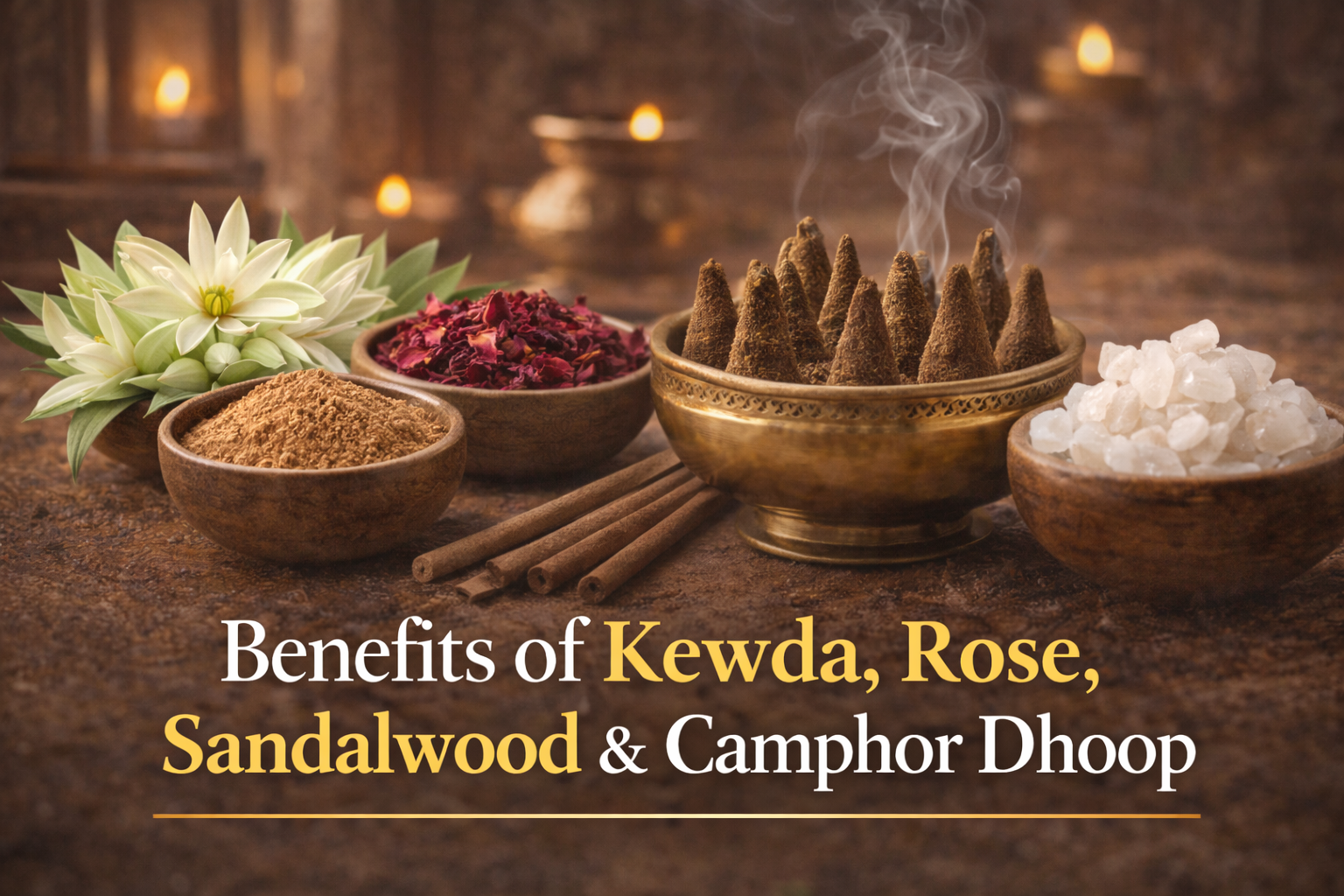
Kewda, rose, sandalwood, and camphor dhoop are valued in traditional practices for their calming aroma and purifying properties. They help create a peaceful environment, support relaxation, and uplift the mood during prayer or meditation. When made naturally, these fragrances offer a soothing experience without the harsh effects of synthetic chemicals.
How Natural Incense Is Made (Traditional Process)
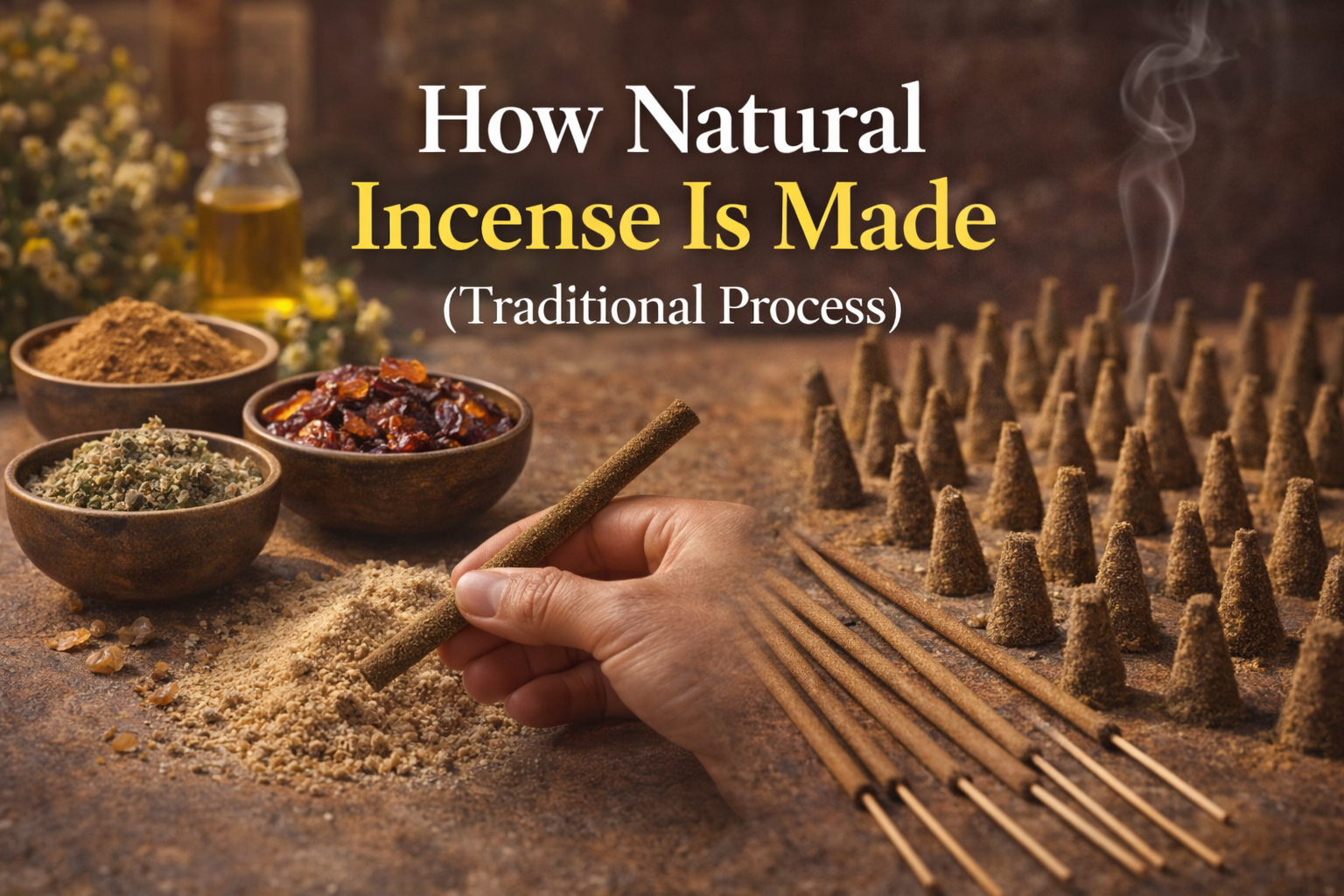
Natural incense is made using traditional methods that blend plant resins, herbs, wood powders, and essential oils without synthetic chemicals. The mixture is hand-rolled onto bamboo sticks or shaped into dhoop cones and sun-dried to preserve its purity and aroma.
Why Avoid Chemical-Based Dhoop & Agarbatti
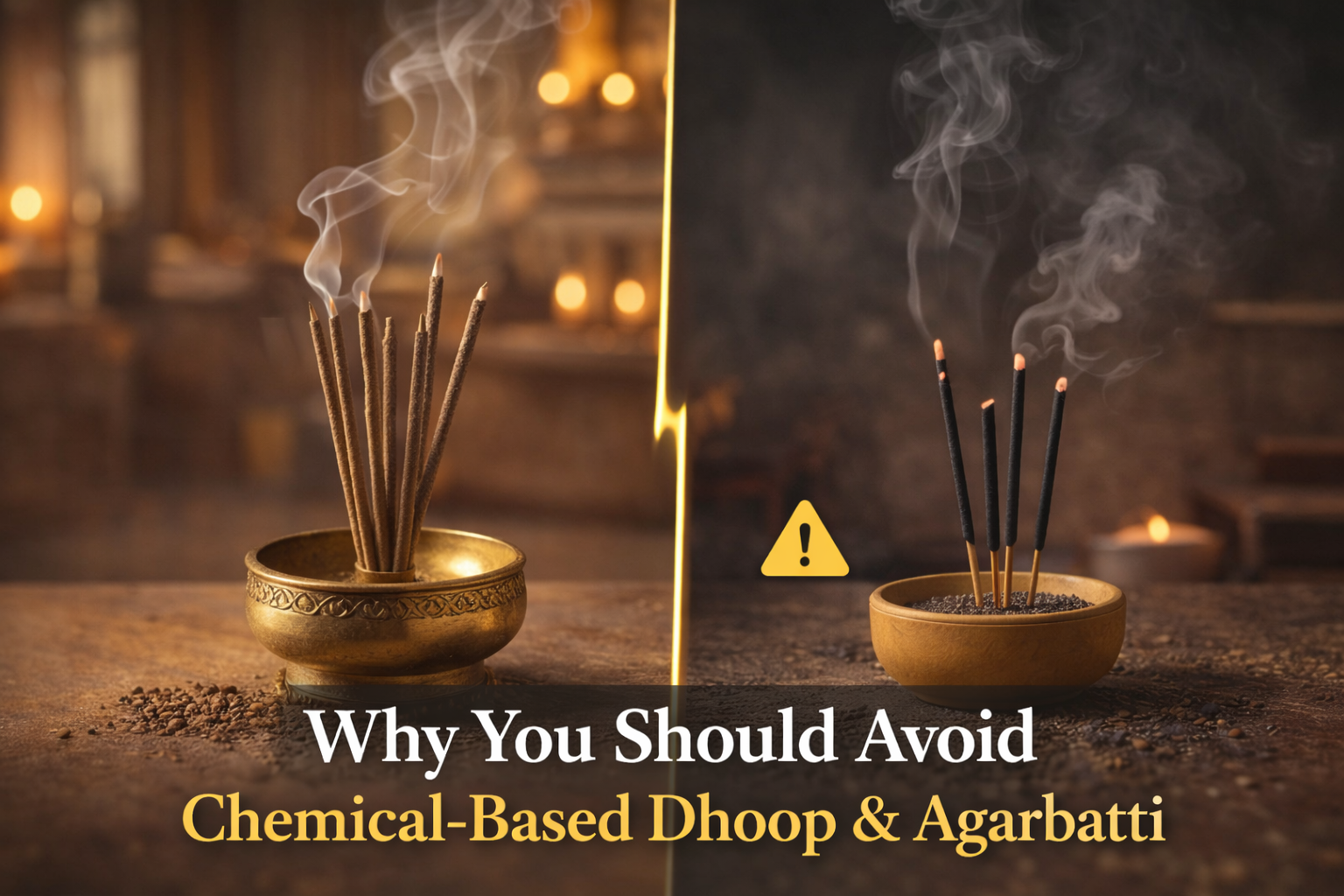
Chemical-based dhoop and agarbatti often contain synthetic fragrances and fillers that can release harmful smoke and indoor air pollutants when burned. Regular exposure may trigger headaches, allergies, or breathing issues, especially in closed spaces.