Introduction
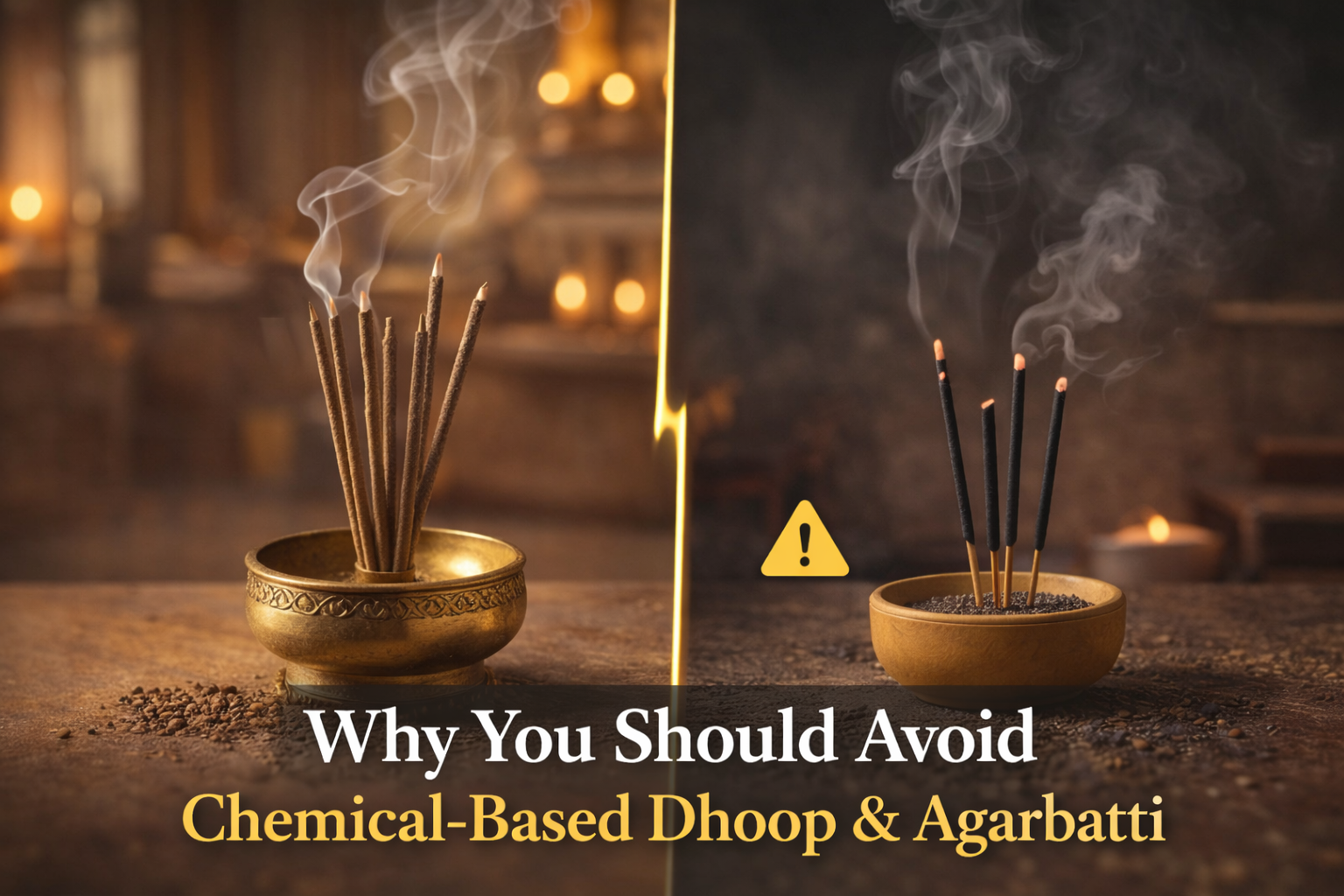
Dhoop and agarbatti are part of daily life in many Indian homes. They are used during prayers, meditation, festivals, and even to freshen indoor spaces. Traditionally, incense was made using natural ingredients like herbs, resins, wood powders, and essential oils.
However, many modern incense products are made using synthetic fragrances, chemical binders, and artificial fillers to reduce cost and increase shelf life. This raises an important question: Should we be concerned about chemical-based dhoop and agarbatti?
This blog explains the differences between natural and chemical incense, their possible effects, and why choosing natural alternatives may be safer for daily use.
What Are Chemical-Based Dhoop & Agarbatti?
Chemical-based incense products often include:
- Synthetic fragrance compounds
- Artificial colourants
- Chemical binders
- Low-cost filler powders
These ingredients help produce strong smell and uniform appearance, but they may release unwanted fumes when burned.
What Happens When Incense Burns?
When any incense burns, it releases smoke. If the ingredients are natural, the smoke mainly comes from plant-based materials. But when synthetic chemicals are present, burning may release:
- Artificial fragrance particles
- Volatile organic compounds (VOCs)
- Excess soot or particulate matter
Indoor air studies have shown that poorly made incense can contribute to indoor air pollution when used in closed spaces.
Possible Concerns with Chemical Incense
1. Indoor Air Quality
Frequent burning of synthetic incense in poorly ventilated rooms may increase smoke particles indoors.
2. Strong Artificial Fragrance
Artificial perfumes can sometimes cause discomfort for sensitive individuals.
3. Residue and Soot
Low-quality incense may produce black residue on walls or surfaces.
4. Long-Term Exposure
Regular exposure to heavy smoke or synthetic fumes is generally not recommended in enclosed environments.
This does not mean occasional use is harmful, but daily heavy use in closed spaces should be approached carefully.
What Makes Natural Dhoop & Agarbatti Different?
Traditional natural incense is made from:
- Wood powders like sandalwood or bark
- Natural resins
- Herbs and flowers
- Essential oils
- Plant-based binders
Such products typically produce:
- Softer fragrance
- Less harsh smoke
- More traditional aroma
They align more closely with traditional practices.
How to Identify Natural Incense
Look for:
- Ingredient transparency on packaging
- Mild, natural smell instead of sharp perfume
- Earthy colour (not overly bright)
- Handmade or traditionally prepared labels
Very strong fragrance before lighting may indicate synthetic additives.
Tips for Safe Use at Home
- Always burn incense in ventilated rooms
- Avoid prolonged burning in closed spaces
- Use small quantities
- Keep away from children and pets
- Prefer natural or low-smoke products
Proper usage matters as much as product quality.
Conclusion
Dhoop and agarbatti are deeply connected to Indian traditions, but modern chemical-based versions may affect indoor air quality when used frequently. Choosing natural incense made from plant-based ingredients and using it responsibly can help maintain both tradition and a healthier indoor environment.
Traditions feel better when they remain close to nature.
------------------------------------------
परिचय
धूप और अगरबत्ती भारतीय घरों में पूजा, ध्यान और वातावरण सुगंधित करने के लिए उपयोग की जाती हैं। पहले ये प्राकृतिक जड़ी-बूटियों, लकड़ी और फूलों से बनाई जाती थीं।
आज कई उत्पाद केमिकल और सिंथेटिक खुशबू से बनाए जाते हैं, जो सस्ते और तेज़ खुशबू वाले होते हैं।
जलने पर क्या होता है?
अगरबत्ती या धूप जलाने पर धुआँ निकलता है।
अगर इसमें केमिकल हों, तो धुएँ में कृत्रिम कण भी हो सकते हैं।
केमिकल धूप के संभावित नुकसान
- कमरे की हवा भारी हो सकती है
- तेज़ खुशबू से सिरदर्द या असहजता हो सकती है
- ज़्यादा कालिख निकल सकती है
प्राकृतिक धूप क्यों बेहतर?
प्राकृतिक धूप में:
- जड़ी-बूटियाँ
- लकड़ी
- रेज़िन
- फूल
होते हैं।
इनसे:
- हल्की खुशबू
- कम तीखा धुआँ
- पारंपरिक सुगंध
मिलती है।
पहचान कैसे करें?
- बहुत तेज़ कृत्रिम खुशबू न हो
- प्राकृतिक रंग हो
- सामग्री सूची साफ़ हो
सुरक्षित उपयोग के सुझाव
- कमरे में हवा का रास्ता रखें
- कम मात्रा में जलाएँ
- बच्चों से दूर रखें
निष्कर्ष
प्राकृतिक धूप और अगरबत्ती पारंपरिक और सुरक्षित विकल्प हैं। रोज़ाना उपयोग के लिए इन्हें चुनना बेहतर है।

About Swadeshika Editorial Team
The official editorial team of Swadeshika.
You Might Also Like
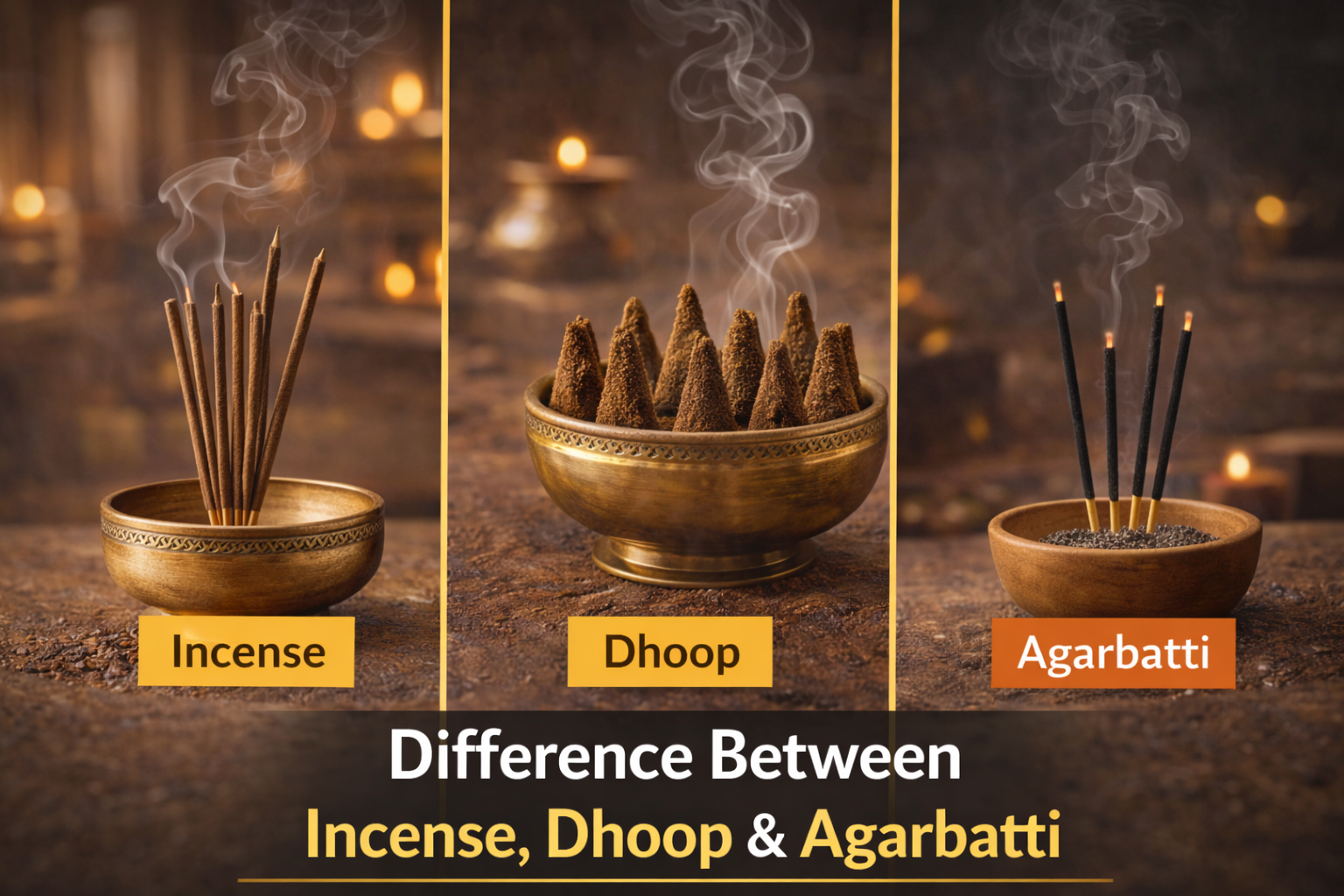
Difference Between Incense, Dhoop & Agarbatti
Incense is a broad term for aromatic materials that release fragrance when burned, including both dhoop and agarbatti. Agarbatti typically uses a bamboo stick coated with fragrant paste, while dhoop is usually stickless and made from natural resins, herbs, and wood powders.
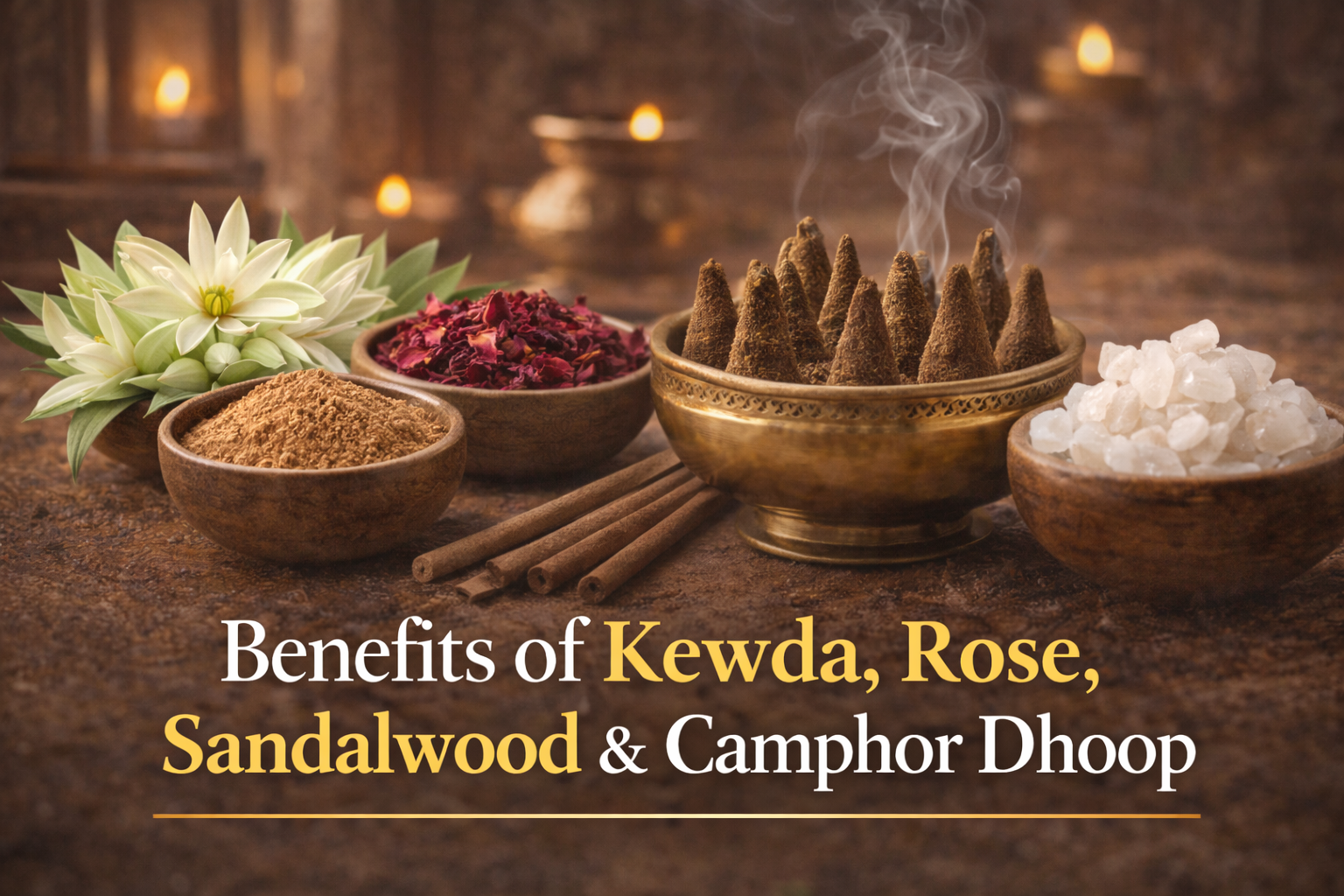
Benefits of Kewda, Rose, Sandalwood & Camphor Dhoop
Kewda, rose, sandalwood, and camphor dhoop are valued in traditional practices for their calming aroma and purifying properties. They help create a peaceful environment, support relaxation, and uplift the mood during prayer or meditation. When made naturally, these fragrances offer a soothing experience without the harsh effects of synthetic chemicals.
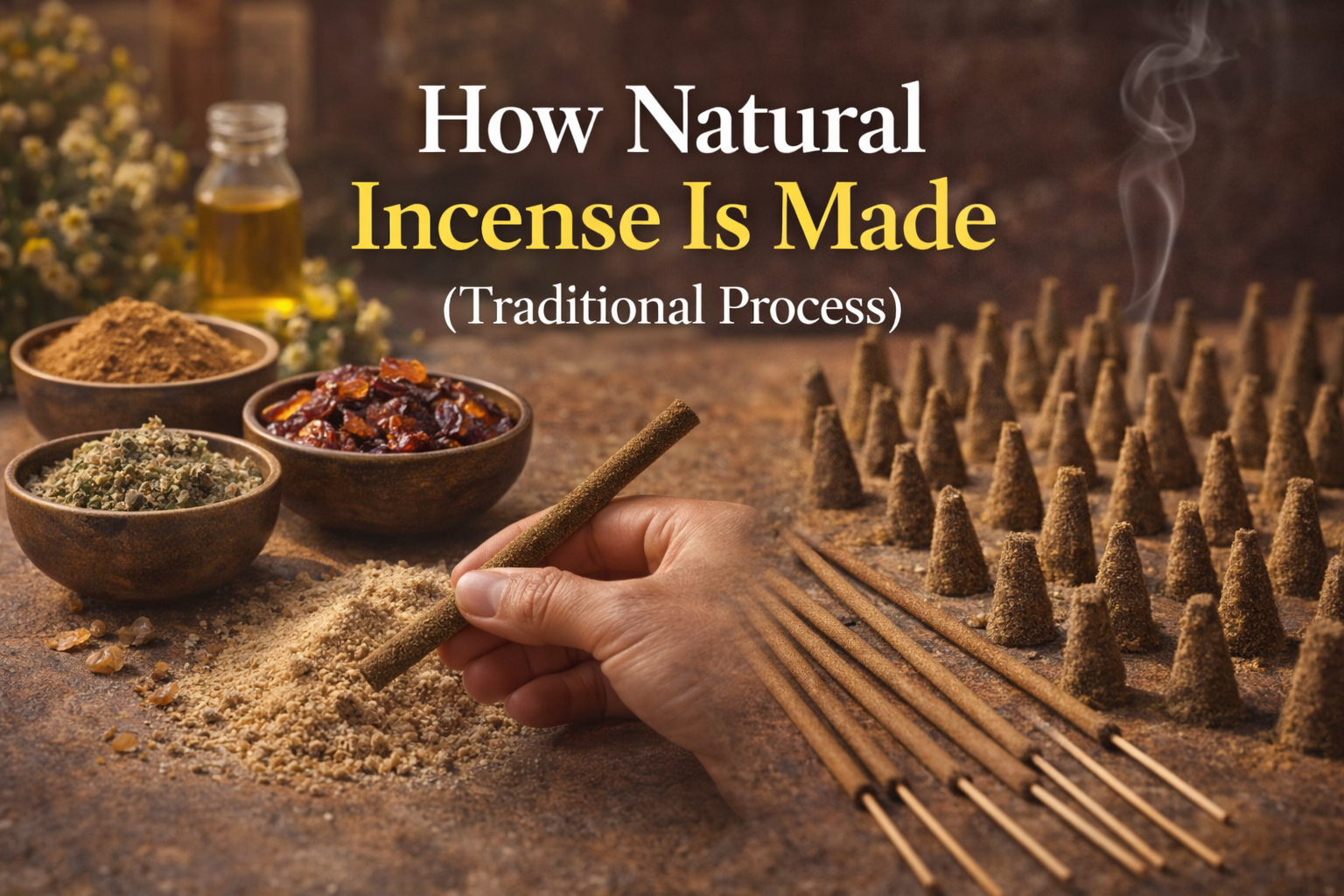
How Natural Incense Is Made (Traditional Process)
Natural incense is made using traditional methods that blend plant resins, herbs, wood powders, and essential oils without synthetic chemicals. The mixture is hand-rolled onto bamboo sticks or shaped into dhoop cones and sun-dried to preserve its purity and aroma.