
Introduction
Incense has been part of Indian spiritual and cultural life for centuries. Whether used during daily prayers, meditation, or festivals, incense like dhoop and agarbatti has traditionally been made from natural plant-based ingredients.
Before modern factory production, incense was crafted using simple, natural methods passed down through generations. Understanding this traditional process helps us appreciate why natural incense smells softer and feels more authentic compared to synthetic alternatives.
This blog explains how natural incense is traditionally made and what ingredients are used.
Traditional Ingredients Used in Natural Incense
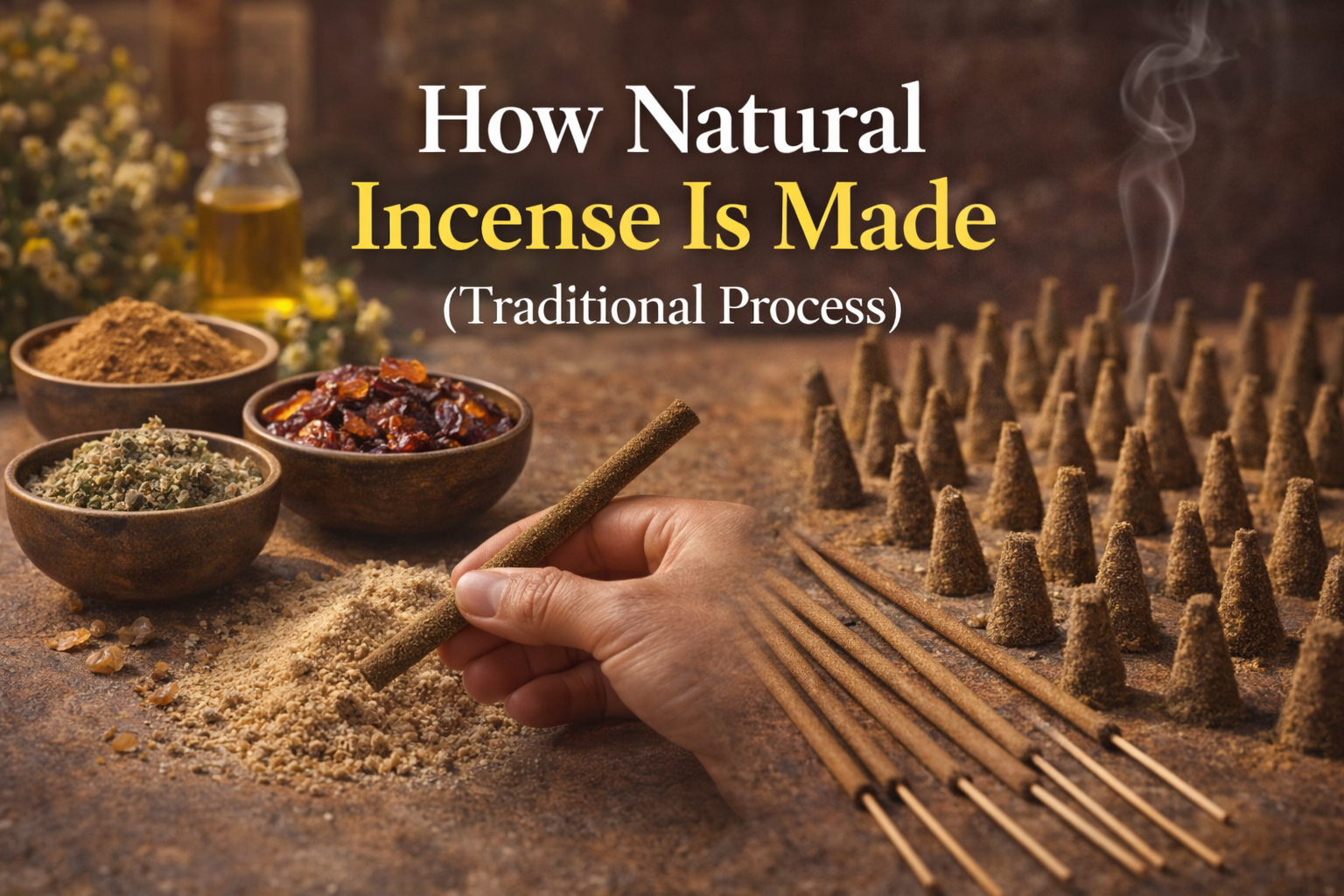
Natural incense typically includes:
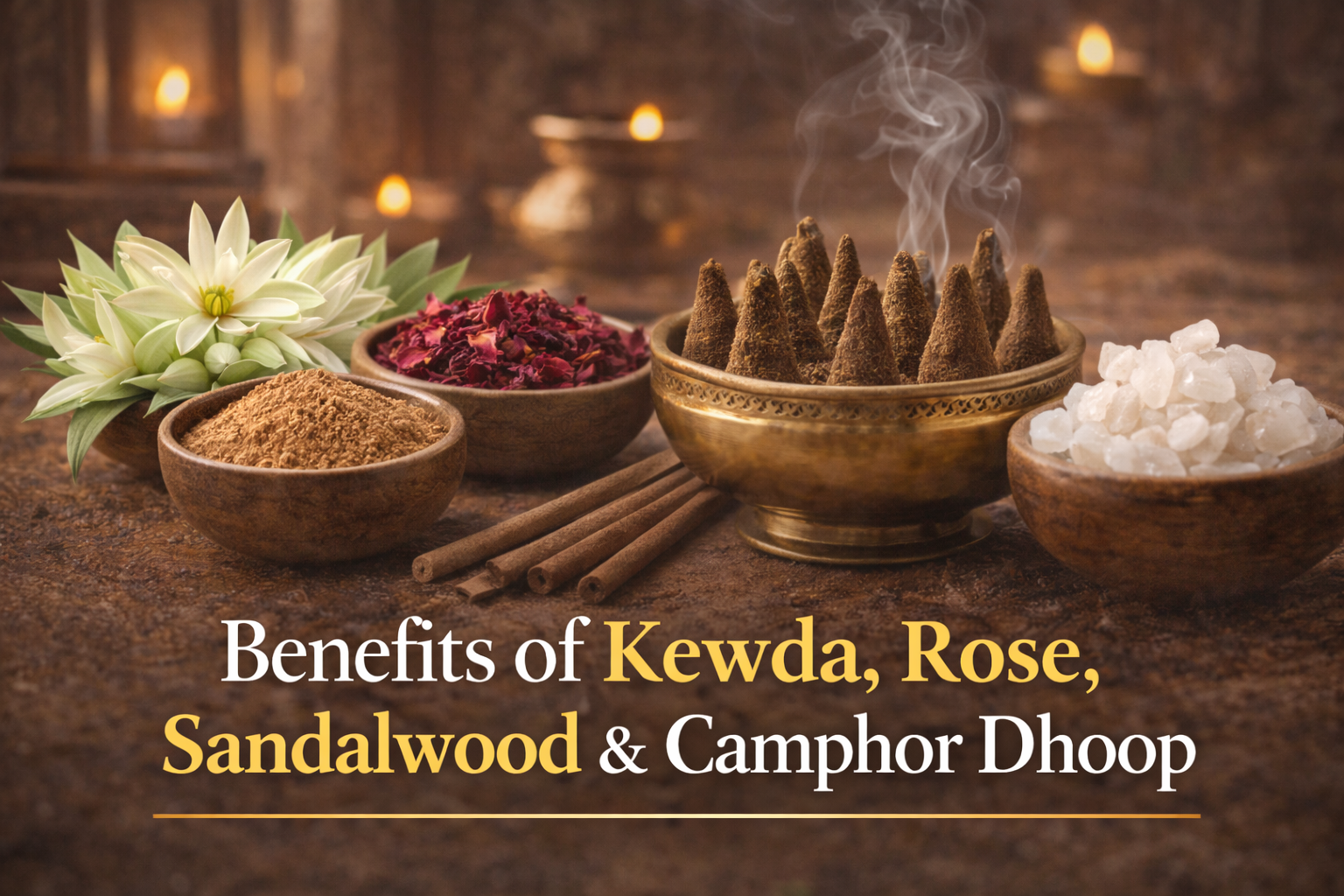
- Wood powders (sandalwood, bark, or natural sawdust)
- Herbs and dried flowers
- Natural resins like guggal or loban
- Essential oils for fragrance
- Plant-based binders such as joss powder or natural gums
These ingredients are chosen not just for fragrance but also for slow, steady burning.
Step-by-Step Traditional Incense Making Process
1. Preparing the Base Powder
Natural wood powder or herb powder is cleaned and ground finely. This powder forms the main body of incense.
The choice of wood or herb influences:
- Burning speed
- Aroma depth
- Smoke quality
2. Mixing Natural Fragrance Ingredients
Resins, dried flowers, or herbal powders are blended with the base powder. Essential oils may also be added in small quantities.
This stage determines the final fragrance profile.
3. Adding Natural Binder
A plant-based binder (often from tree bark or natural gum) is mixed with water to form a paste. This binder helps hold the incense together without using chemicals.
4. Rolling or Shaping
Depending on the type:
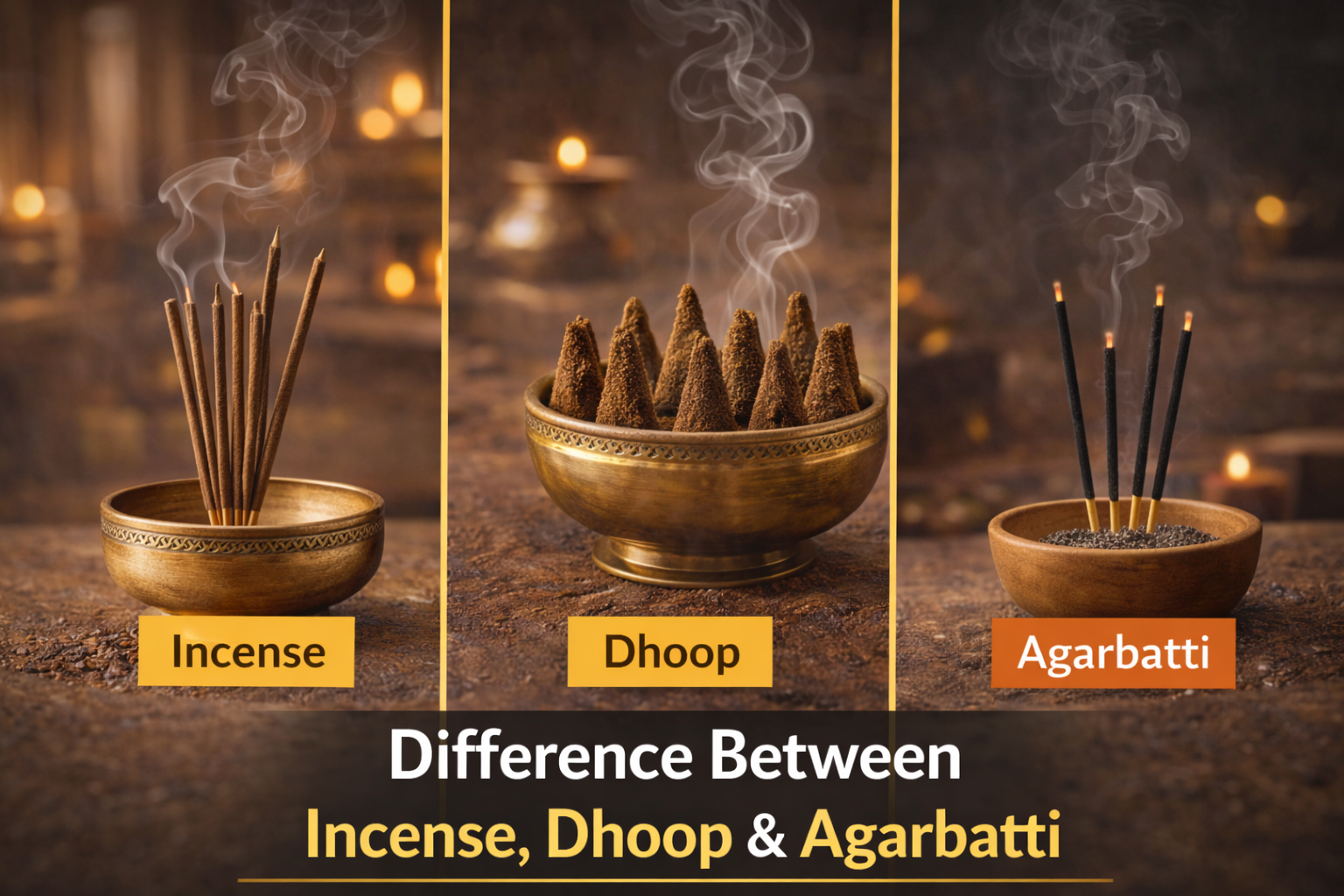
- Agarbatti: Paste is rolled onto thin bamboo sticks
- Dhoop sticks: Paste is shaped into thick sticks without bamboo
- Dhoop cones: Paste is molded into cone shapes
This step is often done by hand in traditional methods.
5. Drying Naturally
The shaped incense is left to dry in shade or sunlight for several hours or days.
Proper drying:
- Prevents cracking
- Ensures even burning
- Preserves fragrance
6. Final Fragrance Coating (Optional)
Some traditional incense receives a final light coating of natural oils or aromatic extracts after drying. This enhances aroma while maintaining natural quality.
Why Traditional Incense Smells Different
Natural incense typically:
- Has softer fragrance
- Burns slower
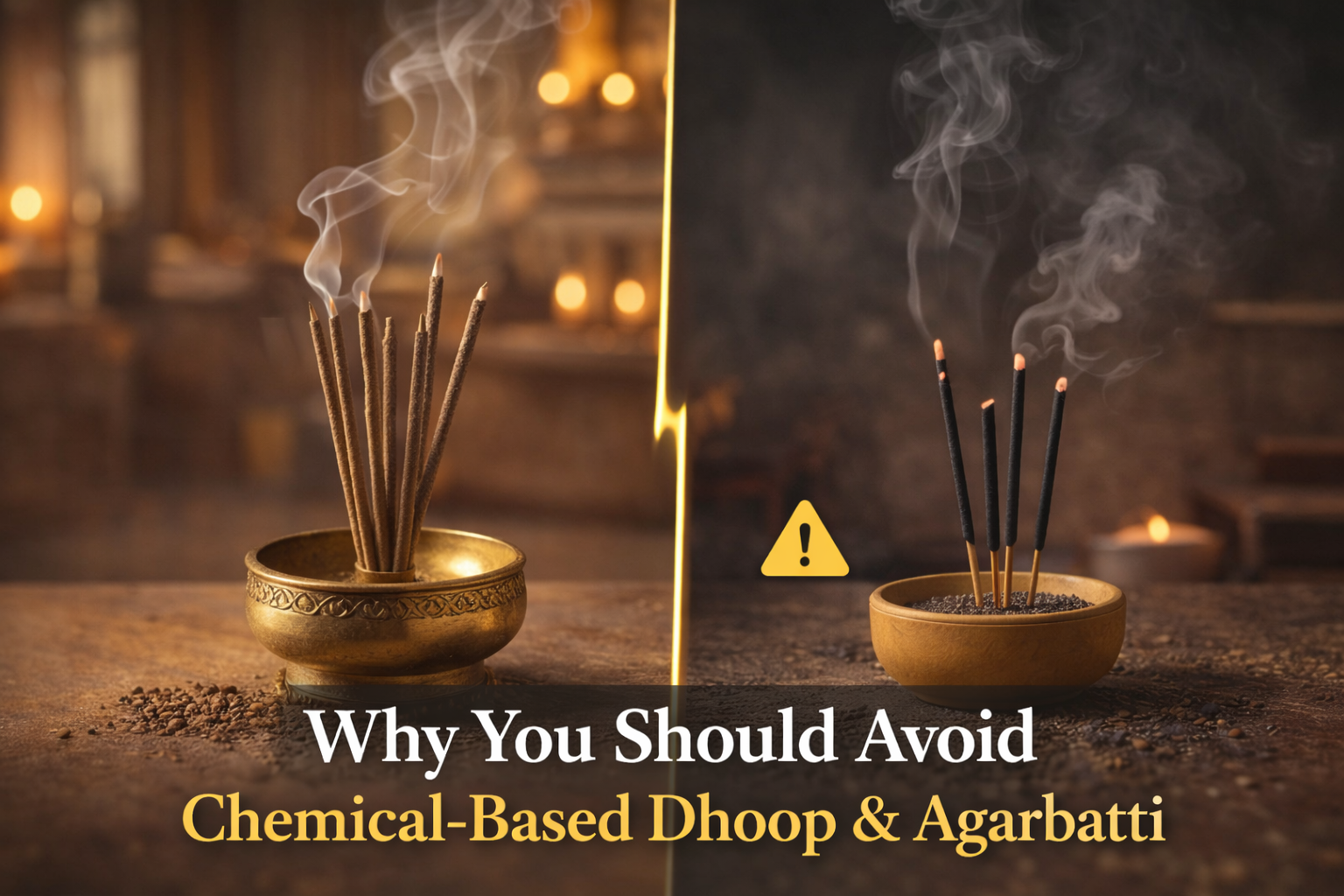
- Produces less harsh smoke
- Shows slight variation in colour or shape
These differences occur because natural materials are less uniform than synthetic factory-made products.
Benefits of Traditional Natural Incense
- Made from plant-based ingredients
- Closer to traditional spiritual practices
- Usually produces milder smoke
- Supports artisan craftsmanship
It reflects a more mindful and eco-conscious approach.
Buying Tips
- Check ingredient transparency
- Prefer handmade or traditionally prepared incense
- Avoid overly bright colours or strong artificial smell
- Choose trusted natural-product sellers
Quality incense should smell natural even before lighting.
Conclusion
Natural incense making is a thoughtful process that combines simple ingredients with careful preparation. From grinding wood powders to hand-rolling sticks and sun-drying them, each step contributes to the final aroma and quality.
Choosing traditionally made incense is not just about fragrance — it is about preserving a cultural craft rooted in nature.
When fragrance comes from nature, it carries tradition with it.
------------------------------------------
परिचय
धूप और अगरबत्ती भारतीय संस्कृति का महत्वपूर्ण हिस्सा हैं। पहले इन्हें प्राकृतिक जड़ी-बूटियों और लकड़ी से पारंपरिक तरीकों से बनाया जाता था।
आज भी कई जगह यह पारंपरिक प्रक्रिया अपनाई जाती है।
प्राकृतिक सामग्री
प्राकृतिक धूप/अगरबत्ती में आमतौर पर:
- लकड़ी का पाउडर
- जड़ी-बूटियाँ
- रेज़िन (लोबान, गुग्गल)
- प्राकृतिक तेल
- पौधों से बने बाइंडर
शामिल होते हैं।
बनाने की प्रक्रिया
1. बेस पाउडर तैयार करना
लकड़ी या जड़ी-बूटियों को पीसकर पाउडर बनाया जाता है।
2. खुशबू मिलाना
रेज़िन, फूल या तेल मिलाए जाते हैं।
3. बाइंडर डालना
प्राकृतिक गोंद या छाल से बना बाइंडर मिलाया जाता है।
4. आकार देना
- अगरबत्ती → बांस की लकड़ी पर रोल
- धूप → मोटी स्टिक या कोन
5. सुखाना
धूप या छाया में सुखाया जाता है।
प्राकृतिक धूप अलग क्यों होती है?
- खुशबू हल्की और प्राकृतिक
- धुआँ कम तीखा
- रंग और आकार थोड़े अलग हो सकते हैं
खरीदते समय ध्यान रखें
- सामग्री सूची देखें
- बहुत तेज़ खुशबू से बचें
- भरोसेमंद स्रोत से लें
निष्कर्ष
प्राकृतिक धूप बनाने की प्रक्रिया सरल लेकिन सावधानीपूर्ण होती है। यह परंपरा और प्रकृति दोनों को जोड़ती है।