
Introduction
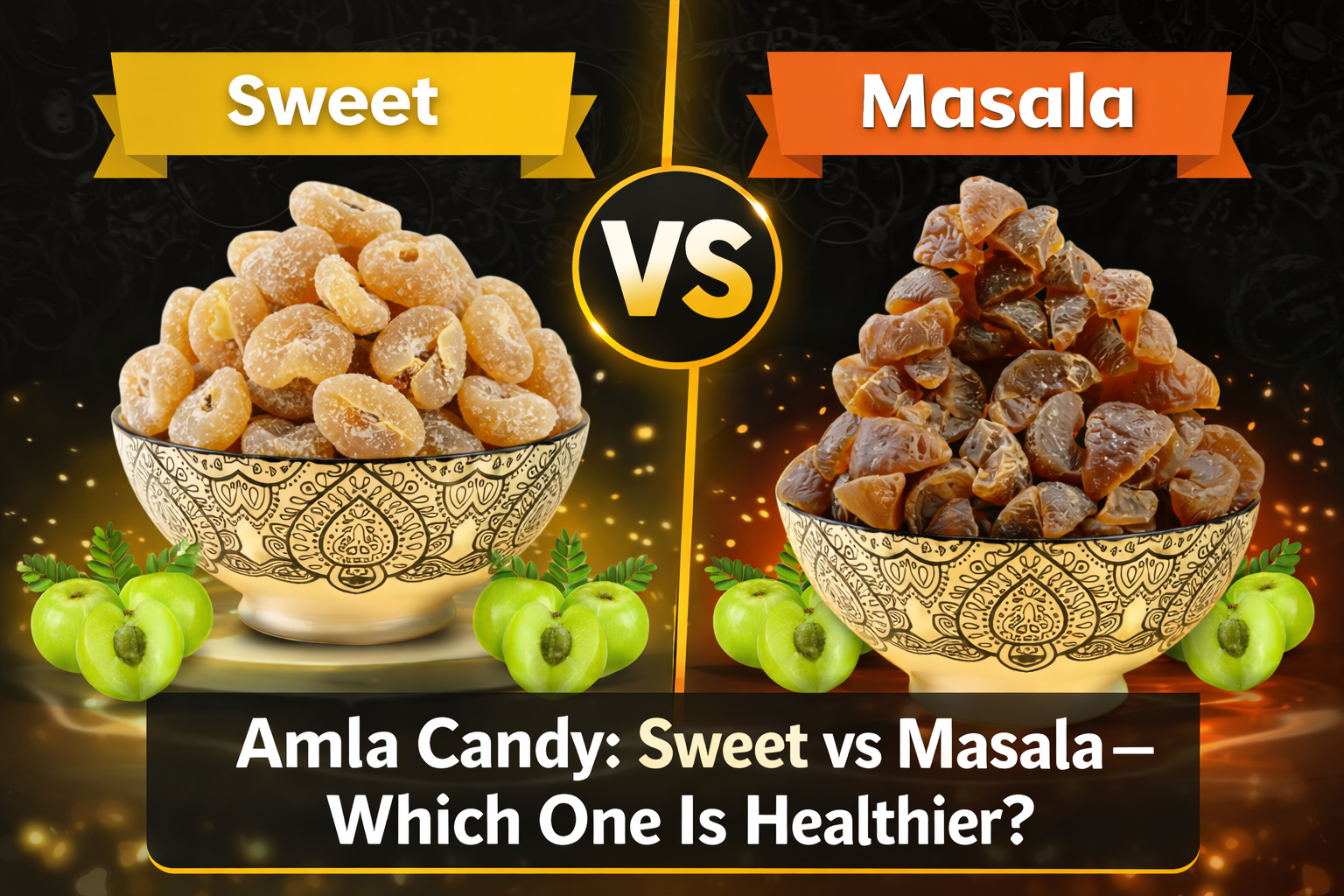
Amla candy has become a popular way to include amla in daily diets. It is easy to carry, easy to eat, and offers the goodness of Indian gooseberry in a convenient form. When buying amla candy, people usually find two main varieties: sweet amla candy and masala amla candy.
Both look similar and are made from the same fruit, yet their taste, ingredients, and usage differ. This often leads to confusion about which one is healthier and more suitable for daily consumption. This blog explains the difference clearly, so you can make the right choice based on your needs.
What Is Sweet Amla Candy?
Sweet amla candy is prepared by processing amla pieces with natural sweeteners. The sweetness helps balance the sour taste of amla, making it appealing to children and people who prefer mild flavours.
Key features:
- Mild and pleasant taste
- Easier to consume daily
- Suitable for all age groups
- Less spicy or pungent
Sweet amla candy is usually chosen as a healthy snack alternative to processed sweets.
What Is Masala Amla Candy?
Masala amla candy is prepared by coating amla pieces with a blend of traditional Indian spices. These spices add tanginess and mild heat, making it popular as an after-meal digestive.
Key features:
- Tangy and spicy flavour
- Often consumed after meals
- Preferred by adults
- Slightly stronger taste
Masala amla candy is commonly used to support digestion after heavy meals.
Sweet vs Masala Amla Candy: A Comparison
| Feature Sweet Amla Candy Masala Amla Candy | ||
| Taste | Mild and sweet | Tangy and spicy |
| Best For | Children, daily use | Adults, post-meal |
| Digestive Effect | Gentle | Stronger |
| Sugar Content | Slightly higher | Lower |
| Spice Content | None | Present |
Nutritional Value: What Stays the Same?
Regardless of flavour, both types of amla candy retain key nutrients when prepared properly:
- Vitamin C
- Antioxidants
- Fibre
- Natural plant compounds
The core nutritional benefit comes from amla itself. The difference lies mainly in added ingredients, not the fruit.
Which One Is Healthier?
The answer depends on how and when you consume it.
Sweet Amla Candy Is Better If:
- You want a mild daily snack
- Children are consuming it
- You prefer less spice
- You use it as a sweet craving substitute
Masala Amla Candy Is Better If:
- You consume it after meals
- You want digestive support
- You enjoy tangy flavours
- You eat heavy or oily food often
From a health perspective, neither is unhealthy when consumed in moderation.
Things to Watch Out For While Buying
Regardless of type, always check:
- Artificial colours
- Excessive sugar
- Preservatives
- Very bright or unnatural appearance
Good-quality amla candy should:
- Look natural
- Taste balanced
- Have a clean ingredient list
How Much Amla Candy Should You Eat?
- 1–2 pieces per day are sufficient
- Avoid overconsumption
- People with sensitive digestion should start slow
Balance is more important than quantity.
Buying and Storage Tips
- Buy from trusted natural food brands
- Store in airtight containers
- Keep away from moisture
- Avoid exposure to heat
Proper storage helps retain taste and freshness.
Conclusion
Sweet and masala amla candy both offer the benefits of amla in different ways. Sweet amla candy is better for daily, gentle consumption, while masala amla candy works well as a digestive after meals.
The healthier choice is the one that fits your lifestyle and eating habits — consumed in moderation.
Healthier choices are not about extremes, but about balance.
------------------------------------------
परिचय
आंवला कैंडी आंवले को रोज़ाना खाने का आसान तरीका बन चुकी है। बाज़ार में आमतौर पर दो तरह की आंवला कैंडी मिलती है — स्वीट आंवला कैंडी और मसाला आंवला कैंडी।
अक्सर लोग यह सोचते हैं कि इनमें से कौन-सी ज़्यादा सेहतमंद है। इसका जवाब समझने के लिए दोनों के फर्क को जानना ज़रूरी है।
स्वीट आंवला कैंडी क्या होती है?
स्वीट आंवला कैंडी आंवले के टुकड़ों को प्राकृतिक मिठास के साथ तैयार करके बनाई जाती है।
इसकी खासियतें:
- स्वाद हल्का और मीठा
- बच्चों के लिए उपयुक्त
- रोज़ाना खाने में आसान
- कम तीखापन
मसाला आंवला कैंडी क्या होती है?
मसाला आंवला कैंडी में आंवले के टुकड़ों पर मसालों की परत होती है।
इसकी खासियतें:
- खट्टा-तीखा स्वाद
- खाने के बाद लेना पसंद किया जाता है
- पाचन में मददगार
- बड़ों को ज़्यादा पसंद
दोनों में अंतर
| बिंदु स्वीट मसाला | ||
| स्वाद | मीठा | खट्टा-तीखा |
| उपयोग | रोज़ाना | भोजन के बाद |
| पाचन प्रभाव | हल्का | ज़्यादा |
| मसाले | नहीं | होते हैं |
पोषण के लिहाज़ से
दोनों में आंवले के मुख्य पोषक तत्व मौजूद रहते हैं। फर्क सिर्फ़ अतिरिक्त सामग्री का होता है।
कौन-सी बेहतर है?
- रोज़ाना और बच्चों के लिए → स्वीट आंवला कैंडी
- भोजन के बाद और पाचन के लिए → मसाला आंवला कैंडी
दोनों सीमित मात्रा में सुरक्षित हैं।
खरीदते समय ध्यान रखें
- बहुत चमकीली कैंडी न लें
- ज़्यादा चीनी या केमिकल से बचें
- सामग्री सूची ज़रूर देखें
सेवन कितना करें?
- दिन में 1–2 टुकड़े काफ़ी हैं
- ज़्यादा खाना सही नहीं
निष्कर्ष
स्वीट और मसाला आंवला कैंडी दोनों के अपने फायदे हैं। सही विकल्प वही है जो आपकी ज़रूरत और खाने की आदत के अनुसार हो।