
Introduction
Sesame oil, known as til ka tel, has been used in Indian cooking and Ayurveda for centuries. It is especially common in South Indian and traditional winter diets. While many modern kitchens rely on refined oils, sesame oil remains valued for its natural nutrients, strong flavour, and traditional health benefits.
This blog explains why sesame oil has been trusted for generations, how it supports daily cooking, and how to use it wisely as part of a balanced diet.
What Is Sesame Oil?
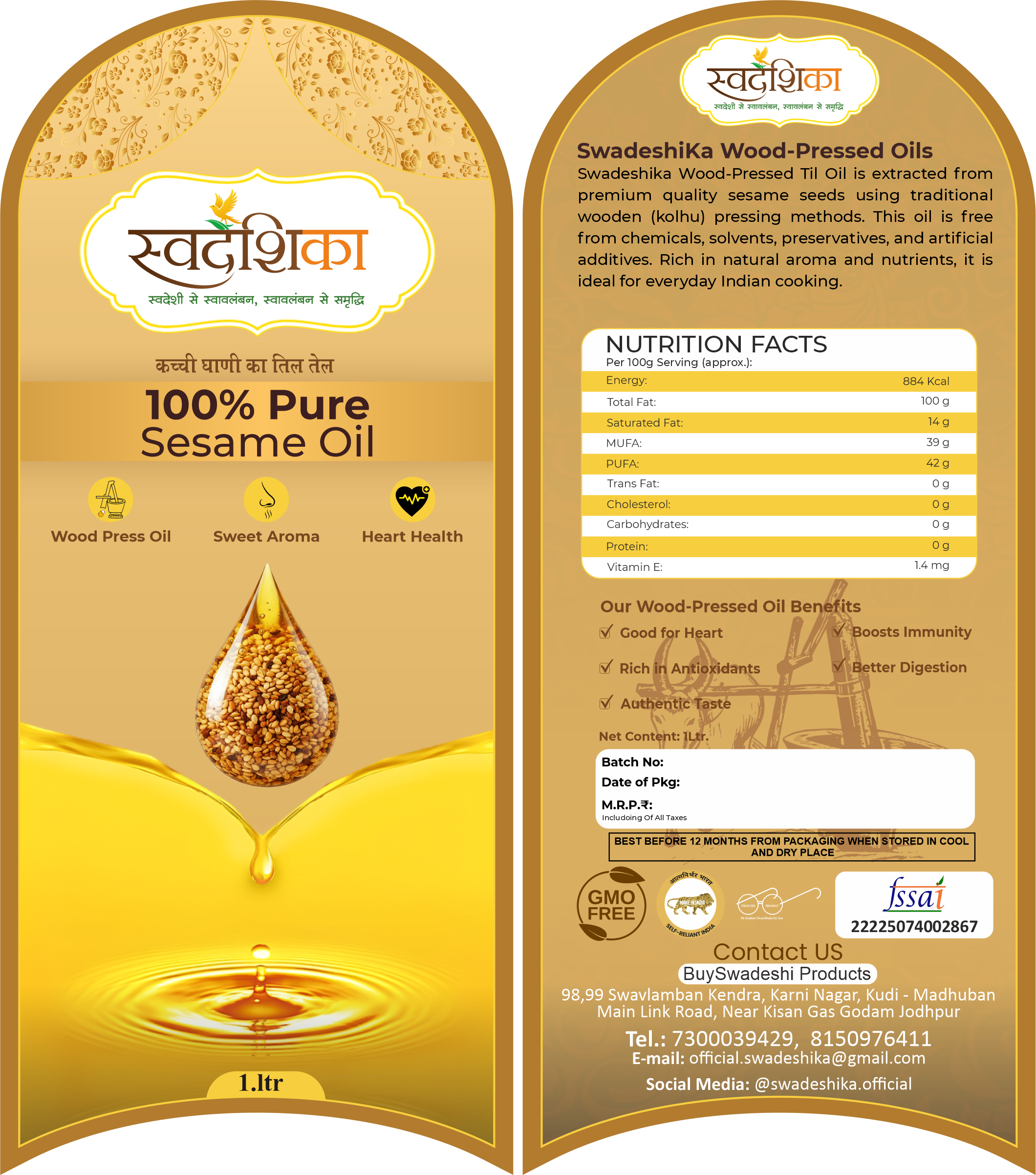
Sesame oil is extracted from sesame seeds (til). Traditionally, it is prepared using cold-pressed or Kachi Ghani methods, which help retain its natural nutrients and aroma.
Key characteristics:
- Golden to dark brown colour
- Strong nutty aroma
- Rich in natural fats
- Stable for cooking
Because sesame seeds naturally contain protective antioxidants, sesame oil has good shelf stability when stored properly.
Nutritional Value of Sesame Oil
Sesame oil contains:
- Healthy unsaturated fats
- Natural antioxidants like sesamol and sesamin
- Vitamin E
- Trace minerals
These nutrients support general wellness when consumed in moderation as part of daily meals.
Ayurvedic Importance of Sesame Oil
In Ayurveda, sesame oil is considered one of the most beneficial oils.
Traditionally, it is believed to:
- Provide warmth to the body
- Support digestion
- Nourish tissues
- Balance vata dosha
- Support joint and muscle health
This is why sesame oil is often recommended during colder seasons.
Health Benefits of Sesame Oil in Cooking
1. Supports Heart Health
Sesame oil contains unsaturated fats that help maintain balanced cholesterol levels when used instead of unhealthy fats.
2. Rich in Antioxidants
Natural compounds in sesame oil help protect the body from oxidative stress.
3. Good for Digestion
Traditional use suggests sesame oil is easier to digest than heavily refined oils.
4. Stable for Cooking
Sesame oil remains stable at moderate cooking temperatures, making it suitable for Indian cooking methods.
Taste and Cooking Advantages
Sesame oil:
- Adds a rich, nutty flavour
- Enhances traditional recipes
- Works well in tadka, stir-fry, and chutneys
- Pairs especially well with lentils and vegetables
Because of its strong flavour, small quantities are usually enough.
How to Use Sesame Oil Daily
- Use for tadka in dal or sabzi
- Add to chutneys or pickles
- Use in stir-fried dishes
- Mix small amounts in salads
Start with limited quantities if you are not used to its strong flavour.
Sesame Oil vs Refined Oils
| Feature Sesame Oil (Cold-Pressed) Refined Oil | ||
| Processing | Minimal | Heavy |
| Nutrients | Preserved | Reduced |
| Aroma | Natural | Neutral |
| Digestibility | Easier | May feel heavy |
Buying and Storage Tips
- Prefer cold-pressed sesame oil
- Check for natural aroma and colour
- Store in airtight containers
- Keep away from sunlight and moisture
Fresh oil offers the best flavour and nutrition.
Conclusion
Sesame oil is more than just a cooking medium — it is a traditional ingredient valued for its nutrition, flavour, and Ayurvedic significance. When used in moderation, it supports a balanced and wholesome diet.
Including sesame oil in everyday cooking is a simple way to reconnect with traditional food wisdom.
Sometimes, the oldest kitchen ingredients remain the most dependable.
------------------------------------------
परिचय
तिल का तेल भारतीय रसोई में सदियों से उपयोग किया जाता रहा है। खासकर दक्षिण भारत और पारंपरिक सर्दियों के भोजन में इसका महत्व अधिक है।
आज भले ही रिफाइंड तेलों का उपयोग बढ़ गया हो, लेकिन तिल का तेल अभी भी अपने स्वाद और गुणों के लिए पसंद किया जाता है।
तिल का तेल क्या होता है?
तिल का तेल तिल के बीजों से निकाला जाता है। पारंपरिक रूप से इसे कच्ची घानी या कोल्ड-प्रेस विधि से बनाया जाता है।
इसकी पहचान:
- सुनहरा या गहरा रंग
- हल्की नट जैसी खुशबू
- प्राकृतिक वसा से भरपूर
तिल तेल के पोषक तत्व
तिल तेल में:
- अच्छे फैट
- एंटीऑक्सिडेंट
- विटामिन E
पाए जाते हैं।
आयुर्वेद में तिल तेल
आयुर्वेद में तिल तेल को:
- शरीर को गर्म रखने वाला
- पाचन में सहायक
- वात दोष संतुलित करने वाला
माना गया है।
तिल तेल के फायदे
- दिल के लिए अच्छा
- एंटीऑक्सिडेंट से भरपूर
- पाचन में मदद
- खाना पकाने के लिए उपयुक्त
उपयोग कैसे करें?
- दाल और सब्ज़ी में तड़का
- चटनी और अचार में
- हल्की फ्राई में
कम मात्रा में ही पर्याप्त होता है।
तिल तेल बनाम रिफाइंड तेल
| बिंदु तिल तेल रिफाइंड तेल | ||
| प्रोसेसिंग | कम | ज़्यादा |
| खुशबू | प्राकृतिक | नहीं |
| पोषण | सुरक्षित | कम |
खरीदने और रखने के सुझाव
- कोल्ड-प्रेस तिल तेल लें
- एयरटाइट डिब्बे में रखें
- धूप से दूर रखें
निष्कर्ष
तिल का तेल स्वाद और पोषण दोनों के लिए उपयोगी है। रोज़मर्रा की रसोई में इसे शामिल करना एक अच्छा पारंपरिक विकल्प है।