
Introduction
Salt is one of the most basic ingredients in every Indian kitchen. It is used in almost every meal, every day. While salt may seem simple, the type of salt you use matters more than most people realise.
Over the years, Himalayan pink salt has become popular as a natural alternative to refined white salt. But is it really different? And if yes, how does that difference affect health, taste, and daily cooking?
This blog explains what Himalayan pink salt is, how it differs from regular salt, and why many households are switching to it.
What Is Himalayan Pink Salt?
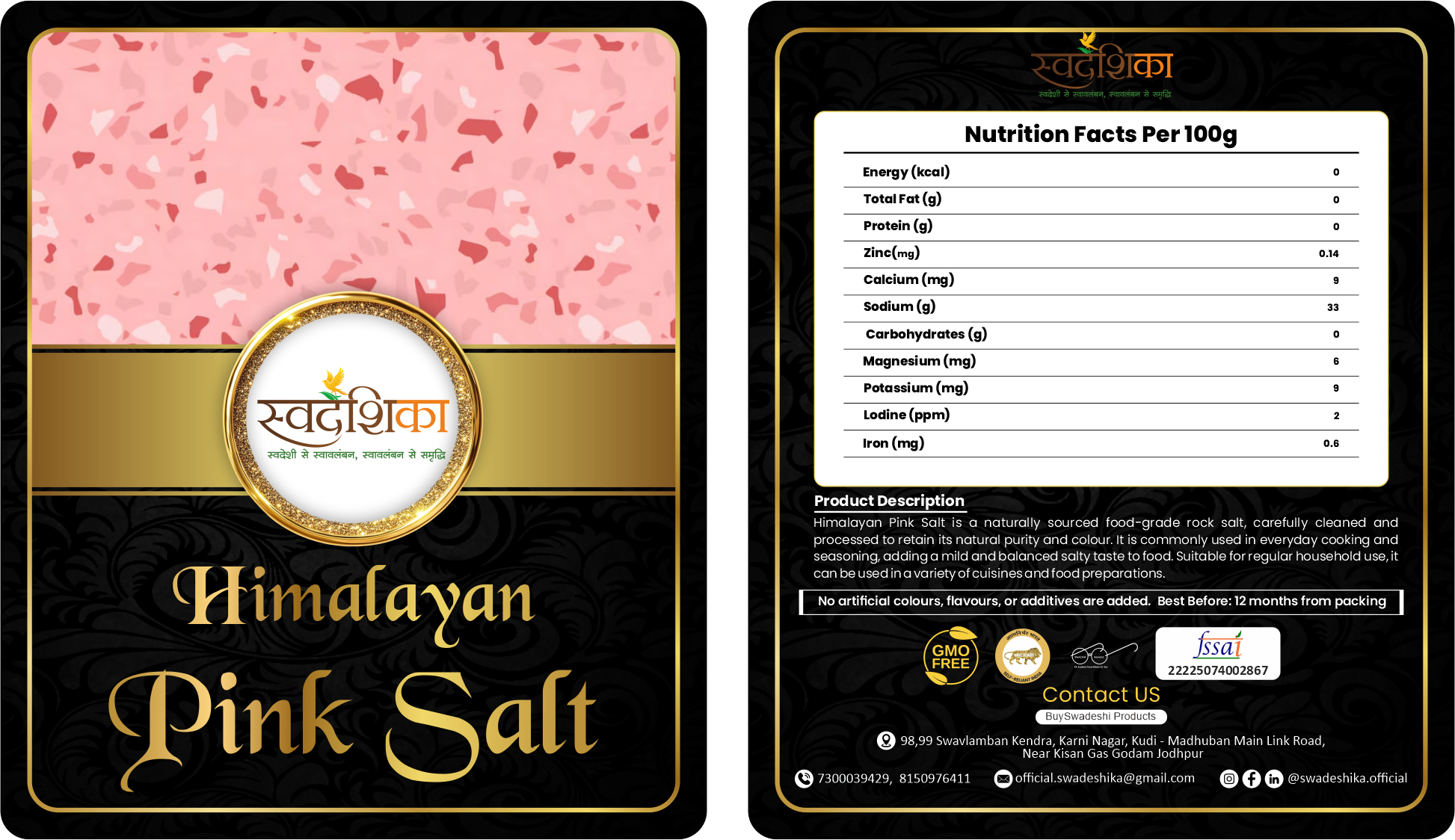
Himalayan pink salt is a natural rock salt mined from the Khewra Salt Mine region, located near the Himalayan range. It is believed to be millions of years old and is extracted using traditional mining methods.
Key characteristics:
- Naturally pink in colour
- Minimally processed
- Free from bleaching and refining
- Contains trace minerals
Unlike refined salt, Himalayan pink salt does not go through heavy chemical processing.
How Refined White Salt Is Made
Most regular table salt is highly refined. During processing:
- Natural minerals are removed
- Salt is bleached to look white
- Anti-caking agents are added to prevent clumping
This makes the salt look clean and uniform, but strips it of its natural mineral content.
Himalayan Pink Salt vs Refined Salt
| Feature Himalayan Pink Salt Refined White Salt | ||
| Processing | Minimal | Highly processed |
| Colour | Natural pink | Bright white |
| Minerals | Contains trace minerals | Mostly sodium chloride |
| Additives | None | Anti-caking agents |
| Taste | Mild and balanced | Sharp and salty |
Key Benefits of Himalayan Pink Salt
1. Less Processed, More Natural
Himalayan pink salt is closer to its natural form. Since it is not bleached or heavily refined, it retains trace minerals like potassium, magnesium, and calcium.
While these minerals are present in small amounts, they contribute to overall balance in daily diets.
2. Balanced Taste
Many people find Himalayan pink salt less harsh and more balanced than refined salt. This helps enhance food flavour without overpowering other ingredients.
As a result, you may naturally end up using slightly less salt.
3. Supports Better Digestion
Traditional Indian diets used rock salt (sendha namak) instead of refined salt. Ayurveda considers rock salt easier to digest and gentler on the stomach when used in moderation.
4. No Chemical Additives
Himalayan pink salt does not contain bleaching agents or anti-caking chemicals commonly found in refined salt.
This makes it suitable for people looking to reduce daily chemical intake from food.
5. Suitable for Fasting and Traditional Cooking
In many Indian households, sendha namak is used during fasting because it is considered pure and natural. It is also widely used in traditional recipes.
What Science Says About Pink Salt
Nutrition experts agree that both pink salt and white salt should be consumed in moderation, as excess sodium intake can lead to health issues.
However, studies highlight that minimally processed salts are preferable because they avoid unnecessary additives. The benefit of pink salt lies more in its purity and processing method than in mineral quantity alone.
How to Use Himalayan Pink Salt in Daily Cooking
- Use it just like regular salt
- Ideal for dals, sabzis, soups, and salads
- Works well in lemon water and buttermilk
- Can be used for seasoning fruits and snacks
Because of its balanced taste, start with a slightly smaller quantity.
Buying and Storage Tips
- Choose coarse or finely ground based on preference
- Avoid very bright or artificially coloured salt
- Store in airtight containers to prevent moisture
- Keep away from water sources
Conclusion
Himalayan pink salt is not a miracle ingredient, but it is a cleaner and more natural alternative to refined salt. Its minimal processing, absence of chemical additives, and balanced taste make it a better choice for everyday cooking.
Switching to Himalayan pink salt is a small change, but it aligns well with a more natural and mindful approach to food.
Sometimes, improving health starts with the simplest ingredient on your plate.
------------------------------------------
परिचय
नमक हर भारतीय रसोई का सबसे ज़रूरी हिस्सा है। रोज़ाना हर खाने में इसका इस्तेमाल होता है। लेकिन ज़्यादातर लोग यह नहीं सोचते कि नमक का प्रकार भी सेहत पर असर डालता है।
आजकल हिमालयन पिंक नमक एक प्राकृतिक विकल्प के रूप में काफ़ी लोकप्रिय हो गया है। लेकिन यह साधारण नमक से अलग कैसे है — यही हम इस ब्लॉग में समझेंगे।
हिमालयन पिंक नमक क्या होता है?
हिमालयन पिंक नमक एक प्राकृतिक सेंधा नमक है, जो हिमालय क्षेत्र के पास स्थित खदानों से निकाला जाता है।
इसकी खास बातें:
- प्राकृतिक गुलाबी रंग
- बहुत कम प्रोसेसिंग
- बिना ब्लीचिंग
- बिना केमिकल
यह नमक प्राकृतिक रूप में ही इस्तेमाल के लिए तैयार किया जाता है।
साधारण सफेद नमक कैसे बनता है?
साधारण टेबल सॉल्ट को फैक्ट्री में:
- ज़्यादा प्रोसेस किया जाता है
- मिनरल्स निकाल दिए जाते हैं
- सफेद दिखाने के लिए ब्लीच किया जाता है
- जमने से रोकने के लिए केमिकल मिलाए जाते हैं
इससे नमक दिखने में अच्छा लगता है, लेकिन उसकी प्राकृतिक गुणवत्ता कम हो जाती है।
हिमालयन पिंक नमक बनाम सफेद नमक
| बिंदु हिमालयन पिंक नमक सफेद नमक | ||
| प्रोसेसिंग | कम | ज़्यादा |
| रंग | प्राकृतिक गुलाबी | सफेद |
| केमिकल | नहीं | होते हैं |
| स्वाद | हल्का और संतुलित | तेज़ |
हिमालयन पिंक नमक के फायदे
1. प्राकृतिक और कम प्रोसेस्ड
इसमें प्राकृतिक मिनरल्स मौजूद रहते हैं और कोई केमिकल नहीं मिलाया जाता।
2. स्वाद संतुलित होता है
यह नमक खाने के स्वाद को बढ़ाता है, लेकिन ज़्यादा नमकीन नहीं लगता।
3. पाचन के लिए बेहतर
आयुर्वेद में सेंधा नमक को पचाने में आसान माना जाता है।
4. केमिकल फ्री
इसमें ब्लीचिंग या एंटी-केकिंग एजेंट नहीं होते।
5. उपवास और पारंपरिक उपयोग
व्रत में और पारंपरिक पकवानों में इसका इस्तेमाल किया जाता है।
इस्तेमाल कैसे करें?
- रोज़ाना के खाने में
- सलाद और फलों पर
- नींबू पानी और छाछ में
- सूप और सब्ज़ियों में
शुरुआत में थोड़ी कम मात्रा डालें।
खरीदने और रखने के सुझाव
- बहुत चमकीला नमक न लें
- एयरटाइट डिब्बे में रखें
- नमी से दूर रखें
निष्कर्ष
हिमालयन पिंक नमक कोई जादुई चीज़ नहीं है, लेकिन यह साधारण नमक की तुलना में ज़्यादा प्राकृतिक और सुरक्षित विकल्प है।
रोज़मर्रा की रसोई में यह एक छोटा लेकिन समझदारी भरा बदलाव है।