
Introduction
Millets like bajra, jowar, and ragi have been part of Indian diets for centuries. Today, millet flour is again becoming popular as people look for healthier alternatives to refined flour (maida). However, many households are unsure how to use millet flour regularly, especially in simple daily snacks.
The good news is that millet flour is versatile and can be easily included in homemade recipes without complicated preparation. This blog shares practical ways to use millet flour in everyday snacks while keeping taste and nutrition balanced.
Why Choose Millet Flour?
Millet flour offers several advantages:
- Naturally high in fibre
- Provides steady energy
- Contains minerals like iron and calcium
- Traditionally suited to Indian cooking
Because millet flour is denser than wheat flour, it is often best used alone in simple recipes or mixed with wheat flour.
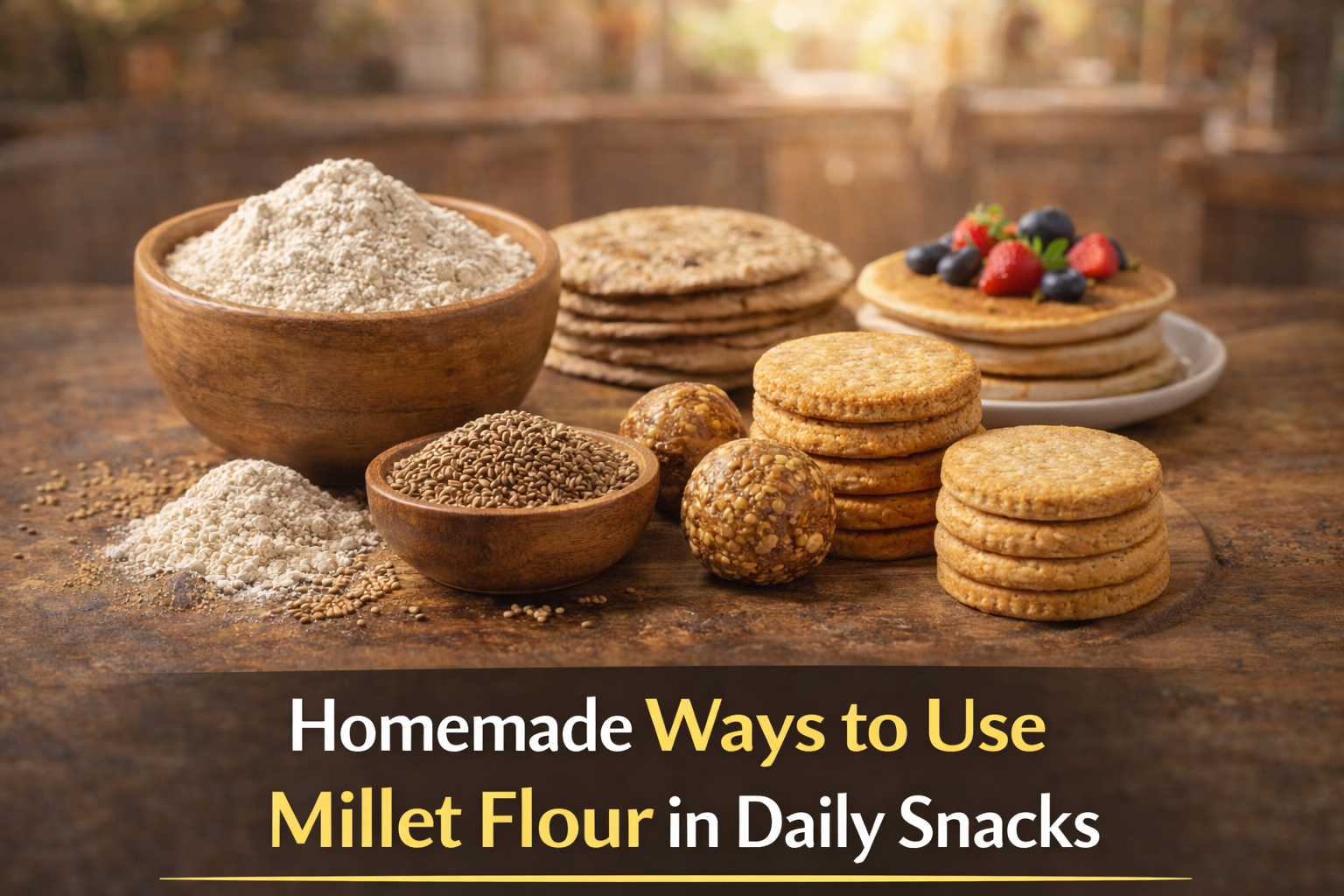
Easy Homemade Snacks Using Millet Flour
1. Millet Roti or Bhakri
One of the simplest uses of millet flour is making roti or bhakri.
How to use:
- Knead millet flour with warm water
- Roll gently or pat by hand
- Cook on a hot tawa
You can mix millet flour with wheat flour initially for easier handling.
2. Millet Cheela or Pancakes
Millet flour works well for savoury pancakes.
How to use:
- Mix millet flour with water or buttermilk
- Add chopped vegetables, salt, and spices
- Cook like a dosa or cheela
This makes a quick breakfast or evening snack.
3. Millet Biscuits at Home
Homemade millet biscuits can replace packaged snacks.
How to use:
- Mix millet flour with a little wheat flour
- Add jaggery powder or natural sweetener
- Shape small biscuits and bake
These can be stored for several days.
4. Millet Laddoos
Millet flour can be roasted and used for laddoos.
How to use:
- Roast millet flour lightly
- Mix with ghee and jaggery
- Shape into small balls
This is a traditional energy snack, especially in winter.
5. Millet Upma or Porridge
Millet flour can also be used in soft preparations.
How to use:
- Roast lightly
- Cook with water or milk
- Add vegetables or jaggery depending on taste
This works well for children or elderly family members.
Tips for Cooking with Millet Flour
- Start by mixing with wheat flour if new to millets
- Use warm water to knead dough
- Roast lightly to enhance flavour
- Consume fresh for best taste
- Store flour in airtight containers
Because millet flour has natural oils, it stays fresh longer when kept cool and dry.
Common Mistakes to Avoid
- Using too much millet flour at once without adjusting texture
- Not roasting when needed, which may affect flavour
- Buying old flour (fresh flour tastes better)
Small adjustments make a big difference.
Conclusion
Millet flour is not difficult to use — it simply requires small changes in cooking habits. From roti and cheela to laddoos and biscuits, there are many easy ways to include millet flour in daily snacks.
Gradually replacing refined flour with millet flour can help make everyday eating more traditional and balanced.
Healthy habits often begin in the home kitchen.
------------------------------------------
परिचय
बाजरा, ज्वार और रागी जैसे मिलेट लंबे समय से भारतीय भोजन का हिस्सा रहे हैं। आज लोग मैदा की जगह मिलेट आटा इस्तेमाल करना चाहते हैं, लेकिन कई बार समझ नहीं आता कि इसे रोज़ाना कैसे उपयोग करें।
मिलेट आटा क्यों चुनें?
- फाइबर से भरपूर
- ऊर्जा धीरे देता है
- आयरन और कैल्शियम देता है
- पारंपरिक और प्राकृतिक
रोज़ाना स्नैक्स में उपयोग
1. मिलेट रोटी / भाकरी
गर्म पानी से आटा गूंधें और तवे पर सेंकें।
शुरुआत में गेहूं के आटे के साथ मिलाकर बना सकते हैं।
2. मिलेट चीला
आटा, पानी, सब्ज़ी और मसाले मिलाकर तवे पर पकाएँ।
3. मिलेट बिस्कुट
मिलेट आटा, थोड़ा गेहूं आटा, गुड़ मिलाकर बेक करें।
4. मिलेट लड्डू
आटा भूनकर घी और गुड़ से लड्डू बनाएं।
5. मिलेट दलिया
भूनकर पानी या दूध में पकाएँ।
उपयोग के सुझाव
- शुरुआत कम मात्रा से करें
- एयरटाइट डिब्बे में रखें
- ताज़ा आटा लें
निष्कर्ष
मिलेट आटा रोज़मर्रा के स्नैक्स में आसानी से शामिल किया जा सकता है। छोटे बदलाव से भोजन अधिक संतुलित और पारंपरिक बन सकता है।