
Introduction
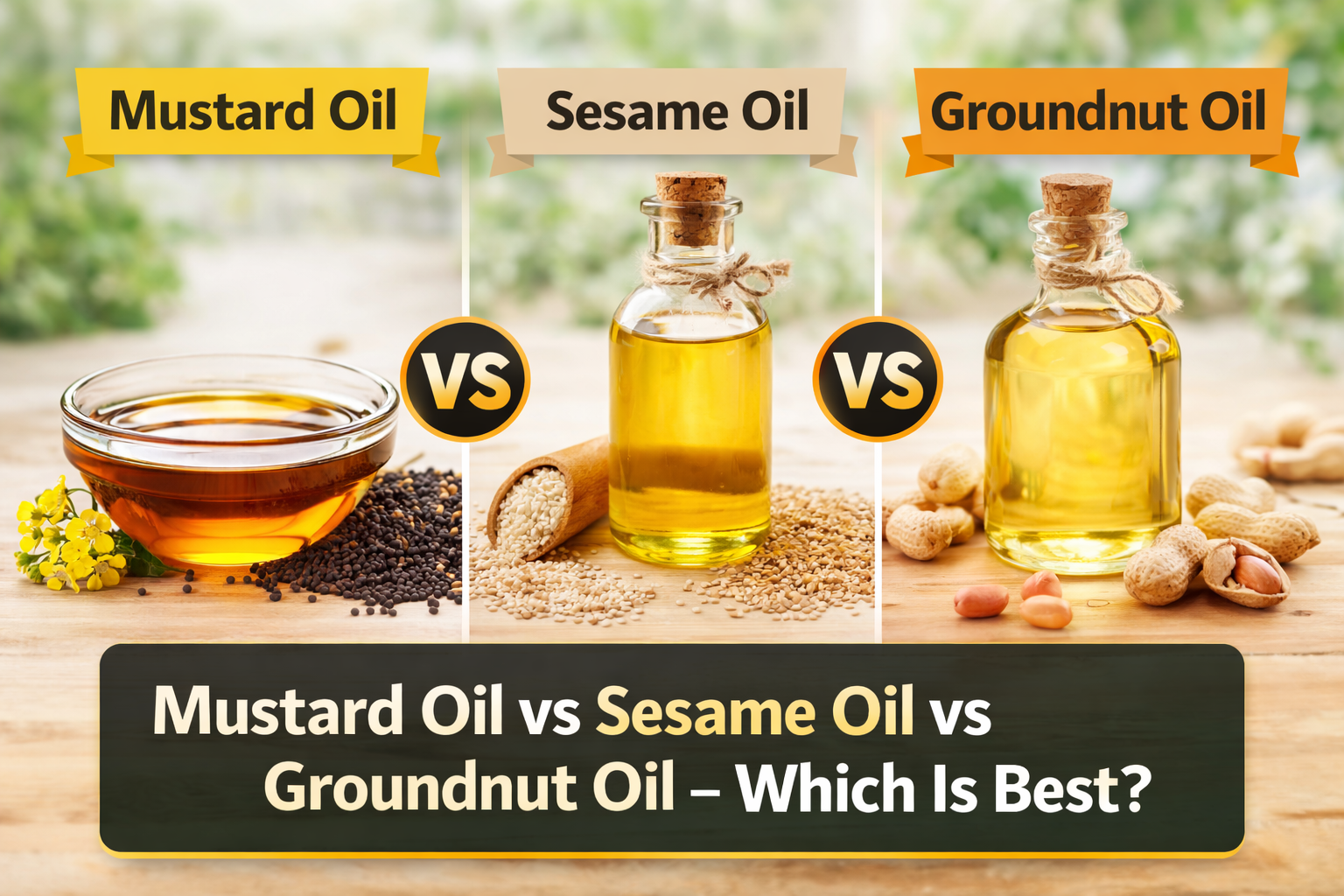
Cooking oil is one of the most important ingredients in Indian kitchens. Different regions traditionally use different oils — mustard oil in the north and east, sesame oil in the south, and groundnut oil in many western parts of India.
With so many options available today, people often wonder: Which oil is actually best for daily cooking? The truth is that no single oil is perfect for all purposes. Each oil has its own nutritional profile, flavour, and ideal usage.
This blog compares mustard oil, sesame oil, and groundnut oil to help you choose wisely based on your cooking style and health needs.
Mustard Oil: Strong Flavour and Traditional Use
Mustard oil has been widely used in North and East India for generations.
Key characteristics:
- Sharp, pungent aroma
- Rich golden colour
- Naturally contains omega-3 fatty acids
- Traditionally used in pickles and high-heat cooking
Benefits:
- Supports digestion in traditional diets
- Strong antimicrobial properties (traditional belief)
- Suitable for frying and sautéing
Mustard oil works best for people accustomed to its strong taste.
Sesame Oil: Nutrient-Rich and Warming
Sesame oil is common in South Indian cooking and Ayurvedic practices.
Key characteristics:
- Nutty aroma
- Rich in antioxidants
- Contains vitamin E and healthy fats
- Naturally stable for moderate cooking
Benefits:
- Supports heart health when used moderately
- Traditionally used for body nourishment
- Suitable for tadka, stir-fry, and traditional dishes
Sesame oil is especially preferred during colder seasons.
Groundnut Oil: Mild Taste and Versatility
Groundnut (peanut) oil is widely used because of its neutral taste and versatility.
Key characteristics:
- Light flavour
- High smoke point
- Suitable for deep frying
- Common in snacks and everyday cooking
Benefits:
- Works well for frying and roasting
- Mild taste suits most dishes
- Stable at higher temperatures
Groundnut oil is often chosen when you want oil that does not dominate the dish’s flavour.
Mustard vs Sesame vs Groundnut Oil: Comparison Table
| Feature Mustard Oil, Sesame Oil, Groundnut Oil | |||
| Taste | Strong | Nutty | Mild |
| Best For | Pickles, frying | Tadka, traditional dishes | Frying, general cooking |
| Smoke Point | High | Moderate-high | High |
| Traditional Use | North/East India | South India | West/Central India |
| Nutritional Strength | Omega-3 rich | Antioxidant-rich | Balanced fats |
Which Oil Is Best for Health?
Instead of choosing just one oil, nutrition experts often recommend rotating oils. This helps provide a balance of fatty acids and nutrients.
A practical approach:
- Use mustard oil for strong-flavoured dishes
- Use sesame oil for traditional recipes and seasonal use
- Use groundnut oil for frying or neutral cooking
Cold-pressed versions of these oils are generally preferable because they retain more natural nutrients.
Ayurvedic Perspective
Ayurveda does not promote one universal oil. It suggests selecting oil based on:
- Body type (dosha)
- Season
- Region
- Cooking method
For example:
- Mustard oil is warming and stimulating
- Sesame oil is nourishing and grounding
- Groundnut oil is moderate and versatile
Buying and Storage Tips
- Prefer cold-pressed or Kachi Ghani oils
- Avoid overly refined oils with no aroma
- Store in airtight containers
- Keep away from sunlight and moisture
Fresh oil always offers better taste and quality.
Conclusion
Mustard oil, sesame oil, and groundnut oil each have unique advantages. The best choice depends on your cooking needs, taste preference, and regional food habits.
Instead of searching for one “perfect” oil, using a variety of traditional oils in moderation is the smarter and more balanced approach.
Good cooking is not about one right ingredient — it’s about using the right ingredient at the right time.
------------------------------------------
परिचय
भारतीय रसोई में अलग-अलग क्षेत्रों में अलग-अलग तेल उपयोग किए जाते हैं।
उत्तर भारत में सरसों तेल, दक्षिण में तिल तेल और पश्चिम में मूंगफली तेल आम है।
अक्सर सवाल होता है — सबसे अच्छा तेल कौन सा है?
असल में, हर तेल की अपनी खासियत होती है।
सरसों तेल
पहचान:
- तेज़ खुशबू
- गहरा रंग
- तलने और अचार के लिए अच्छा
फायदे:
- पारंपरिक रूप से पाचन में सहायक माना जाता है
- तेज़ स्वाद वाले व्यंजनों के लिए उपयुक्त
तिल तेल
पहचान:
- हल्की नट जैसी खुशबू
- पोषक तत्वों से भरपूर
फायदे:
- दिल के लिए सहायक
- पारंपरिक भोजन में उपयोगी
- तड़का और हल्की फ्राई के लिए अच्छा
मूंगफली तेल
पहचान:
- हल्का स्वाद
- ज़्यादा तापमान सह सकता है
फायदे:
- डीप फ्राई के लिए उपयुक्त
- अधिकांश व्यंजनों में आसानी से इस्तेमाल
तुलना
| बिंदु सरसों तिल मूंगफली | |||
| स्वाद | तेज़ | नट जैसा | हल्का |
| उपयोग | अचार, फ्राई | तड़का | डीप फ्राई |
| तापमान सहन | ज़्यादा | मध्यम | ज़्यादा |
सेहत के लिए कौन बेहतर?
एक ही तेल रोज़ इस्तेमाल करने की बजाय,
तेलों को बदल-बदल कर इस्तेमाल करना बेहतर माना जाता है।
खरीदने और रखने के सुझाव
- कोल्ड-प्रेस तेल लें
- एयरटाइट डिब्बे में रखें
- धूप से दूर रखें
निष्कर्ष
कोई एक तेल सबसे अच्छा नहीं होता।
आपकी ज़रूरत और खाना पकाने के तरीके के अनुसार अलग-अलग तेल सही होते हैं।