
Introduction
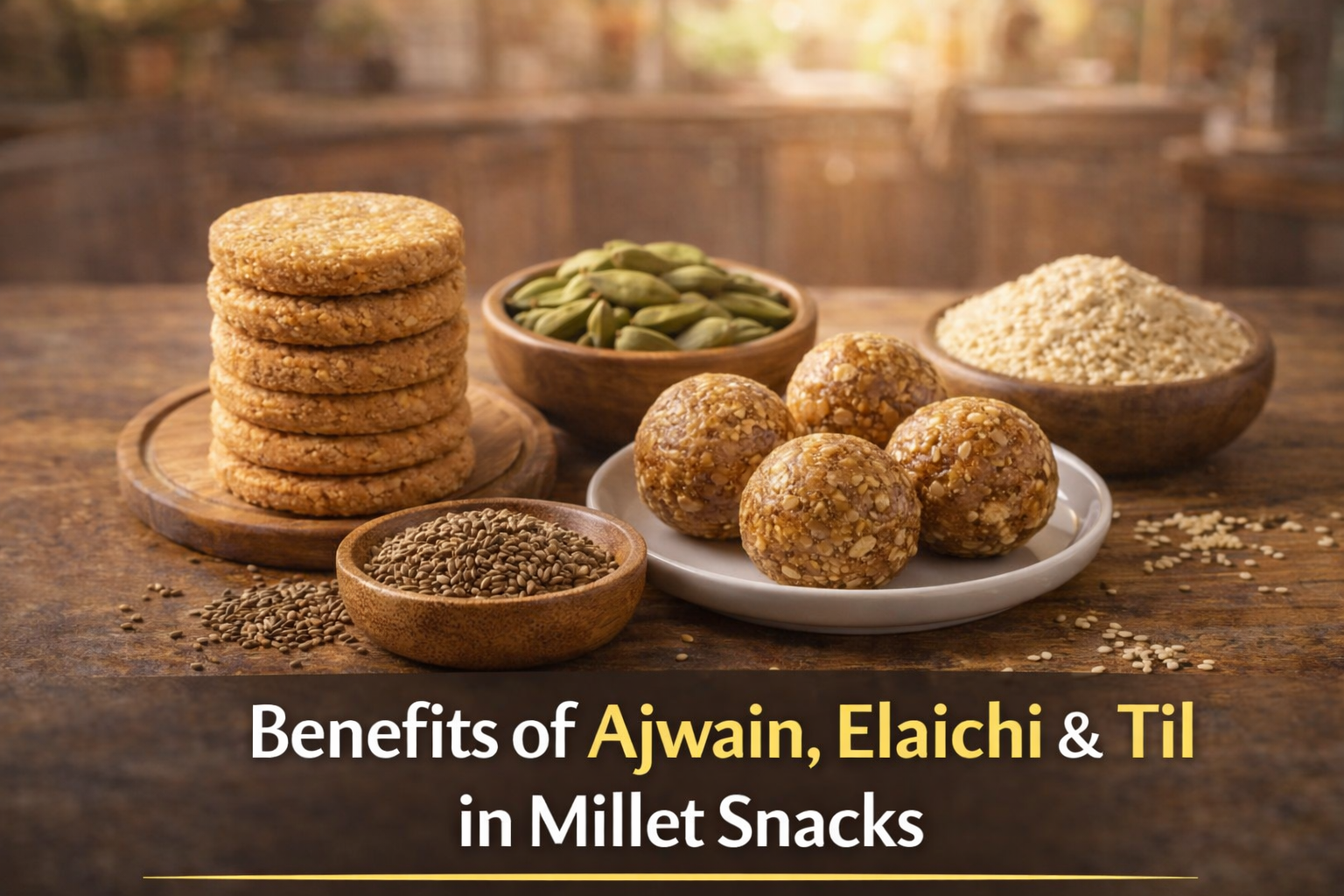
Millet-based snacks are gaining popularity as healthier alternatives to refined-flour snacks. But what truly enhances their value is the use of traditional Indian ingredients like ajwain (carom seeds), elaichi (cardamom), and til (sesame seeds). These small additions not only improve flavour but also bring digestive and nutritional benefits.
In traditional Indian cooking, grains were rarely used alone. They were often combined with spices and seeds to create balanced, easy-to-digest foods. This blog explains how ajwain, elaichi, and til improve millet snacks and why this combination works well.
Why Add Ingredients to Millet Snacks?
Millets are naturally high in fibre and nutrients, but they can sometimes feel heavy if eaten alone. Traditional spices and seeds help:
- Improve digestion
- Enhance flavour naturally
- Add micronutrients
- Balance the overall food quality
This is why many traditional recipes include these ingredients.
Ajwain (Carom Seeds): Supports Digestion
Ajwain has been widely used in Indian kitchens, especially in snacks and breads.
Benefits of ajwain in millet snacks:
- Helps reduce bloating or heaviness
- Supports digestion of fibre-rich foods
- Adds mild, warm flavour
- Traditionally used in biscuits, mathri, and paratha
Because millet flour contains fibre, ajwain helps make such snacks easier on the stomach.
Elaichi (Cardamom): Natural Aroma and Freshness
Elaichi is commonly used in sweet dishes and festive foods.
Benefits of elaichi in millet snacks:
- Provides pleasant natural fragrance
- Enhances taste without artificial flavouring
- Traditionally considered cooling and refreshing
- Pairs well with sweet millet biscuits or laddoos
Even small amounts can noticeably improve flavour.
Til (Sesame Seeds): Adds Nutrition and Texture
Til has long been valued in Indian diets for both taste and nourishment.
Benefits of til in millet snacks:
- Provides healthy fats
- Adds calcium and minerals
- Improves crunch and texture
- Helps make snacks more filling
Til also blends well with both sweet and savoury millet recipes.
Combined Benefits in Millet Snacks
When millet flour is combined with ajwain, elaichi, or til:
| Ingredient Main Role Added Value | ||
| Ajwain | Digestive support | Reduces heaviness |
| Elaichi | Aroma and flavour | Improves taste naturally |
| Til | Nutrition and texture | Adds minerals and healthy fats |
This combination reflects traditional Indian food wisdom — balancing taste, digestion, and nutrition together.
Examples of Millet Snacks Using These Ingredients
- Ajwain millet biscuits
- Elaichi millet laddoos
- Til-bajra crackers
- Mixed millet mathri
- Traditional winter millet sweets
These snacks are common in homemade and natural-product food traditions.
Buying Tips
- Check if real ingredients are used (not artificial flavours)
- Prefer snacks with visible sesame seeds or natural spices
- Avoid products with long additive lists
- Choose fresh, small-batch products when possible
Natural ingredients should enhance, not overpower, the snack.
Conclusion
Ajwain, elaichi, and til are more than flavour enhancers — they represent traditional methods of making millet snacks tastier, easier to digest, and more nutritious. Their use reflects a thoughtful approach to cooking where small ingredients create meaningful improvements.
Including such traditionally balanced snacks in daily routines can support both taste and nutrition naturally.
Sometimes, the smallest ingredients make the biggest difference.
------------------------------------------
परिचय
मिलेट स्नैक्स आजकल लोकप्रिय हो रहे हैं, लेकिन इन्हें और बेहतर बनाते हैं पारंपरिक भारतीय तत्व जैसे अजवाइन, इलायची और तिल। ये स्वाद के साथ-साथ पाचन और पोषण में भी मदद करते हैं।
मिलेट में ये क्यों मिलाए जाते हैं?
मिलेट में फाइबर ज़्यादा होता है, जिससे कभी-कभी भारीपन लग सकता है।
अजवाइन, इलायची और तिल इसे संतुलित करते हैं।
अजवाइन के फायदे
- पाचन में मदद
- गैस या भारीपन कम
- हल्का मसालेदार स्वाद
इलायची के फायदे
- प्राकृतिक खुशबू
- स्वाद बेहतर
- मीठे स्नैक्स में उपयोगी
तिल के फायदे
- कैल्शियम और मिनरल्स
- हेल्दी फैट
- कुरकुरापन और स्वाद
साथ में उपयोग के लाभ
| सामग्री फायदा | |
| अजवाइन | पाचन सहारा |
| इलायची | खुशबू और स्वाद |
| तिल | पोषण और टेक्सचर |
उदाहरण
- अजवाइन मिलेट बिस्कुट
- इलायची मिलेट लड्डू
- तिल बाजरा क्रैकर
निष्कर्ष
अजवाइन, इलायची और तिल मिलेट स्नैक्स को स्वादिष्ट, पौष्टिक और पचने में आसान बनाते हैं।