
Introduction
Choosing the right snacks for children can be challenging. Many packaged snacks available today are high in refined flour, sugar, and additives, which may provide quick taste but limited nutrition. Parents are increasingly looking for healthier alternatives that support growth and energy without being overly processed.
Millet-based snacks are emerging as a smart option because millets are traditional Indian grains known for their fibre, minerals, and steady energy release. This blog explains why millet snacks can be a good choice for kids and how to include them sensibly in daily routines.
What Are Millets?
Millets are small traditional grains such as:
- Bajra (pearl millet)
- Ragi (finger millet)
- Jowar (sorghum)
- Foxtail millet and others
They have been part of Indian diets for centuries and are naturally suited to local climates and cooking styles.
Nutritional Value of Millets for Children
Millets naturally provide:
- Complex carbohydrates for steady energy
- Dietary fibre for digestion
- Calcium (especially in ragi)
- Iron and magnesium
- Plant-based protein
Because they combine fibre and nutrients, millet snacks tend to be more filling than refined-flour snacks.
Why Millet Snacks Are Good for Kids
1. Provide Sustained Energy
Unlike refined flour snacks that may cause quick energy spikes and crashes, millet snacks release energy gradually. This helps children stay active and focused for longer periods.
2. Support Digestive Health
The fibre in millets helps maintain regular digestion and prevents frequent hunger.
3. Naturally Nutrient-Rich
Millets contain essential minerals that support growth and daily nutrition.
4. Encourage Traditional Eating Habits
Introducing millet snacks helps children develop taste for traditional grains instead of only processed foods.
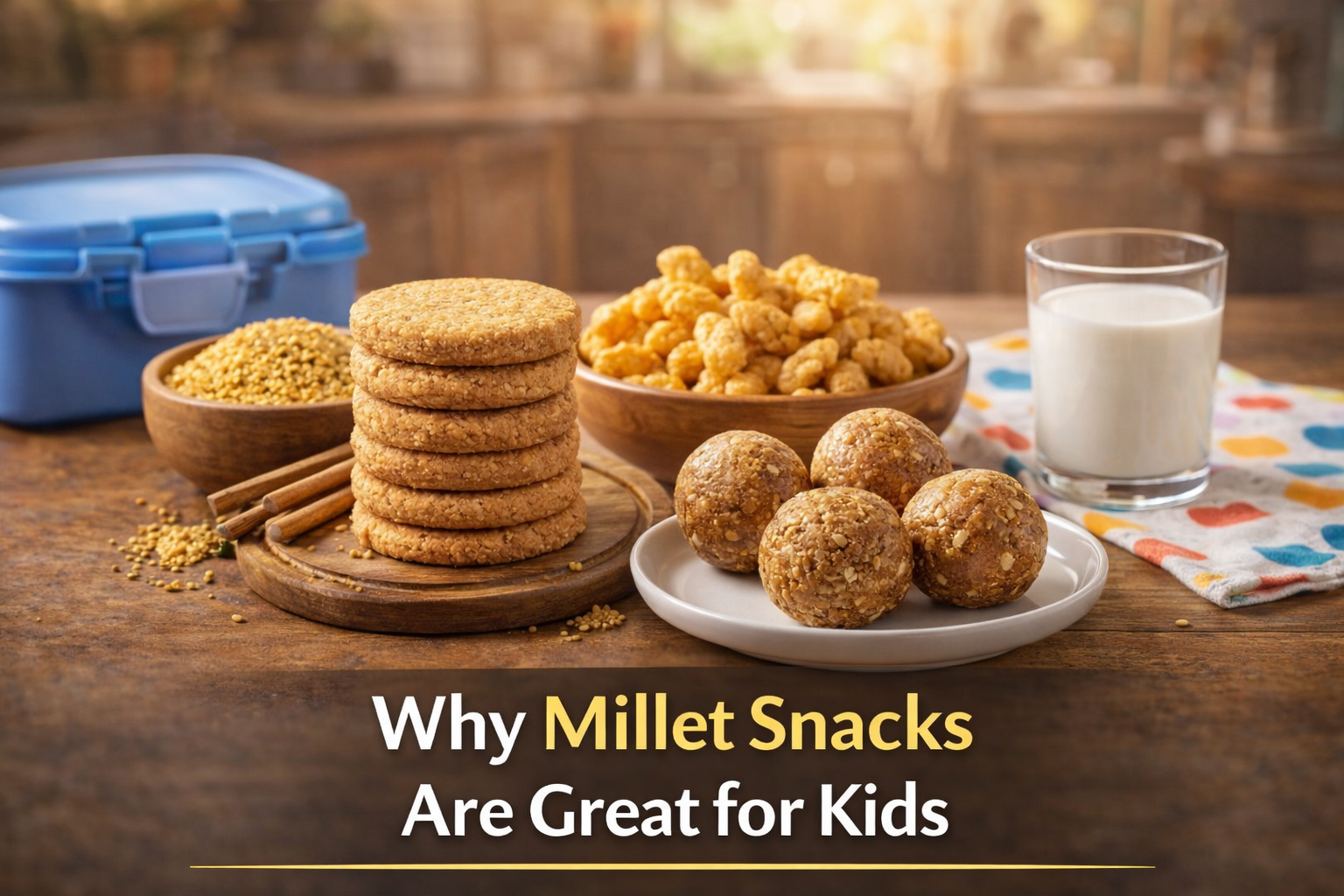
Examples of Kid-Friendly Millet Snacks
- Millet biscuits
- Ragi laddoos
- Bajra or jowar crackers
- Millet chilla or pancakes
- Homemade millet porridge
These options can be adjusted for sweetness or spice based on age and preference.
Important Balance to Maintain
Millet snacks are beneficial, but they should still be:
- Consumed in moderation
- Combined with fruits, nuts, and balanced meals
- Checked for added sugar or artificial ingredients
Packaged millet snacks are only healthy if their ingredient list is clean.
Tips for Introducing Millet Snacks to Kids
- Start with mild flavours
- Mix millet flour with wheat flour initially
- Serve with familiar foods like milk or curd
- Make snacks visually appealing
Gradual introduction helps children accept new tastes more easily.
Buying and Storage Tips
- Choose snacks made with high millet content
- Avoid products with excessive sugar or additives
- Prefer fresh or small-batch items
- Store in airtight containers
- Keep in a cool, dry place
Fresh snacks usually taste better and retain nutrition.
Conclusion
Millet snacks can be a wholesome addition to children’s diets because they offer fibre, minerals, and steady energy in a natural form. While they are not a magic solution, replacing some refined snacks with millet-based options can support healthier eating habits over time.
Healthy habits formed in childhood often last a lifetime.
------------------------------------------
परिचय
बच्चों के लिए सही स्नैक चुनना आसान नहीं होता। बाज़ार में मिलने वाले कई स्नैक्स मैदा, चीनी और केमिकल से बने होते हैं, जो स्वाद तो देते हैं लेकिन पोषण कम होता है।
मिलेट स्नैक्स एक बेहतर विकल्प हो सकते हैं क्योंकि मिलेट पारंपरिक अनाज हैं और पोषक तत्वों से भरपूर होते हैं।
मिलेट क्या हैं?
मिलेट छोटे अनाज होते हैं जैसे:
- बाजरा
- रागी
- ज्वार
ये भारतीय भोजन का हिस्सा लंबे समय से रहे हैं।
बच्चों के लिए पोषण
मिलेट में:
- ऊर्जा देने वाले कार्बोहाइड्रेट
- फाइबर
- कैल्शियम (रागी में अधिक)
- आयरन
पाए जाते हैं।
मिलेट स्नैक्स क्यों अच्छे?
1. लंबे समय तक ऊर्जा
धीरे-धीरे ऊर्जा देते हैं।
2. पाचन के लिए अच्छे
फाइबर पाचन में मदद करता है।
3. पोषक तत्वों से भरपूर
बच्चों की वृद्धि में सहायक।
उदाहरण
- मिलेट बिस्कुट
- रागी लड्डू
- मिलेट पैनकेक
- बाजरा क्रैकर
ध्यान रखें
- ज़्यादा चीनी वाले स्नैक्स न लें
- संतुलित मात्रा में दें
निष्कर्ष
मिलेट स्नैक्स बच्चों के लिए पोषक और बेहतर विकल्प हो सकते हैं, खासकर जब इन्हें संतुलित आहार के साथ दिया जाए।