
Introduction
Rose water has been used in Indian households for centuries. It is known for its gentle fragrance, cooling nature, and versatility in daily care routines. From traditional skincare to Ayurvedic practices, rose water has held a steady place because of its simplicity and effectiveness.
Unlike many modern cosmetic products, pure rose water is mild, natural, and suitable for regular use. This blog explains what rose water is, how it is traditionally used for skin, hair, and wellness, and how to choose and use it correctly.
What Is Rose Water?
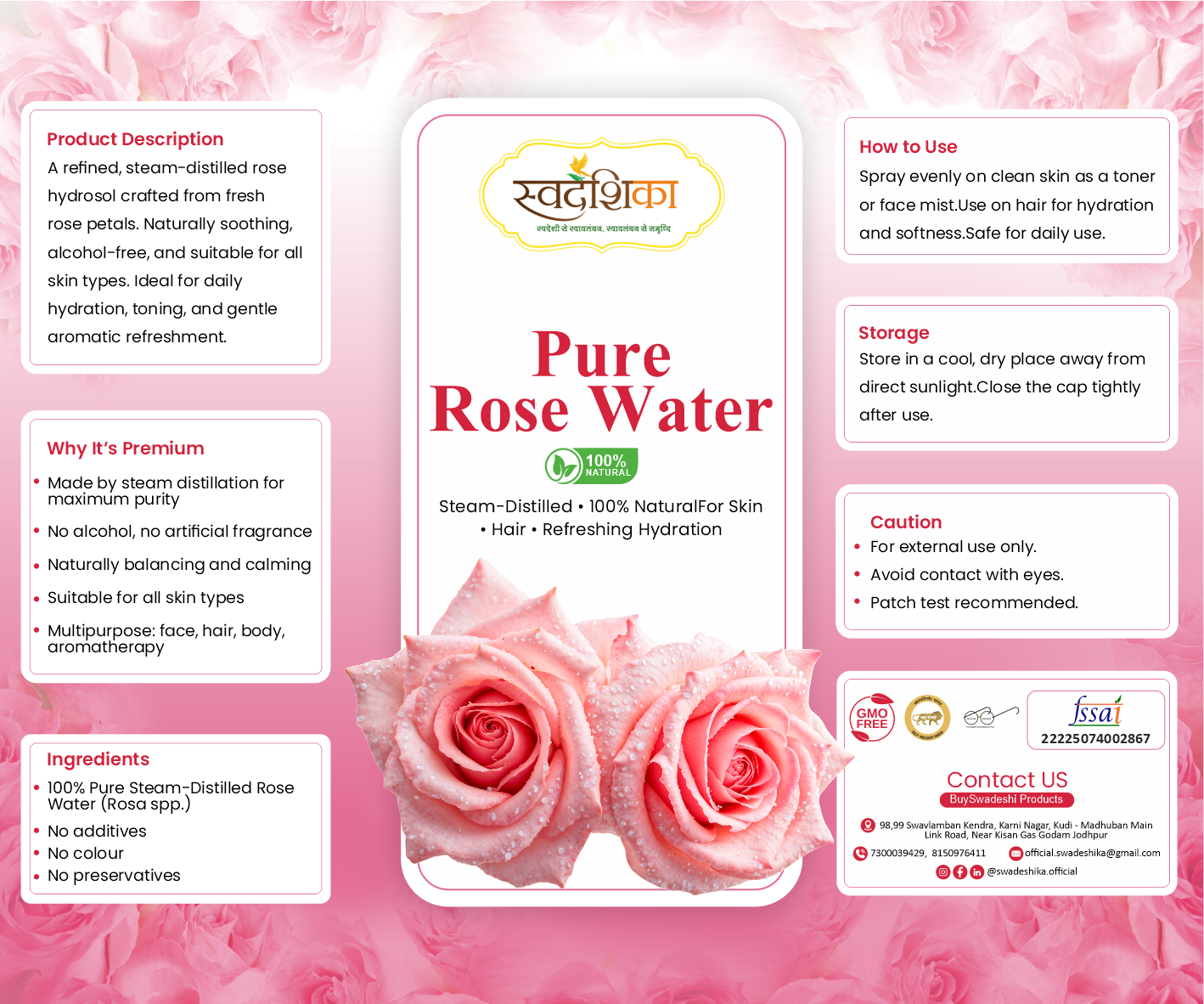
Rose water is a natural liquid made by distilling fresh rose petals with water. This process captures the essence, aroma, and beneficial properties of roses without adding chemicals.
Good-quality rose water:
- Is clear and colourless
- Has a mild, natural rose fragrance
- Does not contain alcohol or synthetic perfume
- Feels light and refreshing on the skin
Pure rose water is very different from artificial rose-scented liquids.
Rose Water in Ayurveda
In Ayurveda, rose water is known for its cooling (sheetal) properties. It is traditionally used to:
- Calm excess body heat
- Soothe irritated skin
- Support emotional balance
- Refresh the senses
Because of its gentle nature, it is suitable for all skin types.
Benefits of Rose Water for Skin
1. Natural Toner
Rose water helps cleanse and tighten pores without drying the skin. It maintains the skin’s natural moisture balance.
2. Soothes Sensitive Skin
Its cooling effect helps calm redness, irritation, and minor inflammation.
3. Supports Skin Hydration
Regular use helps refresh and hydrate the skin, especially in hot weather.
4. Suitable for Daily Use
Because it is mild and chemical-free, rose water can be used daily without side effects.
Benefits of Rose Water for Hair
1. Soothes Scalp
Rose water helps calm an itchy or irritated scalp.
2. Adds Light Shine
When used as a hair rinse, it adds natural freshness and softness.
3. Supports Scalp Balance
It helps maintain a healthy scalp environment without making hair greasy.
Other Traditional Uses of Rose Water
- Added to drinking water for cooling
- Used in homemade face packs
- Mixed in eye care routines (external use only)
- Used in religious and cultural rituals
These uses highlight rose water’s versatility.
How to Use Rose Water Daily
For Skin:
- Spray directly on the face
- Use with cotton as a toner
- Mix with face packs
For Hair:
- Mix with water and rinse hair
- Spray lightly on scalp
For Cooling:
- Add a few drops to drinking water
Buying and Storage Tips
- Choose rose water made from real rose distillation
- Avoid products with added colour or alcohol
- Check ingredient list carefully
- Store in a cool, dark place
- Keep bottle tightly closed
Pure rose water has a shorter shelf life but offers better results.
Conclusion
Rose water is a simple, natural product that fits easily into daily skin, hair, and wellness routines. Its cooling, soothing nature and gentle action make it suitable for people of all ages.
In a world of complex products, rose water remains valuable because of its simplicity and purity.
Sometimes, the most effective care is also the gentlest.
------------------------------------------
परिचय
गुलाब जल का उपयोग भारतीय घरों में लंबे समय से होता आ रहा है। इसकी हल्की खुशबू, ठंडक और प्राकृतिक गुणों के कारण इसे त्वचा और बालों की देखभाल में पसंद किया जाता है।
शुद्ध गुलाब जल रोज़ाना इस्तेमाल के लिए सुरक्षित और लाभकारी होता है।
गुलाब जल क्या होता है?
गुलाब जल ताज़ी गुलाब की पंखुड़ियों को पानी के साथ आसवन (डिस्टिलेशन) करके बनाया जाता है।
अच्छा गुलाब जल:
- साफ़ और बिना रंग का होता है
- हल्की प्राकृतिक खुशबू होती है
- बिना अल्कोहल और केमिकल के होता है
आयुर्वेद में गुलाब जल
आयुर्वेद में गुलाब जल को ठंडा प्रभाव देने वाला माना गया है।
इसका उपयोग:
- शरीर की गर्मी शांत करने
- त्वचा को ठंडक देने
- मन को शांत करने
के लिए किया जाता है।
त्वचा के लिए गुलाब जल के फायदे
1. प्राकृतिक टोनर
त्वचा को साफ़ करता है और नमी बनाए रखता है।
2. संवेदनशील त्वचा के लिए
लालिमा और जलन को शांत करता है।
3. रोज़ाना उपयोग योग्य
हर तरह की त्वचा के लिए उपयुक्त है।
बालों के लिए फायदे
- सिर की त्वचा को ठंडक देता है
- खुजली कम करता है
- बालों में हल्की चमक लाता है
गुलाब जल के अन्य उपयोग
- पीने के पानी में मिलाकर
- फेस पैक में
- धार्मिक उपयोग में
गुलाब जल कैसे इस्तेमाल करें?
- चेहरे पर स्प्रे करें
- रुई से टोनर की तरह
- बाल धोने के बाद रिंस करें
खरीदने और रखने के सुझाव
- असली गुलाब से बना हुआ चुनें
- केमिकल और रंग से बचें
- ठंडी जगह पर रखें
निष्कर्ष
गुलाब जल एक सरल और प्राकृतिक उत्पाद है, जो त्वचा और बालों की देखभाल में मदद करता है। इसकी सबसे बड़ी ताकत इसकी शुद्धता है।