
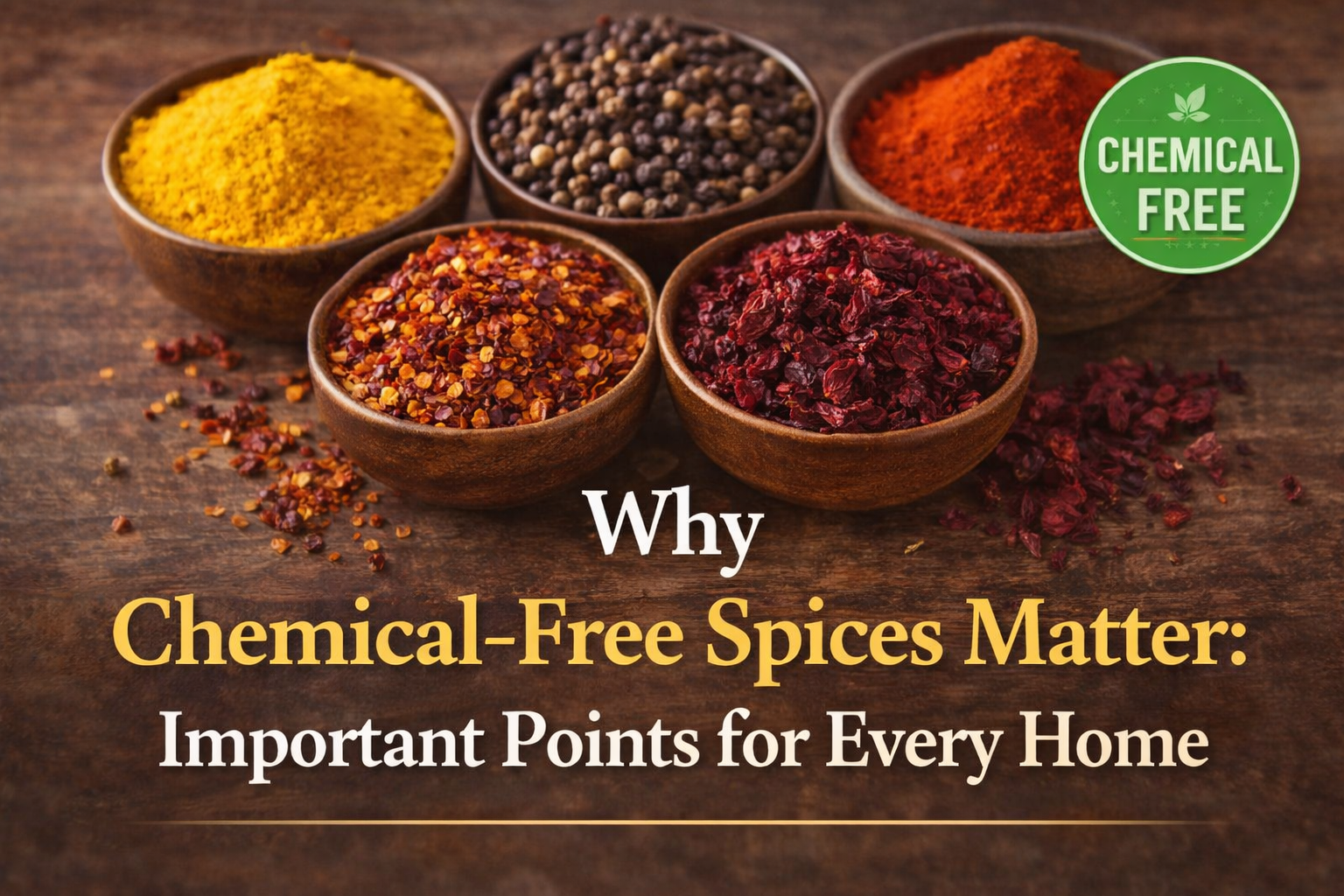
🌿 Why Chemical-Free Spices Matter: A Clear & Complete Guide for Every Household
1. Introduction
Spices are the backbone of Indian cooking. They define our flavours, aromas, traditions, and everyday meals. But most people don’t realise that a large percentage of spices sold in the market today are adulterated, chemically treated, or artificially enhanced.
A 2022 study by FSSAI reported that up to 24% of loose spices sold in India fail purity tests, mainly due to artificial colours, fillers, and contaminated ingredients.
This makes the shift to chemical-free spices not just a preference — but a health necessity.
2. What Exactly Are Chemical-Free Spices?
Chemical-free spices are prepared without:
- Artificial colours
- Synthetic fragrances
- Preservatives
- Polishing agents
- Toxic dyes (like Sudan Red, Metanil Yellow)
- Fillers (starch, talc, chalk powder)
Instead, they are:
- Naturally grown
- Sun-dried
- Hand-cleaned
- Stone-ground
- Stored without chemical treatment
In simple words: Spices the way they were meant to be — pure and natural.
3. Why Market Spices Are Not the Same Anymore (The Real Problem)
With increased demand, commercial spice producers often use shortcuts that compromise quality.
Common Adulterants in Market Spices (FSSAI Insights):
- Chilli Powder: Brick powder, artificial red dye
- Turmeric Powder: Metanil yellow, chalk powder
- Coriander Powder: Sawdust, husk powder
- Hing: Only 30% hing + 70% fillers
- Salt: Bleaching agents & anti-caking chemicals
A 2021 Public Lab report found that over 30% of turmeric samples in India had traces of harmful synthetic colour. These adulterants may improve colour and texture, but they reduce nutritional value and may harm long-term health.
4. Health Risks of Chemically Treated Spices
Even small amounts of adulterated spices, when consumed daily, can impact digestion and immunity.
Common Health Concerns:
- Digestive discomfort
- Acidity and bloating
- Headaches
- Allergic reactions
- Long-term toxin buildup
- Skin issues
- Lowered immunity
For children and elders, these effects are even stronger.
5. How Chemical-Free Spices Make a Real Difference
Switching to pure, natural spices improves both health and flavour immediately.
Benefits of Chemical-Free Spices:
- Better Taste & Aroma: Natural oils stay intact, enhancing every dish.
- Higher Nutrient Value: No bleaching or heating processes involved.
- Safer for Daily Use: Zero toxins, colours, or chemical residues.
- Lower Consumption Required: Pure spices are potent — a smaller quantity gives a stronger flavour.
- Supports Sustainable Farming: Encourages traditional, organic agriculture practices.
6. Simple Tests to Identify Pure Spices at Home
You can check purity using these quick household tests:Red Chilli Powder
Mix in warm water. If colour spreads instantly → colour added. If it settles slowly → pure.Turmeric Powder
Add a pinch in water. If foam forms → adulterants present. Pure turmeric sinks without foam.Coriander Powder
Rub between fingers. Pure dhaniya feels coarse; not smooth like talc.Hing
Pure hing has a strong aroma; only a pinch is enough. If you need more quantity → it contains fillers.
7. Why India Needs Chemical-Free Spices Again
According to the Ministry of AYUSH:
- 40% of common digestive problems in India come from chemically processed food.
- Daily consumption of synthetic dyes (from adulterated spices) is linked to rising acidity and gut issues.
Traditional Indian kitchens always relied on natural, unpolished spices because:
- They supported digestion
- Balanced doshas (Ayurveda)
- Provided natural immunity
- Enhanced the body’s ability to absorb nutrients
Chemical-free spices reconnect modern kitchens with these benefits.
8. How Swadeshika Ensures Purity in Every Spice
Swadeshika focuses on:
- Handpicked raw materials
- No artificial colours
- No synthetic enhancers
- Sun-drying instead of industrial drying
- Stone-grinding for natural oil retention
- No chemical polishing
- Small-batch processing
- Zero adulteration
This ensures high potency, authentic aroma, and complete safety.
9. How to Use Pure Spices for Best Results
- Store in airtight glass containers
- Keep away from moisture
- Buy small quantities frequently
- Roast lightly before use for a better aroma
- Avoid mixing batches
With pure spices, less is more — start with smaller quantities.
10. Conclusion
Chemical-free spices are not a trend. They are a return to the purity and honesty of traditional Indian cooking.
Switching to pure spices means:
- Better immunity
- Better taste
- Better digestion
- Safer long-term health
For your family, your food, and your wellbeing — choosing pure spices is one of the simplest, most meaningful decisions you can make.
Choose purity.
Choose tradition.
Choose spices that nourish, not harm.
------------------------------------------
1. परिचय (Introduction)
मसाले भारतीय खाने की जान हैं। ये हमारे स्वाद, खुशबू, और रोज़मर्रा के खाने को पहचान देते हैं। लेकिन बहुत से लोगों को यह पता नहीं है कि आज बाज़ार में मिलने वाले ज़्यादातर मसालों में मिलावट होती है, उन्हें केमिकल्स से ट्रीट किया जाता है, या उनमें नकली चीज़ें मिलाई जाती हैं।
FSSAI की 2022 की एक रिपोर्ट के मुताबिक, भारत में खुले बिकने वाले 24% मसाले शुद्धता टेस्ट में फ़ेल हो जाते हैं। इसकी मुख्य वजह नकली रंग, भराव (fillers), और ख़राब चीज़ों की मिलावट है।
इसलिए, केमिकल-फ्री मसालों की तरफ़ जाना अब सिर्फ़ एक पसंद नहीं—बल्कि सेहत की ज़रूरत है।
2. केमिकल-फ्री मसाले क्या होते हैं? (What Exactly Are Chemical-Free Spices?)
केमिकल-फ्री मसाले वे होते हैं जिन्हें इनके बिना तैयार किया जाता है:
- नकली रंग
- सिंथेटिक खुशबू
- प्रेज़रवेटिव (ख़राब होने से बचाने वाले पदार्थ)
- पॉलिश करने वाले एजेंट
- ज़हरीले रंग (जैसे सूडान रेड, मेटानिल येलो)
- भराव (जैसे स्टार्च, टैल्क, खड़िया पाउडर)
इसके बजाय, केमिकल फ्री मसाले ऐसे होते हैं जो:
- कुदरती रूप से उगाए गए
- धूप में सुखाए गए
- हाथ से साफ़ किए गए
- पत्थर की चक्की में पीसे गए
- बिना केमिकल ट्रीटमेंट के स्टोर किए गए
आसान शब्दों में कहें तो: ये मसाले वैसे ही हैं जैसे उन्हें होना चाहिए — शुद्ध और प्राकृतिक (pure and natural)।
3. बाज़ार के मसाले अब पहले जैसे क्यों नहीं हैं? (The Real Problem)
बढ़ती मांग के कारण, कमर्शियल मसाला बनाने वाले अक्सर क्वालिटी से समझौता करते हुए आसान रास्ते अपनाते हैं।
बाज़ार के मसालों में आम मिलावट (FSSAI के अनुसार):
- मिर्च पाउडर: ईंट का पाउडर, नकली लाल रंग
- हल्दी पाउडर: मेटानिल येलो, खड़िया पाउडर
- धनिया पाउडर: लकड़ी का बुरादा, भूसी
- हींग: सिर्फ़ 30% हींग + 70% भराव
- नमक: ब्लीचिंग एजेंट और एंटी-केकिंग केमिकल्स
2021 की एक रिपोर्ट में पाया गया कि भारत में हल्दी के 30% से ज़्यादा सैंपल में हानिकारक सिंथेटिक रंग के अंश थे। ये मिलावटी चीज़ें रंग और बनावट तो सुधार सकती हैं, लेकिन ये पोषण मूल्य को कम कर देती हैं और लंबे समय में सेहत को नुक़सान पहुँचा सकती हैं।
4. केमिकल्स वाले मसालों से सेहत को ख़तरे (Health Risks)
अगर रोज़ाना थोड़ी मात्रा में भी मिलावटी मसाले खाए जाएँ, तो वे पाचन और इम्यूनिटी पर असर डाल सकते हैं।
आम स्वास्थ्य समस्याएँ:
- पाचन में परेशानी
- एसिडिटी और पेट फूलना
- सिरदर्द
- एलर्जिक रिएक्शन
- लंबे समय तक शरीर में ज़हर जमा होना
- त्वचा की समस्याएँ
- इम्यूनिटी का कमज़ोर होना
बच्चों और बुज़ुर्गों के लिए, ये असर और भी ज़्यादा होते हैं।
5. केमिकल-फ्री मसाले क्या बदलाव लाते हैं? (How Chemical-Free Spices Make a Real Difference)
शुद्ध, प्राकृतिक मसालों को अपनाने से सेहत और स्वाद दोनों में तुरंत सुधार आता है।
केमिकल-फ्री मसालों के फ़ायदे:
- बेहतर स्वाद और खुशबू: प्राकृतिक तेल बरकरार रहते हैं, जिससे हर व्यंजन का स्वाद बढ़ जाता है।
- ज़्यादा पोषक तत्व: ब्लीचिंग या गर्म करने की प्रक्रिया शामिल नहीं होती।
- रोज़मर्रा के लिए सुरक्षित: किसी भी प्रकार का कोई रंग, या केमिकल अवशेष नहीं।
- कम खपत की ज़रूरत: शुद्ध मसाले असरदार होते हैं — कम मात्रा में भी मज़बूत स्वाद देते हैं।
- सस्टेनेबल खेती को समर्थन: पारंपरिक, जैविक खेती के तरीकों को बढ़ावा मिलता है।
6. घर पर शुद्ध मसालों को पहचानने के आसान टेस्ट (Simple Tests to Identify Pure Spices)
आप इन घरेलू टेस्ट से शुद्धता की जाँच कर सकते हैं:
- लाल मिर्च पाउडर: इसे गुनगुने पानी में मिलाएँ। अगर रंग तुरंत फैल जाता है → रंग मिलाया गया है। अगर यह धीरे-धीरे नीचे बैठता है → शुद्ध है।
- हल्दी पाउडर: एक चुटकी पानी में डालें। अगर झाग बनता है → मिलावट है। शुद्ध हल्दी बिना झाग के बैठ जाती है।
- धनिया पाउडर: उँगलियों के बीच रगड़ें। शुद्ध धनिया खुरदुरा महसूस होता है; टैल्क की तरह चिकना नहीं।
- हींग: शुद्ध हींग में तेज़ खुशबू होती है; सिर्फ़ एक चुटकी काफ़ी है। अगर आपको ज़्यादा मात्रा चाहिए → इसका मतलब इसमें भराव मिला है।
7. भारत को फिर से केमिकल-फ्री मसालों की ज़रूरत क्यों है? (Why India Needs Chemical-Free Spices Again)
आयुष मंत्रालय के अनुसार:
- भारत में 40% आम पाचन समस्याएँ केमिकल से प्रोसेस किए गए भोजन से आती हैं।
- मिलावटी मसालों से रोज़ाना सिंथेटिक रंग का सेवन बढ़ती हुई एसिडिटी और पेट की समस्याओं से जुड़ा है।
पारंपरिक भारतीय रसोई हमेशा प्राकृतिक, अनपॉलिश मसालों पर निर्भर रही, क्योंकि:
- वे पाचन में मदद करते थे
- दोषों (आयुर्वेद) को संतुलित करते थे
- प्राकृतिक इम्यूनिटी देते थे
- शरीर की पोषक तत्वों को सोखने की क्षमता बढ़ाते थे
केमिकल-फ्री मसाले आधुनिक रसोई को इन फ़ायदों से फिर से जोड़ते हैं।
8. स्वादेशिका कैसे हर मसाले में शुद्धता सुनिश्चित करता है (How Swadeshika Ensures Purity)
स्वादेशिका इन चीज़ों पर ध्यान देता है:
- हाथ से चुनी गई कच्ची सामग्री
- कोई नकली रंग नहीं
- कोई सिंथेटिक (नकली) बढ़ाने वाले एजेंट नहीं
- इंडस्ट्रियल ड्राइंग के बजाय धूप में सुखाना
- प्राकृतिक तेल को बनाए रखने के लिए पत्थर की चक्की में पीसना
- कोई केमिकल पॉलिशिंग नहीं
- छोटे बैच में प्रोसेसिंग
- ज़ीरो मिलावट
यह उच्च शक्ति, असली खुशबू, और पूरी सुरक्षा सुनिश्चित करता है।
9. बेहतरीन नतीजों के लिए शुद्ध मसाले कैसे इस्तेमाल करें (How to Use Pure Spices)
- हवा-बंद काँच के कंटेनरों में स्टोर करें
- नमी से दूर रखें
- कम मात्रा में और जल्दी-जल्दी खरीदें
- बेहतर खुशबू के लिए इस्तेमाल से पहले हल्का भून लें
- बैचों को आपस में मिलाने से बचें
शुद्ध मसालों के साथ, कम ही ज़्यादा है — हमेशा कम मात्रा से शुरुआत करें।
10. निष्कर्ष (Conclusion)
केमिकल-फ्री मसाले कोई नया ट्रेंड नहीं हैं। यह पारंपरिक भारतीय खाने की शुद्धता और सच्चाई की तरफ़ वापसी है।
शुद्ध मसालों को अपनाने का मतलब है:
- बेहतर इम्यूनिटी
- बेहतर स्वाद
- बेहतर पाचन
- लंबे समय तक सुरक्षित सेहत
अपने परिवार, अपने खाने और अपनी सेहत के लिए — शुद्ध मसाले चुनना सबसे आसान और सही फ़ैसला है जो आप ले सकते हैं।
शुद्धता चुनें।
परंपरा चुनें।
ऐसे मसाले चुनें जो पोषण दें, नुक़सान नहीं।