
Introduction
Sweetness has always been a part of Indian food culture. Traditionally, sweetness came from natural sources like fruits, honey, jaggery, and raw sugar. However, over time, refined white sugar became the most commonly used sweetener, mainly because it is cheap and easily available.
In recent years, people have started returning to traditional alternatives like jaggery (gud). Ayurveda has long considered jaggery a better choice than refined sugar when consumed in moderation. This blog explains why jaggery is preferred, how it differs from sugar, and what both traditional wisdom and modern understanding say about it.
What Is Jaggery?
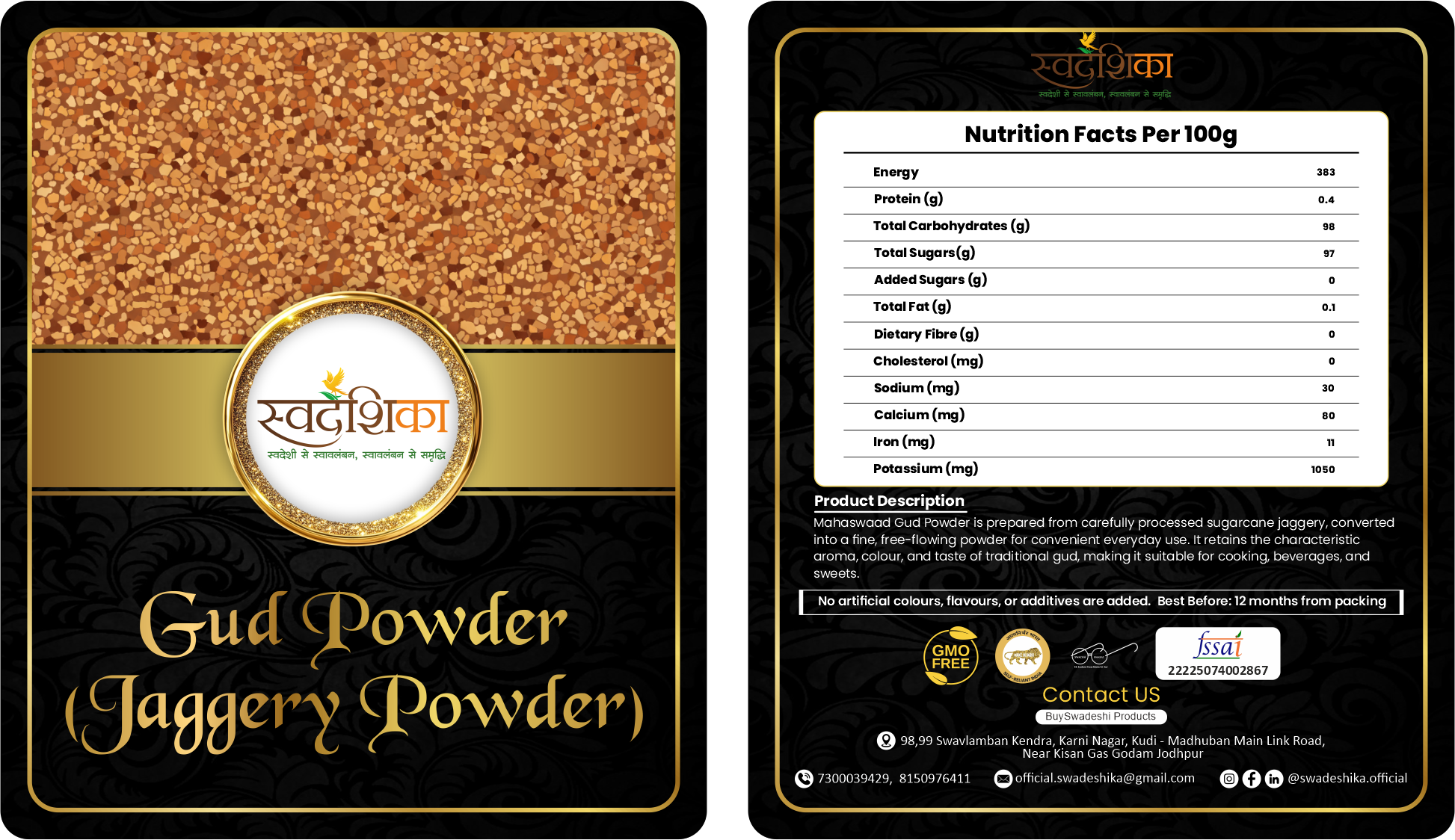
Jaggery is a natural sweetener made by boiling sugarcane juice (or sometimes date palm sap) until it thickens and solidifies. Unlike refined sugar, jaggery is made with minimal processing and without chemical bleaching.
Key characteristics of jaggery:
- Brown or golden colour
- Rich, earthy flavour
- Contains molasses
- Minimally processed
- No artificial chemicals
Because it retains molasses, jaggery keeps some of sugarcane’s natural nutrients.
What Is Refined Sugar?
Refined sugar is produced through multiple industrial steps. During this process:
- Sugarcane juice is heavily filtered
- Molasses is completely removed
- Chemicals are used for bleaching
- The final product becomes pure sucrose
Refined sugar provides sweetness but no additional nutritional value.
Jaggery vs Sugar: A Simple Comparison
| Feature Jaggery Refined Sugar | ||
| Processing | Minimal | Heavy processing |
| Colour | Brown / golden | White |
| Minerals | Present in small amounts | Removed |
| Chemical Use | No bleaching | Bleaching agents used |
| Taste | Rich, earthy | Sharp sweetness |
Ayurvedic View on Jaggery
Ayurveda considers jaggery a natural and warming sweetener. Traditionally, it has been used to:
- Support digestion
- Reduce dryness in the body
- Balance vata dosha
- Provide sustained energy
Because jaggery is less refined, it is believed to be easier for the body to process compared to refined sugar.
Modern Nutritional Understanding
From a modern nutrition perspective, jaggery still contains sugar and calories. However:
- It contains trace minerals like iron, potassium, and magnesium
- It is absorbed slightly more slowly than refined sugar
- It avoids chemical residues from processing
Nutrition experts agree that while jaggery is not a health food, it is a better alternative to refined sugar when sweetness is needed.
How Jaggery Supports Digestion
In traditional Indian meals, a small piece of jaggery is often eaten after food. This practice is believed to:
- Stimulate digestive enzymes
- Help cleanse the digestive tract
- Reduce acidity when taken in moderation
This is why jaggery is commonly consumed after meals in many regions of India.
When and How to Use Jaggery
- As a sweetener in tea or herbal drinks
- In traditional sweets and desserts
- After meals in small quantities
- In winter foods for warmth
Because jaggery has a stronger flavour, smaller quantities are usually enough.
Buying and Storage Tips
- Choose jaggery with a natural brown colour
- Avoid very shiny or overly hard blocks
- Prefer chemical-free or traditionally made jaggery
- Store in airtight containers
- Keep away from moisture
Conclusion
Jaggery is better than refined sugar not because it is calorie-free, but because it is less processed, more natural, and closer to its traditional form. Ayurveda and modern nutrition both support the idea that less refined sweeteners are a wiser choice when consumed in moderation.
Replacing refined sugar with jaggery is a simple step towards more mindful eating.
Sometimes, old wisdom offers the most practical solutions.
------------------------------------------
परिचय
भारतीय खान-पान में मिठास हमेशा से मौजूद रही है। पहले मिठास के लिए गुड़, शहद और फल इस्तेमाल किए जाते थे। लेकिन समय के साथ रिफाइंड चीनी का उपयोग बढ़ गया।
आज फिर लोग पारंपरिक विकल्पों की ओर लौट रहे हैं, जिनमें गुड़ सबसे प्रमुख है। आयुर्वेद में गुड़ को चीनी से बेहतर माना गया है। यह ब्लॉग बताता है कि ऐसा क्यों है।
गुड़ क्या होता है?
गुड़ गन्ने के रस को उबालकर बनाया जाता है। इसमें:
- बहुत कम प्रोसेसिंग होती है
- कोई ब्लीचिंग केमिकल नहीं होता
- गन्ने के प्राकृतिक तत्व बने रहते हैं
इसका रंग भूरा या सुनहरा होता है और स्वाद गहरा होता है।
रिफाइंड चीनी क्या होती है?
रिफाइंड चीनी फैक्ट्री में कई स्टेप्स से बनती है:
- रस को ज़्यादा साफ किया जाता है
- केमिकल से रंग हटाया जाता है
- केवल मिठास बचती है
इसमें कोई पोषण नहीं होता।
गुड़ और चीनी में अंतर
| बिंदु गुड़ चीनी | ||
| प्रोसेसिंग | कम | ज़्यादा |
| रंग | प्राकृतिक | सफेद |
| केमिकल | नहीं | होते हैं |
| पोषण | थोड़ा बहुत | नहीं |
आयुर्वेद में गुड़
आयुर्वेद के अनुसार गुड़:
- पाचन में मदद करता है
- शरीर को गर्माहट देता है
- वात दोष को संतुलित करता है
इसीलिए भोजन के बाद गुड़ खाने की परंपरा रही है।
आधुनिक पोषण का नज़रिया
गुड़ भी मीठा है और इसमें कैलोरी होती है। लेकिन:
- यह कम प्रोसेस्ड है
- इसमें कुछ प्राकृतिक खनिज होते हैं
- इसमें केमिकल नहीं होते
इसलिए यह चीनी से बेहतर विकल्प माना जाता है।
गुड़ का उपयोग कैसे करें?
- चाय और काढ़े में
- मिठाइयों में
- भोजन के बाद थोड़ा सा
- सर्दियों के व्यंजनों में
खरीदने और रखने के सुझाव
- बहुत चमकदार गुड़ न लें
- प्राकृतिक रंग वाला चुनें
- एयरटाइट डिब्बे में रखें
- नमी से दूर रखें
निष्कर्ष
गुड़ कोई दवा नहीं है, लेकिन यह चीनी की तुलना में अधिक प्राकृतिक और सुरक्षित विकल्प है। आयुर्वेद और आधुनिक विज्ञान दोनों इसे सीमित मात्रा में बेहतर मानते हैं।