
Introduction
Pulses have always been the backbone of Indian meals. From dal-chawal to khichdi and everyday sabzi combinations, pulses are consumed across all regions and communities. They are affordable, versatile, and packed with nutrients, making them a staple in both traditional and modern Indian kitchens.
Often called the primary protein source for vegetarian diets, pulses provide much more than just protein. This blog explains why Indian pulses are considered nutritional powerhouses, their health benefits, and how to include them wisely in daily meals.
What Are Pulses?
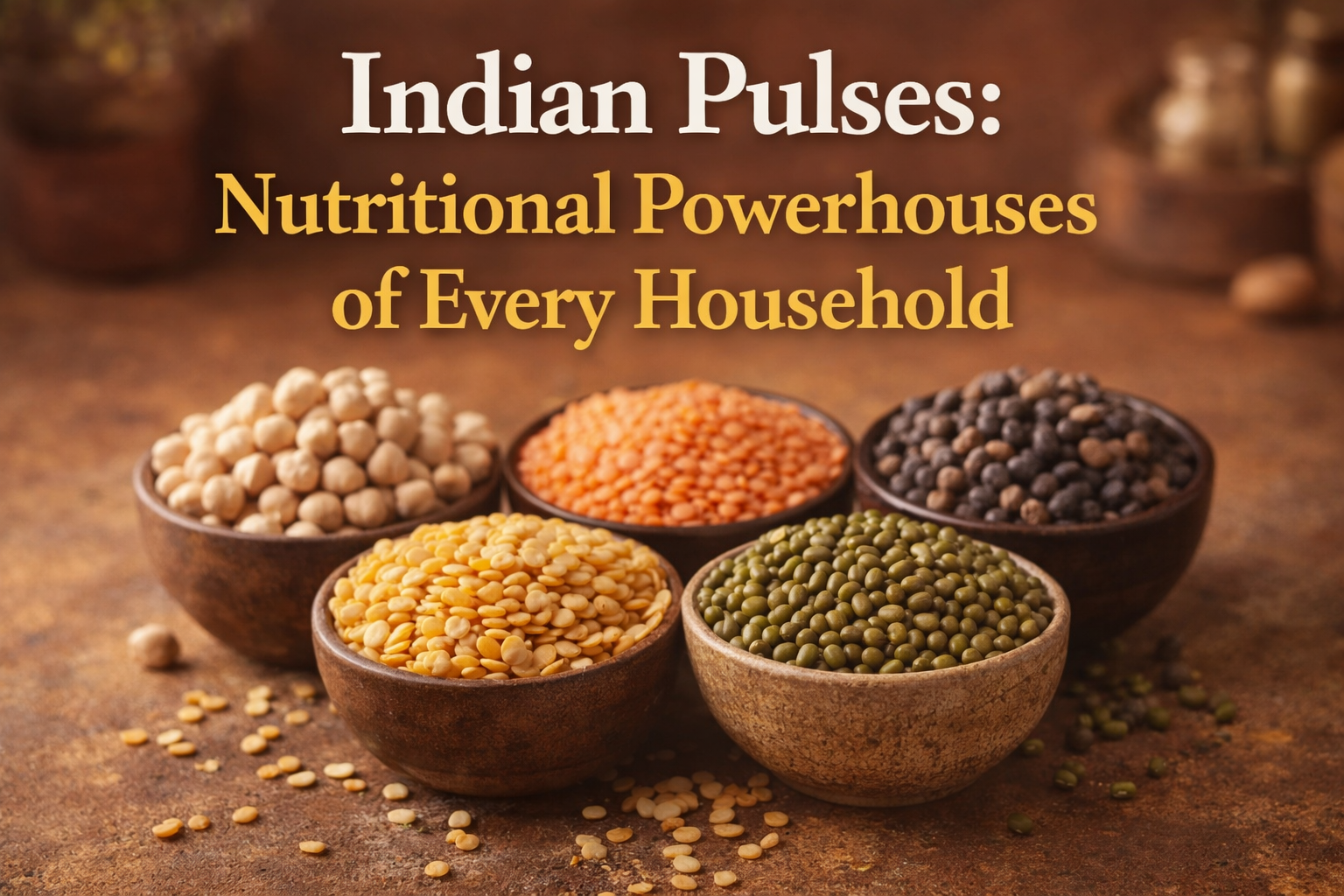
Pulses are edible seeds of legume plants. Common Indian pulses include:
- Moong dal
- Chana dal
- Toor dal
- Masoor dal
- Urad dal
They are available in whole, split, polished, and unpolished forms, each with slightly different cooking times and nutritional qualities.
Nutritional Value of Indian Pulses
Pulses are naturally rich in:
- Plant-based protein
- Dietary fibre
- Complex carbohydrates
- Iron and folate
- Magnesium and potassium
- B vitamins
Because they combine protein and fibre, pulses help provide sustained energy and satiety.
Why Pulses Are Essential in Indian Diets
1. Primary Protein Source for Vegetarians
For households that consume little or no meat, pulses serve as a dependable protein source. When combined with grains like rice or wheat, they form complete protein combinations.
2. Supports Digestive Health
The fibre in pulses supports gut health and helps maintain regular digestion.
3. Helps Maintain Energy Levels
Complex carbohydrates release energy slowly, helping avoid sudden hunger or energy dips.
4. Supports Heart Health
Regular consumption of pulses is associated with better cholesterol balance when part of a balanced diet.
Whole vs Split vs Polished Pulses
| TypeDescriptionNutritional Value | ||
| Whole Pulses | With outer skin intact | Highest fibre |
| Split Pulses | Skin removed or partially retained | Good balance |
| Polished Pulses | Processed for shine | Slightly reduced nutrients |
Unpolished pulses are generally preferred for higher nutritional value.
Traditional Indian Wisdom About Pulses
Indian food traditions rarely use a single dal every day. Instead, meals often rotate between different pulses. This approach:
- Provides diverse nutrients
- Improves digestion
- Prevents dietary monotony
Spices like cumin, hing, ginger, and turmeric are traditionally added to dals to improve digestibility.
How to Include Pulses in Daily Meals
- Dal with rice or roti
- Khichdi or pongal
- Sprouted salads
- Dal-based soups
- Besan or pulse flour snacks
Soaking pulses before cooking helps improve digestion and reduce cooking time.
Buying and Storage Tips
- Prefer unpolished pulses when available
- Check for uniform size and natural colour
- Avoid pulses with excessive shine
- Store in airtight containers
- Keep in a cool, dry place
Fresh pulses cook faster and taste better.
Conclusion
Indian pulses are simple yet powerful foods that support nutrition, digestion, and daily energy needs. Their affordability and versatility make them essential in every household.
Including a variety of pulses in daily meals is one of the easiest ways to maintain a balanced and wholesome diet.
Sometimes, the most ordinary foods carry the most extraordinary nourishment.
------------------------------------------
परिचय
दालें भारतीय भोजन का आधार रही हैं। दाल-चावल, खिचड़ी और रोज़ाना के भोजन में दाल का महत्वपूर्ण स्थान है। ये सस्ती, पौष्टिक और आसानी से बनने वाली होती हैं।
दालों को शाकाहारी भोजन का मुख्य प्रोटीन स्रोत माना जाता है।
दालें क्या होती हैं?
दालें फलियों के बीज होते हैं। आम भारतीय दालें हैं:
- मूंग दाल
- चना दाल
- तुअर दाल
- मसूर दाल
- उड़द दाल
ये साबुत, धुली या पॉलिश्ड रूप में मिलती हैं।
दालों के पोषक तत्व
दालों में:
- प्रोटीन
- फाइबर
- कार्बोहाइड्रेट
- आयरन
- विटामिन B
पाए जाते हैं।
दालें क्यों ज़रूरी हैं?
1. प्रोटीन का मुख्य स्रोत
शाकाहारी भोजन में दालें प्रोटीन देती हैं।
2. पाचन के लिए अच्छी
फाइबर पाचन को सहारा देता है।
3. ऊर्जा बनाए रखती हैं
धीरे-धीरे ऊर्जा देती हैं।
साबुत बनाम धुली बनाम पॉलिश्ड दाल
| प्रकारविवरणपोषण | ||
| साबुत | छिलके सहित | ज़्यादा फाइबर |
| धुली | छिलका कम | संतुलित |
| पॉलिश्ड | चमकदार | थोड़ा कम पोषण |
रोज़ाना कैसे शामिल करें?
- दाल-चावल
- खिचड़ी
- स्प्राउट सलाद
- सूप
खरीदने और रखने के सुझाव
- बिना पॉलिश की दाल लें
- एयरटाइट डिब्बे में रखें
- सूखी जगह पर रखें
निष्कर्ष
दालें सादा लेकिन शक्तिशाली भोजन हैं। रोज़ाना अलग-अलग दालों का उपयोग संतुलित आहार के लिए अच्छा है।