
Introduction
Sugar is a part of daily life in most Indian households. From morning tea to sweets and snacks, sugar is used regularly, often without much thought. However, not all sugar is the same. The type of sugar you consume can make a real difference to your overall health.
Two common types available today are raw sugar (khandsari) and refined white sugar. While both provide sweetness, they are very different in how they are processed and how they affect the body. This blog explains these differences clearly, so you can make a more informed choice.
What Is Raw Sugar (Khandsari)?
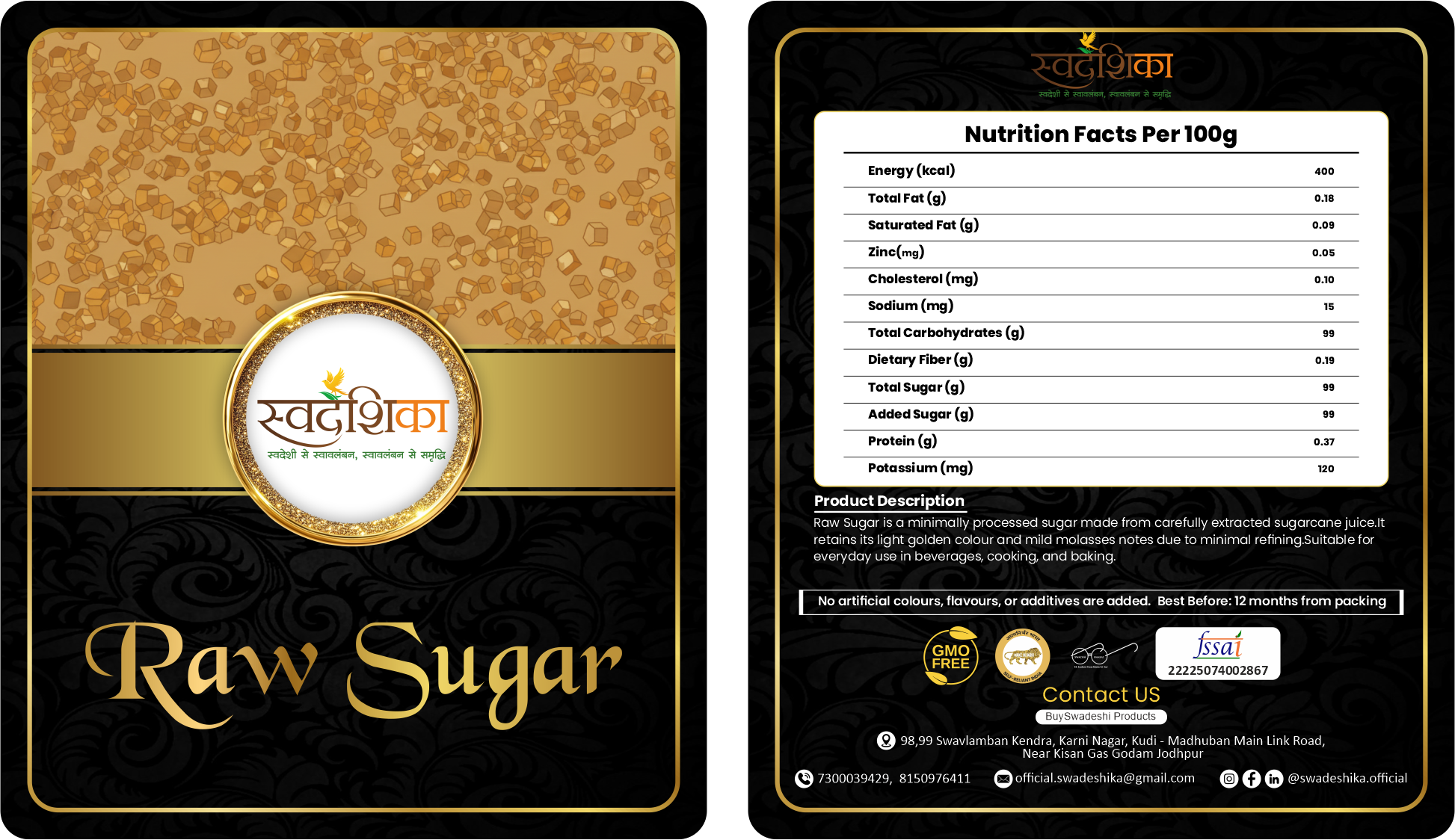
Raw sugar, also known as khandsari, is made from sugarcane juice using traditional and minimal processing methods. The juice is filtered, heated gently, and crystallised without heavy chemical treatment.
Key characteristics of raw sugar:
- Light brown or golden colour
- Mild, natural sweetness
- Contains traces of molasses
- Minimal processing
- No bleaching agents
Because of minimal processing, raw sugar retains some natural minerals present in sugarcane.
What Is Refined White Sugar?
Refined white sugar goes through multiple industrial processing steps. During refining:
- Sugarcane juice is heavily filtered
- Chemicals are used to remove impurities
- The sugar is bleached to make it white
- Molasses and minerals are completely removed
The final product is almost pure sucrose, with no nutritional value beyond calories.
Raw Sugar vs Refined Sugar: A Comparison
| Feature Raw Sugar (Khandsari) Refined White Sugar | ||
| Processing | Minimal | Highly processed |
| Colour | Light brown / golden | Bright white |
| Minerals | Trace minerals present | None |
| Chemical Use | No bleaching | Bleaching & chemicals |
| Taste | Mild, natural | Sharp sweetness |
How Processing Affects Health
The problem with refined sugar is not just sugar itself, but how heavily it is processed.
According to nutrition experts:
- Refined sugar provides empty calories
- It causes rapid spikes in blood sugar
- It offers no vitamins or minerals
Raw sugar, while still sugar, is considered a less aggressive form because it is closer to its natural state and is absorbed slightly more slowly.
Ayurvedic Perspective on Sugar
Ayurveda traditionally favours less refined sweeteners. Raw sugar and jaggery were commonly used because they were believed to be easier on digestion when consumed in moderation.
Refined sugar, being highly processed, is considered heavier and more disruptive to digestion when consumed regularly.
Does Raw Sugar Mean “Healthy”?
It is important to be clear:
Raw sugar is not a health food.
However:
- It is a better alternative than refined sugar
- It avoids chemical processing
- It retains some natural properties of sugarcane
Health experts recommend reducing overall sugar intake, but when sweetness is needed, choosing a less refined option is wiser.
How to Use Raw Sugar in Daily Life
- Tea and coffee
- Traditional sweets
- Homemade desserts
- Baking in small quantities
Because raw sugar has a mild flavour, you may naturally use less compared to refined sugar.
Buying and Storage Tips
- Choose raw sugar with uneven crystals (a sign of minimal processing)
- Avoid very white or overly uniform grains
- Store in airtight containers
- Keep away from moisture
Conclusion
Raw sugar and refined sugar both add sweetness, but they are not equal in quality. Refined sugar is highly processed and offers no nutritional value, while raw sugar retains some natural characteristics of sugarcane and avoids chemical bleaching.
Choosing raw sugar is a small but more mindful step towards better everyday eating habits.
Better choices begin with understanding what goes into your food.
------------------------------------------
परिचय
चीनी लगभग हर भारतीय घर में रोज़ इस्तेमाल होती है। चाय, मिठाई और पकवानों में हम बिना सोचे समझे चीनी डाल देते हैं। लेकिन यह जानना ज़रूरी है कि हर चीनी एक जैसी नहीं होती।
आजकल आमतौर पर दो तरह की चीनी मिलती है — खांड (रॉ शुगर) और रिफाइंड सफेद चीनी। दोनों मीठास देती हैं, लेकिन शरीर पर उनका असर अलग होता है।
खांड (रॉ शुगर) क्या होती है?
खांड गन्ने के रस से बनाई जाती है और इसमें बहुत कम प्रोसेसिंग होती है।
इसकी खासियतें:
- हल्का भूरा या सुनहरा रंग
- प्राकृतिक मिठास
- बिना ब्लीचिंग
- कम प्रोसेसिंग
इसमें गन्ने के कुछ प्राकृतिक तत्व बने रहते हैं।
रिफाइंड सफेद चीनी क्या होती है?
रिफाइंड चीनी फैक्ट्री में कई स्टेप्स से बनती है:
- गन्ने के रस को बहुत ज़्यादा साफ किया जाता है
- केमिकल से रंग हटाया जाता है
- सफेद दिखाने के लिए ब्लीच किया जाता है
अंत में सिर्फ मीठापन बचता है, पोषण नहीं।
खांड बनाम रिफाइंड चीनी
| बिंदु खांड रिफाइंड चीनी | ||
| प्रोसेसिंग | कम | बहुत ज़्यादा |
| रंग | हल्का भूरा | सफेद |
| केमिकल | नहीं | होते हैं |
| पोषण | थोड़ा बहुत | नहीं |
सेहत पर असर
रिफाइंड चीनी:
- ब्लड शुगर तेज़ी से बढ़ाती है
- कोई पोषण नहीं देती
- रोज़ाना ज़्यादा लेने पर नुकसान करती है
खांड:
- थोड़ा बेहतर विकल्प है
- शरीर पर हल्का असर डालती है
आयुर्वेद का नज़रिया
आयुर्वेद में कम प्रोसेस्ड मीठे पदार्थों को बेहतर माना गया है।
खांड और गुड़ पारंपरिक रूप से इस्तेमाल होते रहे हैं।
क्या खांड पूरी तरह से हेल्दी है?
नहीं।
खांड भी चीनी ही है और इसे सीमित मात्रा में ही लेना चाहिए।
लेकिन रिफाइंड चीनी की तुलना में यह बेहतर विकल्प है।
इस्तेमाल कैसे करें?
- चाय और कॉफी में
- घर की मिठाइयों में
- हल्की बेकिंग में
खरीदने और रखने के सुझाव
- बहुत सफेद दिखने वाली खांड न लें
- दाने असमान हों
- एयरटाइट डिब्बे में रखें
निष्कर्ष
रिफाइंड चीनी की तुलना में खांड ज़्यादा प्राकृतिक और कम प्रोसेस्ड होती है।
मीठे की ज़रूरत हो तो खांड एक समझदारी भरा विकल्प है।