
Introduction
Toor dal and masoor dal are among the most commonly used pulses in Indian households. Whether it is everyday dal with rice, sambhar, or simple home-style meals, both dals play an important role in providing nutrition and taste.
Many people wonder which dal is healthier or better suited for daily use. The answer is not about choosing one over the other, but understanding their nutritional differences, digestion, and ideal uses. This blog compares toor dal and masoor dal to help you use them wisely in your kitchen.
What Is Toor Dal?
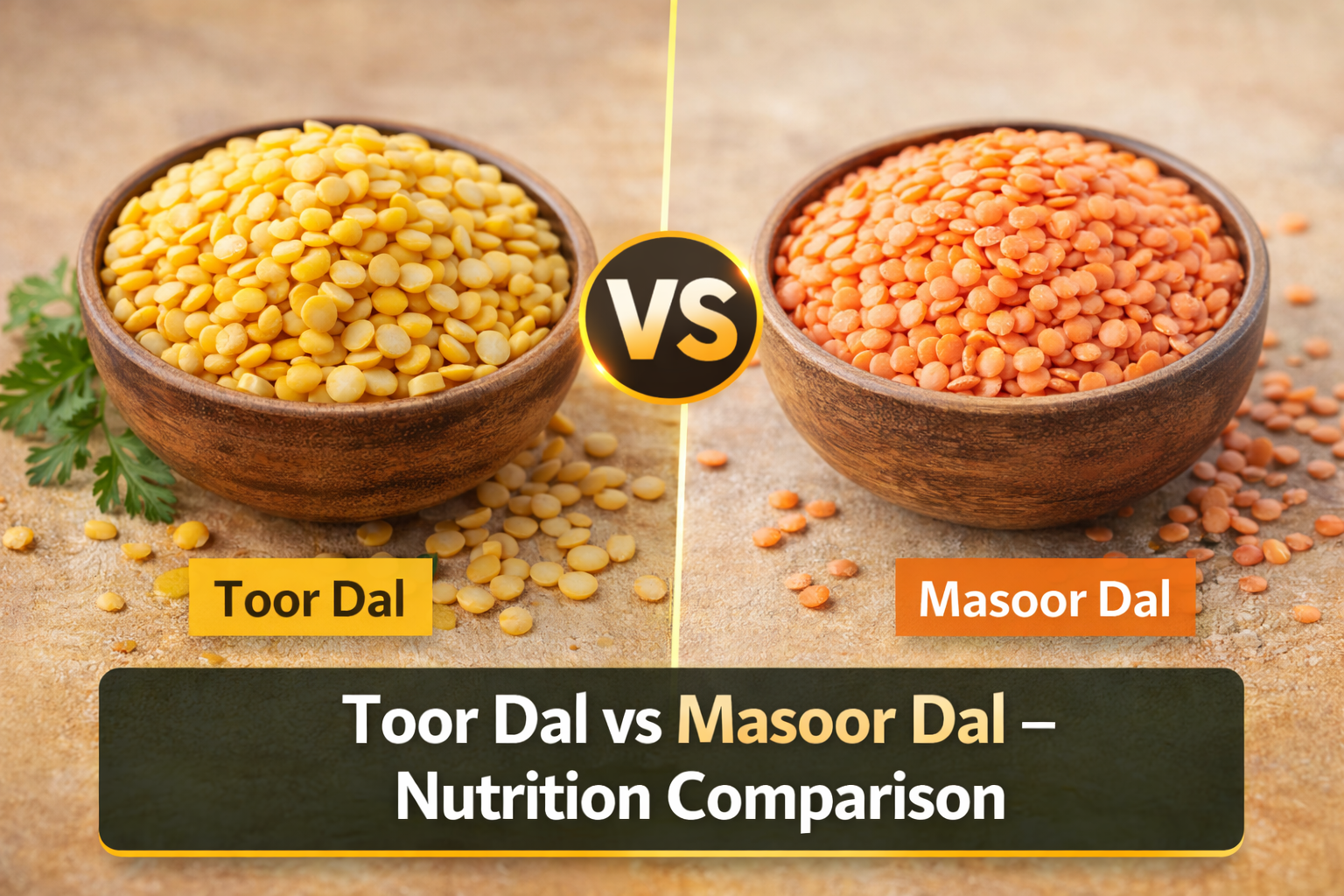
Toor dal (also called arhar dal) is made from split pigeon peas. It has a mild flavour and becomes soft and creamy when cooked.
Key characteristics:
- Light yellow colour
- Slightly nutty taste
- Medium cooking time
- Common in daily Indian meals and sambhar
Toor dal is often considered the classic everyday dal in many Indian homes.
What Is Masoor Dal?
Masoor dal is made from split red lentils. It cooks quickly and has a slightly earthy taste.
Key characteristics:
- Orange-red colour (turns yellowish after cooking)
- Faster cooking time
- Smooth texture
- Mild earthy flavour
Masoor dal is often preferred for quick meals.
Nutritional Comparison
| Feature Toor Dal Masoor Dal | ||
| Protein | High | High |
| Fibre | Good | Slightly higher |
| Iron | Moderate | Higher |
| Cooking Time | Medium | Fast |
| Digestibility | Balanced | Very easy |
Both dals are excellent sources of plant protein and essential nutrients.
Health Benefits of Toor Dal
1. Balanced Daily Nutrition
Toor dal offers a good mix of protein, carbohydrates, and fibre, making it ideal for everyday meals.
2. Sustained Energy
Its complex carbohydrates release energy gradually.
3. Versatile in Cooking
Works well in dal, sambhar, and mixed vegetable preparations.
Health Benefits of Masoor Dal
1. Rich in Iron
Masoor dal contains comparatively higher iron, which supports healthy blood formation.
2. Quick Cooking
Ideal for busy households because it cooks faster.
3. Light and Easy to Digest
Often preferred for light meals or when digestion feels weak.
Ayurvedic Perspective
Ayurveda considers both dals nutritious but slightly different in nature:
- Toor dal is seen as balanced and suitable for regular consumption.
- Masoor dal is considered slightly lighter and easier to digest, but sometimes warming in nature.
This is why many traditional diets rotate between different dals.
When Should You Use Toor Dal?
Choose toor dal when:
- Cooking everyday dal
- Preparing sambhar
- Want creamy texture
- Need a filling meal
When Should You Use Masoor Dal?
Choose masoor dal when:
- Cooking quick meals
- Need easy digestion
- Preparing thin dal or soup
- Want slightly higher iron intake
Cooking Tips
- Soak toor dal for faster cooking
- Masoor dal usually does not require soaking
- Add cumin, hing, or ginger to improve digestion
- Combine with vegetables for balanced nutrition
Buying and Storage Tips
- Prefer unpolished dals when available
- Check for natural colour and uniform grains
- Avoid excessive shine
- Store in airtight containers
- Keep in a cool, dry place
Conclusion
Both toor dal and masoor dal are nutritious and valuable in Indian diets. Toor dal works well for hearty daily meals, while masoor dal is ideal for quick, light, and iron-rich dishes.
Instead of choosing one, rotating both ensures better variety and balanced nutrition.
A balanced kitchen often comes from using simple ingredients in smart combinations.
------------------------------------------
परिचय
तुअर दाल और मसूर दाल दोनों भारतीय भोजन में बहुत उपयोग होती हैं। दाल-चावल से लेकर सांभर तक, ये दोनों पोषण और स्वाद देती हैं।
अक्सर लोग पूछते हैं कि कौन-सी दाल ज़्यादा अच्छी है। सही जवाब है — दोनों की अपनी खासियत है।
तुअर दाल क्या है?
तुअर दाल अरहर के दानों से बनती है।
पहचान:
- हल्का पीला रंग
- क्रीमी बनावट
- रोज़ाना की दाल में उपयोग
मसूर दाल क्या है?
मसूर दाल लाल मसूर से बनती है।
पहचान:
- लाल/नारंगी रंग
- जल्दी पकती है
- हल्की बनावट
तुलना
| बिंदु तुअर मसूर | ||
| प्रोटीन | अच्छा | अच्छा |
| आयरन | मध्यम | ज़्यादा |
| पकने का समय | मध्यम | जल्दी |
| पाचन | सामान्य | आसान |
कब कौन-सी लें?
- रोज़ाना के भोजन के लिए → तुअर दाल
- जल्दी और हल्का भोजन → मसूर दाल
खरीदने और रखने के सुझाव
- बिना पॉलिश की दाल लें
- एयरटाइट डिब्बे में रखें
- सूखी जगह पर रखें
निष्कर्ष
तुअर और मसूर दोनों दालें पौष्टिक हैं। इन्हें बदल-बदल कर उपयोग करना सबसे बेहतर है।