
Introduction
Cooking oil is a daily essential in every Indian kitchen. While most people focus on the type of oil they use, how that oil is extracted is equally important. Over time, traditional oil extraction methods were replaced by fast industrial processes, mainly to reduce cost and increase output.
However, traditional methods like Kachi Ghani (cold-pressed) oil extraction are now being rediscovered for their nutritional value and purity. This blog explains what Kachi Ghani means, how it works, and why traditionally extracted oils are considered better for daily cooking.
What Does Kachi Ghani Mean?
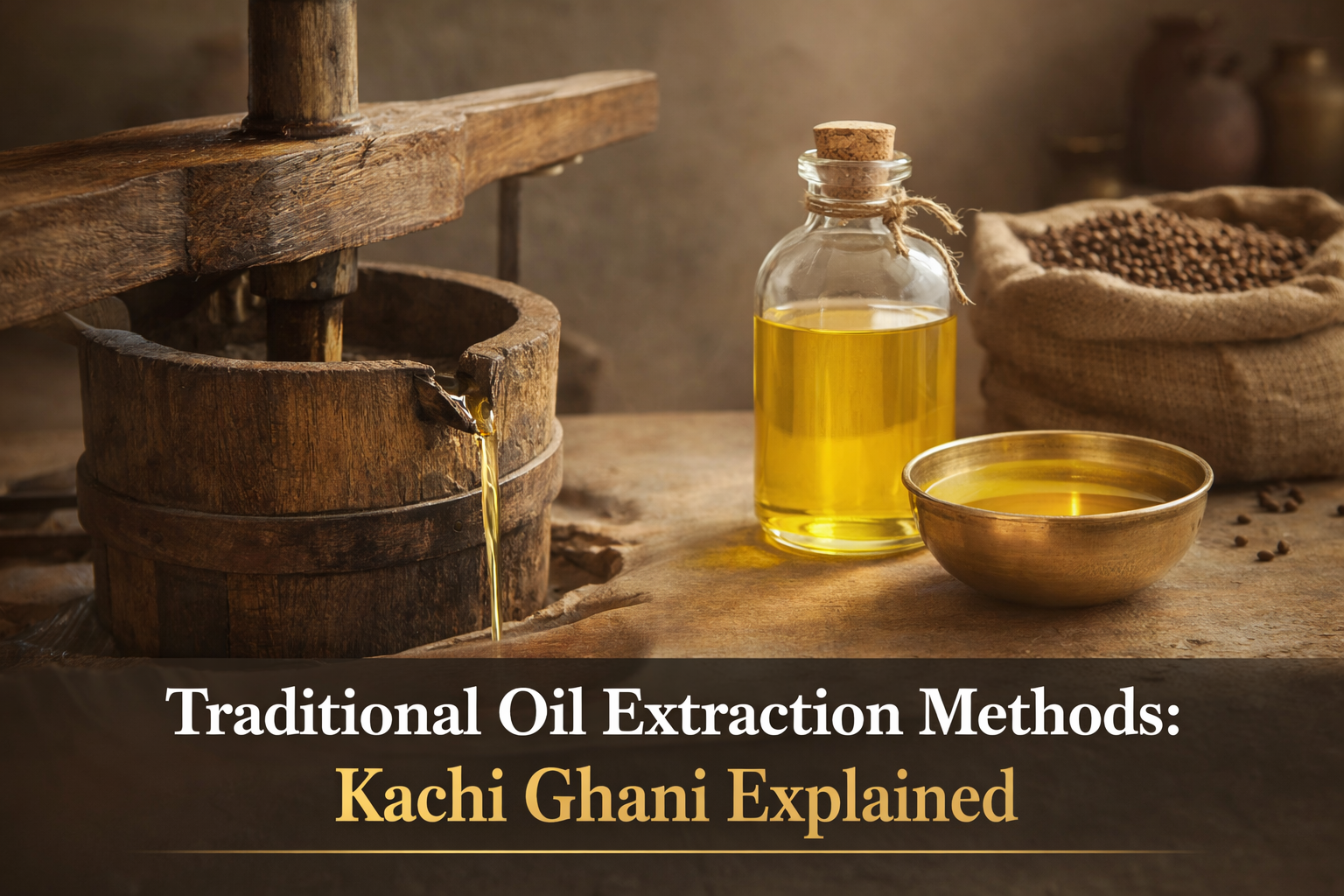
“Kachi Ghani” refers to a traditional cold-press oil extraction method. In this process, oil seeds are crushed slowly at low temperatures to extract oil naturally.
Key points:
- No external heat applied
- No chemical solvents used
- Oil extracted through pressure only
- Natural nutrients remain intact
Because heat is not used, the oil retains its original flavour, aroma, and nutritional properties.
How Traditional Kachi Ghani Extraction Works
The traditional process involves:
- Cleaning and drying oil seeds
- Crushing them slowly using wooden or mechanical presses
- Extracting oil at controlled, low temperatures
- Filtering oil naturally without chemical refining
This slow extraction ensures that the oil does not lose its natural goodness.
How Modern Industrial Oil Extraction Works
Most refined oils are extracted using high heat and chemical solvents like hexane. These methods:
- Extract maximum oil quickly
- Remove natural aroma and nutrients
- Require bleaching and deodorising
- Produce oil that looks clear but is nutritionally weaker
While refined oils have longer shelf life, they lose many natural properties.
Kachi Ghani Oil vs Refined Oil
| Feature Kachi Ghani Oil Refined Oil | ||
| Extraction | Cold-pressed | Heat + chemicals |
| Nutrients | Largely retained | Mostly destroyed |
| Aroma | Natural | Removed |
| Processing | Minimal | Heavy |
| Digestibility | Easier | Heavier |
Why Kachi Ghani Oils Are Better for Cooking
1. Retain Natural Nutrients
Cold pressing preserves antioxidants, vitamins, and healthy fats.
2. Better Digestibility
Traditional oils are easier on the stomach and less likely to cause heaviness.
3. Natural Flavour
Kachi Ghani oils enhance food taste naturally, especially Indian dishes.
4. No Chemical Residues
Since no solvents are used, the oil remains chemical-free.
Ayurvedic View on Traditional Oils
Ayurveda emphasizes using fresh, minimally processed oils. Traditionally extracted oils are considered:
- Nourishing
- Supportive of digestion
- Suitable for daily use
Different oils are recommended for different body types and seasons.
Common Oils Made Using Kachi Ghani Method
- Mustard oil
- Groundnut (peanut) oil
- Sesame oil
- Coconut oil
Each oil has its own traditional and regional significance.
Buying and Storage Tips
- Look for “cold-pressed” or “Kachi Ghani” on labels
- Avoid overly clear or odourless oil
- Store in dark glass or steel containers
- Keep away from heat and sunlight
Cold-pressed oils are best consumed fresh.
Conclusion
Kachi Ghani oil extraction represents a return to traditional wisdom. By avoiding heat and chemicals, this method preserves the natural qualities of oil that refined processes often destroy.
Choosing Kachi Ghani oils is a simple way to make daily cooking more natural and nourishing.
Sometimes, slowing down the process makes food healthier.
------------------------------------------
परिचय
तेल हर भारतीय रसोई की ज़रूरत है। लेकिन ज़्यादातर लोग यह नहीं सोचते कि तेल कैसे निकाला गया है, यह भी उतना ही ज़रूरी है।
कच्ची घानी जैसी पारंपरिक विधियाँ आज फिर से लोकप्रिय हो रही हैं, क्योंकि ये तेल को ज़्यादा प्राकृतिक और पोषक बनाए रखती हैं।
कच्ची घानी का मतलब क्या है?
कच्ची घानी एक पारंपरिक कोल्ड-प्रेस तेल निकालने की विधि है।
इसमें:
- बीजों को धीरे-धीरे दबाया जाता है
- कोई बाहरी गर्मी नहीं दी जाती
- कोई केमिकल इस्तेमाल नहीं होता
कच्ची घानी से तेल कैसे निकाला जाता है?
- बीजों को साफ़ किया जाता है
- धीरे-धीरे दबाव डालकर तेल निकाला जाता है
- तेल को प्राकृतिक रूप से छाना जाता है
इससे तेल की खुशबू और पोषण सुरक्षित रहता है।
आधुनिक तेल निकालने की विधि
आधुनिक तरीकों में:
- ज़्यादा गर्मी
- केमिकल सॉल्वेंट
- ब्लीचिंग और डीओडराइजेशन
का उपयोग होता है।
कच्ची घानी बनाम रिफाइंड तेल
| बिंदु कच्ची घानी रिफाइंड | ||
| प्रोसेसिंग | कम | बहुत ज़्यादा |
| खुशबू | प्राकृतिक | नहीं |
| पाचन | आसान | भारी |
| केमिकल | नहीं | होते हैं |
कच्ची घानी तेल के फायदे
- प्राकृतिक पोषण
- बेहतर पाचन
- स्वाद बढ़ाता है
- केमिकल मुक्त
आयुर्वेद में पारंपरिक तेल
आयुर्वेद में ताज़ा और कम प्रोसेस्ड तेल को बेहतर माना गया है।
कच्ची घानी से बनने वाले तेल
- सरसों तेल
- मूंगफली तेल
- तिल तेल
- नारियल तेल
खरीदने और रखने के सुझाव
- लेबल ध्यान से पढ़ें
- बहुत साफ़ तेल से बचें
- ठंडी जगह पर रखें
निष्कर्ष
कच्ची घानी विधि तेल को प्राकृतिक रूप में बनाए रखती है। रोज़मर्रा के उपयोग के लिए यह एक बेहतर विकल्प है।