
Introduction
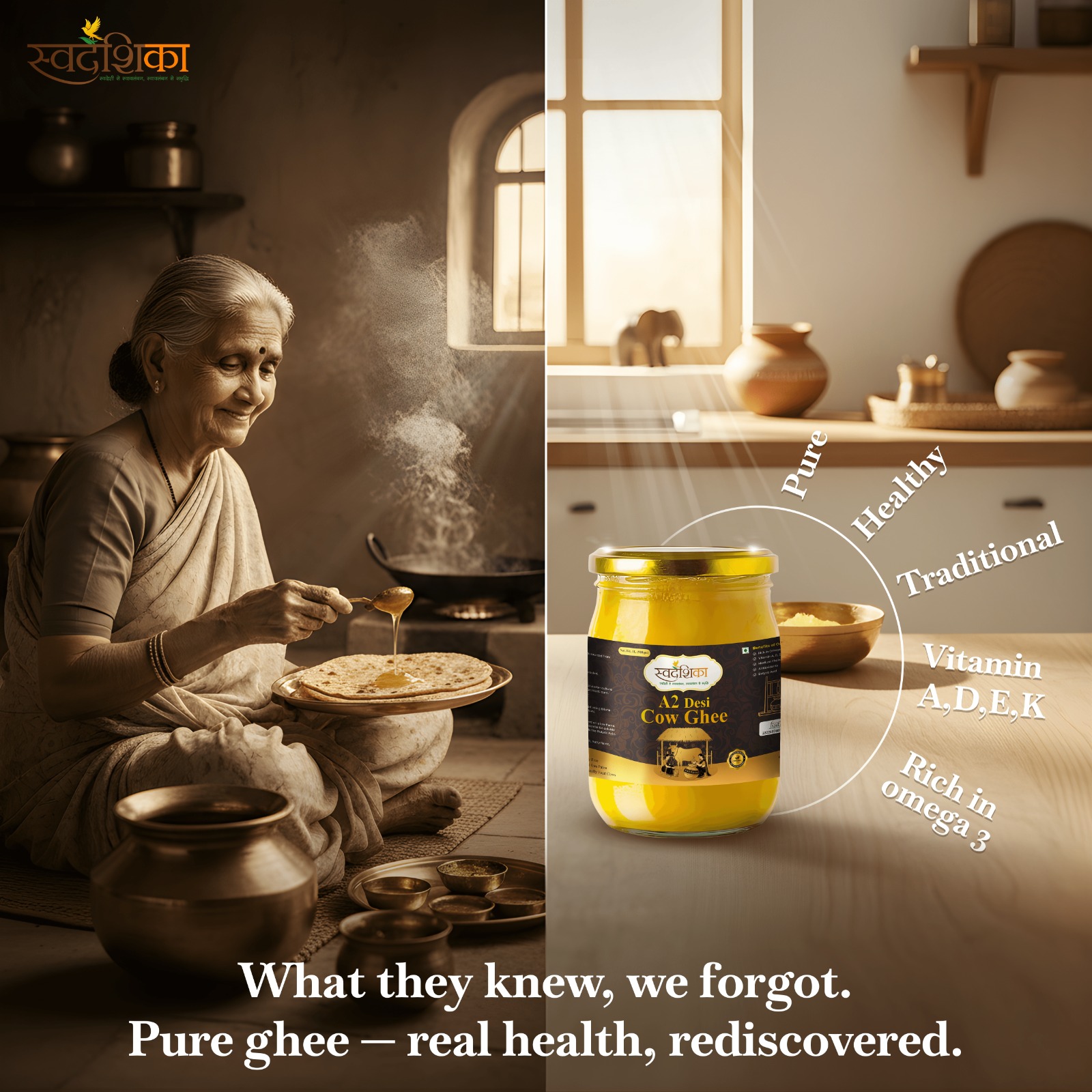
Ghee has always been an essential part of Indian cooking. From daily meals to religious rituals, it has been valued for its taste, nutrition, and digestibility. In recent years, A2 ghee has gained attention as a superior alternative to regular ghee. This has also created confusion, with many people unsure whether A2 ghee is genuinely different or just another health trend.
This blog explains what A2 ghee is, how it differs from regular ghee, and why both Ayurveda and modern science consider A2 ghee easier to digest and better suited for regular consumption.
What Is A2 Ghee?
A2 ghee is made from the milk of indigenous Indian cow breeds such as Gir, Sahiwal, Red Sindhi, and Tharparkar. These cows produce milk that contains A2 beta-casein protein.
The ghee is traditionally prepared using the bilona method, where:
- Milk is cultured into curd
- Curd is churned to extract butter
- Butter is slowly heated to make ghee
This slow process preserves the natural qualities of ghee.
What Is Regular Ghee?
Regular ghee is usually made from milk of crossbred or foreign cow breeds, which contain A1 beta-casein protein. It is often produced using cream separation and faster industrial methods.
While regular ghee still provides fat and calories, its digestion and impact on the body may differ from A2 ghee.
A2 Ghee vs Regular Ghee: Key Differences
| FeatureA2 GheeRegular Ghee | ||
| Cow Breed | Indigenous Indian cows | Crossbred/foreign cows |
| Protein Type | A2 beta-casein | A1 beta-casein |
| Preparation | Traditional bilona | Industrial/cream-based |
| Digestibility | Easier | Heavier for some people |
| Ayurvedic Value | High | Moderate |
Ayurvedic Perspective on A2 Ghee
Ayurveda considers ghee a sattvic food, essential for nourishing body tissues and supporting digestion.
A2 ghee is believed to:
- Improve digestion (agni)
- Nourish brain and nervous system
- Support immunity
- Balance vata and pitta dosha
Traditional texts emphasize ghee made from desi cow milk using slow methods.
What Modern Science Says
Modern studies suggest that:
- A2 protein is easier to digest than A1 protein for many people
- A1 protein digestion may produce BCM-7, a compound linked to digestive discomfort in some individuals
- Traditional ghee contains beneficial fatty acids like butyrate, which supports gut health
This explains why some people tolerate A2 ghee better than regular ghee.
Health Benefits of A2 Ghee
1. Easier Digestion
A2 ghee is often better tolerated by people who feel heaviness after consuming regular dairy.
2. Supports Gut Health
It contains butyric acid, which supports healthy digestion.
3. Supports Brain and Memory
Ayurveda associates ghee with nourishment of brain tissues.
4. Suitable for Cooking
A2 ghee has a high smoke point, making it ideal for Indian cooking.
How to Use A2 Ghee Daily
- Add 1–2 teaspoons to meals
- Use for cooking, roasting, and tadka
- Consume with warm rice or dal
- Can be taken with warm water in the morning
Moderation is essential, as ghee is calorie-dense.
Buying and Storage Tips
- Check that ghee is made from A2 milk
- Prefer bilona or traditional method
- Avoid artificial aroma or colour
- Store in airtight containers
- Keep away from moisture
Pure ghee does not require refrigeration.
Conclusion
A2 ghee stands apart because of its source, preparation method, and digestibility. Both Ayurveda and modern science support the idea that ghee made from indigenous cow milk using traditional methods is better suited for regular use.
Choosing A2 ghee is not about trends — it is about returning to traditional food wisdom.
Sometimes, the best nutrition comes from respecting tradition.
------------------------------------------
परिचय
घी भारतीय भोजन का अभिन्न हिस्सा रहा है। आजकल A2 घी को लेकर काफ़ी चर्चा है, लेकिन बहुत से लोग इसके बारे में पूरी जानकारी नहीं रखते।
यह ब्लॉग बताता है कि A2 घी क्या होता है, यह साधारण घी से कैसे अलग है और आयुर्वेद व आधुनिक विज्ञान इसे बेहतर क्यों मानते हैं।
A2 घी क्या होता है?
A2 घी देसी भारतीय गायों के दूध से बनाया जाता है, जैसे:
- गिर
- साहीवाल
- थारपारकर
इस दूध में A2 प्रोटीन पाया जाता है।
घी बनाने की पारंपरिक बिलोना विधि में दूध को दही बनाकर, मथकर और धीरे-धीरे पकाया जाता है।
साधारण घी क्या होता है?
साधारण घी ज़्यादातर विदेशी या क्रॉसब्रेड गायों के दूध से बनाया जाता है, जिसमें A1 प्रोटीन होता है।
A2 घी बनाम साधारण घी
| बिंदु A2 घी साधारण घी | ||
| दूध का स्रोत | देसी गाय | विदेशी/क्रॉसब्रेड |
| प्रोटीन | A2 | A1 |
| पाचन | आसान | कुछ लोगों को भारी |
| विधि | पारंपरिक | औद्योगिक |
आयुर्वेद में A2 घी
आयुर्वेद के अनुसार A2 घी:
- पाचन सुधारता है
- मस्तिष्क को पोषण देता है
- वात और पित्त संतुलित करता है
विज्ञान क्या कहता है?
- A2 प्रोटीन आसानी से पचता है
- A1 प्रोटीन कुछ लोगों में पाचन समस्या पैदा कर सकता है
- घी में ब्यूटिरिक एसिड होता है, जो आँतों के लिए अच्छा है
A2 घी के फायदे
- पाचन में सहायक
- आँतों के लिए अच्छा
- पकाने के लिए सुरक्षित
- दिमाग़ी स्वास्थ्य को सहारा
A2 घी कैसे इस्तेमाल करें?
- रोज़ 1–2 चम्मच
- खाने में या पकाने में
- सुबह गुनगुने पानी के साथ
खरीदने और रखने के सुझाव
- A2 दूध से बना हो
- बिलोना विधि का हो
- एयरटाइट डिब्बे में रखें
निष्कर्ष
A2 घी पारंपरिक ज्ञान और आधुनिक विज्ञान — दोनों का समर्थन प्राप्त करता है। यह रोज़मर्रा के उपयोग के लिए बेहतर विकल्प है।