
Introduction
Bajra, also known as pearl millet, has been a staple grain in Indian agriculture and rural diets for centuries. Especially in regions like Rajasthan, Gujarat, and Haryana, bajra has long been valued for its ability to grow in harsh climates and provide sustained nourishment.
In recent years, bajra has been rediscovered as a “supergrain” due to its strong nutritional profile and health-supporting properties. This blog explains what makes desi bajra special, its benefits, and how to include it in daily meals.
What Is Desi Bajra?
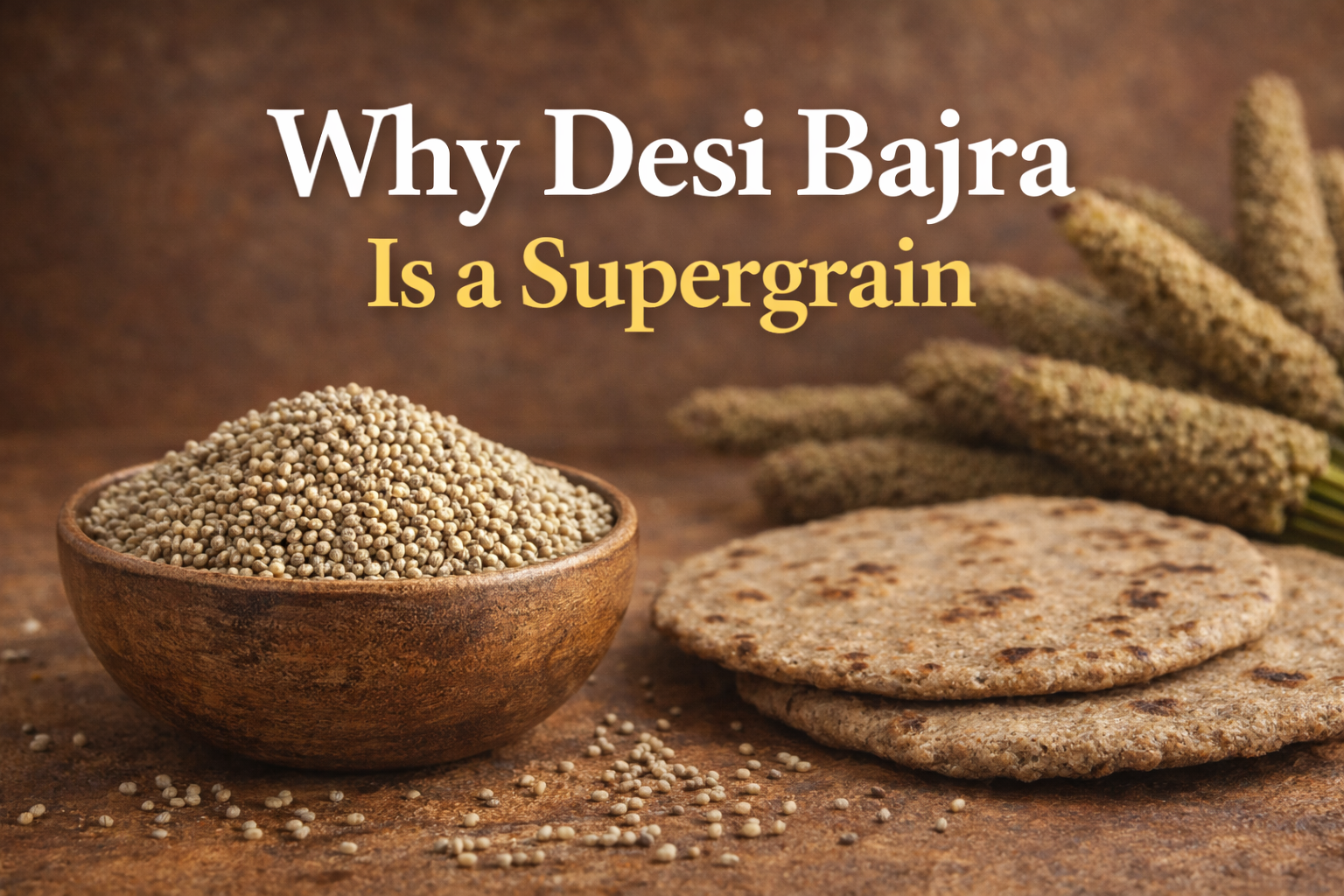
Desi bajra refers to traditional, locally grown pearl millet varieties, often cultivated using natural farming methods and adapted to Indian soil and climate.
Key characteristics:
- Small, greyish grains
- Naturally hardy crop
- Rich, earthy taste
- Traditionally stone-ground into flour
Because it is less refined than many modern grains, bajra retains more fibre and nutrients.
Nutritional Value of Bajra
Bajra is naturally rich in:
- Dietary fibre
- Plant-based protein
- Iron and magnesium
- B vitamins
- Complex carbohydrates
- Natural antioxidants
Its combination of fibre and complex carbs makes it a slow-digesting grain that supports sustained energy.
Why Bajra Is Called a Supergrain
1. High Fibre Content
Bajra contains more fibre than many commonly used grains like polished rice. Fibre supports digestion and helps maintain fullness.
2. Supports Energy and Strength
Complex carbohydrates release energy slowly, making bajra suitable for physically active lifestyles.
3. Naturally Gluten-Free
Bajra is naturally gluten-free, making it suitable for people avoiding wheat.
4. Supports Mineral Intake
Its iron and magnesium content contribute to overall nutritional balance.
Traditional Importance of Bajra in Indian Diets
In traditional Indian households, bajra was commonly consumed in:
- Bajra roti
- Khichdi
- Porridge during winters
- Rural labour diets for sustained energy
It was often paired with ghee, jaggery, or buttermilk to create balanced meals.
Ayurvedic Perspective
Ayurveda considers bajra:
- Warming in nature
- Suitable during cold seasons
- Helpful for sustaining strength and stamina
Because of its warming quality, bajra is often preferred in winter diets.
How to Include Bajra in Daily Meals
- Bajra roti or bhakri
- Mixed millet khichdi
- Bajra porridge
- Blend bajra flour with wheat flour
- Use in traditional snacks
Start gradually if you are new to bajra, as its high fibre may take time to adjust.
Buying and Storage Tips
- Choose naturally grown bajra grains or flour
- Avoid flour stored for too long (fresh is better)
- Store grains in airtight containers
- Keep in a cool, dry place
- Prefer freshly ground flour for best taste
Conclusion
Desi bajra earns the name “supergrain” not because it is trendy, but because it has always been nutritionally strong and environmentally resilient. Its fibre, minerals, and slow-release energy make it a valuable addition to balanced Indian diets.
Including bajra regularly is a simple way to reconnect with traditional grains while supporting daily nutrition.
Sometimes, the grains of the past hold the answers for modern nutrition
------------------------------------------
परिचय
बाजरा भारत के पारंपरिक अनाजों में से एक है। राजस्थान, गुजरात और हरियाणा जैसे राज्यों में यह लंबे समय से मुख्य भोजन का हिस्सा रहा है।
आज फिर से बाजरे को “सुपरग्रेन” कहा जा रहा है क्योंकि यह पोषण से भरपूर है।
देसी बाजरा क्या है?
देसी बाजरा पारंपरिक किस्म का मोती बाजरा होता है, जो स्थानीय जलवायु में उगाया जाता है।
पहचान:
- छोटे भूरे/स्लेटी दाने
- प्राकृतिक स्वाद
- पारंपरिक रूप से आटा बनाया जाता है
बाजरे के पोषक तत्व
बाजरे में:
- फाइबर
- प्रोटीन
- आयरन
- मैग्नीशियम
- विटामिन B
पाए जाते हैं।
बाजरा सुपरग्रेन क्यों?
1. ज़्यादा फाइबर
पाचन को सहारा देता है।
2. धीरे ऊर्जा देता है
लंबे समय तक पेट भरा रखता है।
3. ग्लूटेन-फ्री
गेहूं से परहेज़ करने वालों के लिए उपयुक्त।
4. खनिजों से भरपूर
शरीर के लिए उपयोगी।
पारंपरिक उपयोग
- बाजरा रोटी
- खिचड़ी
- सर्दियों का दलिया
आयुर्वेद के अनुसार
बाजरा गर्म तासीर वाला माना जाता है और सर्दियों में उपयोगी होता है।
कैसे शामिल करें?
- बाजरा रोटी
- आटे में मिलाकर
- खिचड़ी
खरीदने और रखने के सुझाव
- ताज़ा बाजरा लें
- एयरटाइट डिब्बे में रखें
- सूखी जगह पर रखें
निष्कर्ष
देसी बाजरा पौष्टिक और पारंपरिक दोनों है। इसे नियमित भोजन में शामिल करना सेहत के लिए अच्छा है।